Johannesburg’s mayoral race turns into a fight over competing realities
?s next mayor may be decided as much by competing poll numbers as by votes. With the city headed for another hung council, Helen Zille’s
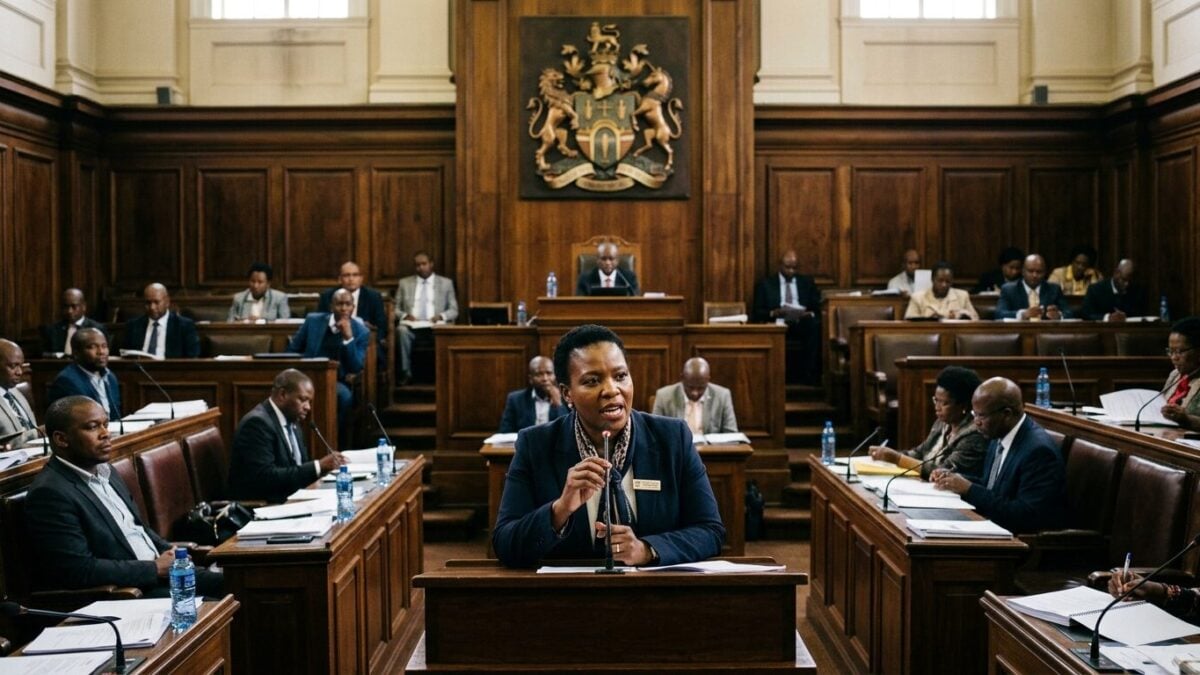
Johannesburg’s next mayor may be decided as much by competing poll numbers as by votes. With the city headed for another hung council, Helen Zille’s push to lead the Democratic Alliance’s challenge has collided with a rival reading of the race, and the gap between those narratives is now part of the contest itself.
The fight matters well beyond City Hall. Johannesburg is South Africa’s economic capital, and the stakes are blunt: whether the city can escape years of decline or sink deeper into political drift and weak governance.
A race shaped by coalition arithmetic
The immediate problem is simple. No single party appears able to win the 136 seats needed for an outright majority in Johannesburg’s 270-seat council. That makes the mayor’s chain far less straightforward than a standard electoral prize.
Helene Zille is running what one observer has described as the strongest campaign in the city, but even that may not be enough. A party can finish first and still lose the mayoralty if rivals stitch together a governing bloc after the vote. In Johannesburg, winning the election and winning City Hall are no longer the same thing.
That reality has opened space for a noisy scramble. Helen Zille and Herman Mashaba are both being talked about as figures in the contest, while the Democratic Alliance also has to protect suburban support and reach beyond its traditional base. The political map is shifting under everyone’s feet.
Polls point to an open field
New data cited in local reporting suggests Gauteng voters are up for grabs, a finding that can be extrapolated to Johannesburg. In Ipsos’ Khayabus survey, 43% of respondents in Gauteng agreed or strongly agreed with the statement that no political party represents their views. That is a striking number in a province that includes the country’s biggest city.
The same survey put the ANC on 42% if an election were held tomorrow in Gauteng, with the DA on 24%, the EFF on 14% and the MK party on 8%. The rest were split among smaller parties, undecided voters or respondents who would not say.
For Mari Harris, an Ipsos director and political analyst, the takeaway is that many would-be voters are not locked in. They are uncertain. And that uncertainty creates an opening for parties trying to sell themselves as the answer to Johannesburg’s long slide.
The Treasury-versus-patronage frame
Another narrative cuts through the campaign from a different angle. One analysis has cast the struggle over Johannesburg as a clash between National Treasury and what it calls an ANC patronage machine. At the centre is a contested R10.3 billion two-year municipal wage increase agreed last year and now described by Treasury as illegal.
The fiscal picture is grim enough on its own. Johannesburg faces insolvency risks, rising debt and a weak cash position, while election pressure and union demands hang over the next administration. Eskom debt adds another layer of pressure. So does basic governance.
That is why this mayoral race is being fought on two levels at once: who can win enough votes, and who can persuade residents that the city’s crisis has a clear villain — and a clear fix. In a place where voters are unsettled and coalitions are likely to decide the outcome, the story line may matter almost as much as the tally. Johannesburg’s next government is likely to be built seat by seat, deal by deal.