Indonesia Urges Caution as Anak Krakatau Volcano Remains Volatile
Indonesian officials advise public vigilance regarding Mount Anak Krakatau eruptions, urging residents to follow official government data to avoid misinformation.
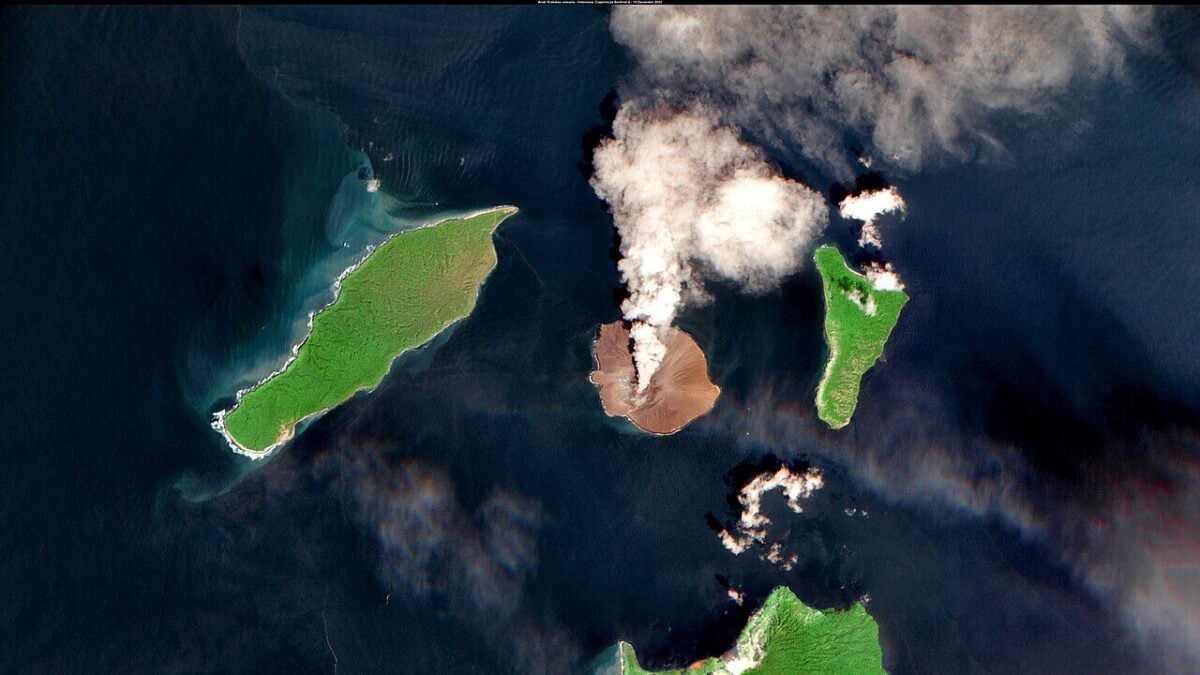
JAKARTA — Indonesian lawmakers are urging the public to rely exclusively on official government data regarding the ongoing volcanic activity of Mount Anak Krakatau, located in the Sunda Strait. The call comes as the nation’s geological agencies closely monitor the volcano following a 25-hour eruptive sequence that concluded early Sunday, Sept. 6, 2026, at 12:04 a.m. local time (WIB).
Maman Imanul Haq, a member of the House of Representatives' Commission VIII, emphasized that clear communication is essential to prevent the spread of unverified information on social media. "Follow official information and directives from the government, the Regional Disaster Management Agency, the National Disaster Management Agency, the Center for Volcanology and Geological Hazard Mitigation, and local authorities," Imanul Haq stated.
Volcanic Status and Regional Monitoring
While the continuous eruptive phase—which began on Friday, Sept. 4, at 11:07 p.m. WIB—has ceased, the Center for Volcanology and Geological Hazard Mitigation (PVMBG) warns that the risk of subsequent eruptions remains significant. Anak Krakatau is currently classified at the 'Waspada' (Caution) alert level. Other Indonesian volcanoes, including Mount Semeru, Mount Ibu in North Maluku, and Mount Ili Lewotolok in East Nusa Tenggara, remain at the higher 'Siaga' (Watch) level.
Indonesia's Meteorology, Climatology, and Geophysical Agency (BMKG) has identified ash fall clusters extending across Banten, Jakarta, West Java, and Bengkulu. The agency is maintaining a 24-hour watch on atmospheric conditions to assess potential impacts on aviation, maritime routes in the Sunda Strait, and overall air quality.
Operational and Health Precautions
The impact of volcanic ash poses immediate health risks, particularly regarding respiratory safety. Local officials are proactively adjusting public operations to minimize exposure. Iwan Suryawan, Deputy Speaker of the West Java Regional House of Representatives, has proposed work-from-home arrangements for non-essential civil servants in affected areas to mitigate risks.
Hardiyanto Kenneth, a member of the Jakarta Regional House of Representatives, urged provincial authorities to ensure the rapid dissemination of data regarding road conditions and visibility. "The government must ensure information reaches the public quickly and accurately," Kenneth said. He stressed that inter-agency coordination—involving health departments, environmental agencies, and disaster management teams—is critical to maintaining public safety as conditions evolve.
Authorities have issued practical guidance for residents in impacted regions, advising them to limit outdoor activities, secure food and water sources from ash contamination, and ensure doors and windows remain closed. Legislators continue to push for the strengthening of early warning systems, demanding that real-time data be prioritized to facilitate timely evacuations and the distribution of emergency aid where necessary.