Indonesia Lawmakers Demand School Closures Near Active Volcanoes
Indonesian MPs push for mandatory distance learning for schools near active volcanoes like Anak Krakatau and Semeru, citing health and safety risks.
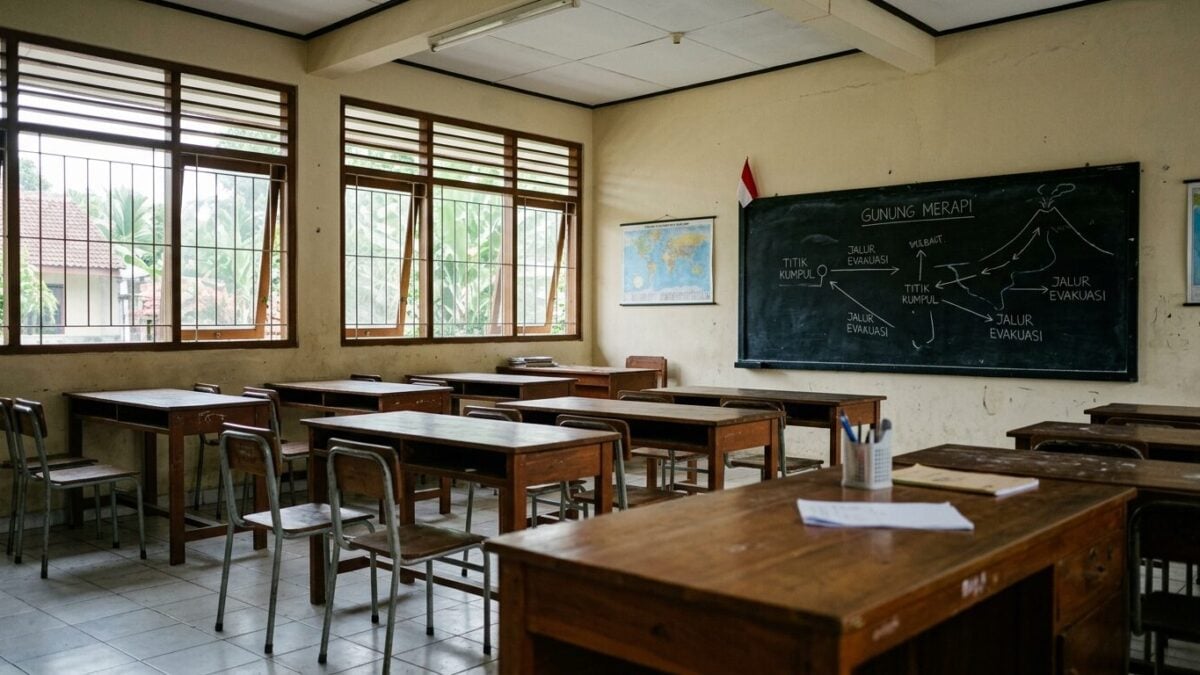
JAKARTA — Indonesia’s parliamentary leaders are demanding that schools located in regions affected by volcanic eruptions switch to mandatory distance learning, warning that institutions failing to comply with safety protocols will face administrative sanctions. The call comes as several high-risk volcanoes, including the volatile Anak Krakatau in the Sunda Strait, remain under active monitoring.
"Do not force operations if Anak Krakatau or other active mountains, including those in East Nusa Tenggara, remain a threat," said Lalu Hadrian Irfani, Deputy Chairman of the House of Representatives’ Commission X, during a briefing at the parliamentary complex in Jakarta on Monday, Sept. 7, 2026. He emphasized that the safety of students, teachers, and staff must remain the absolute priority during ongoing seismic activity.
The push for remote education follows a directive that mandated distance learning for all educational institutions in the capital, Jakarta, effective Sept. 7, 2026. This measure covers all levels, from early childhood education centers to vocational high schools, as officials assess evolving environmental conditions. Beyond the immediate impact of Anak Krakatau, lawmakers are closely monitoring the status of Mount Ile Lewotolok in East Nusa Tenggara and the persistently active Mount Semeru.
Volcanic Risks and Transport Disruptions
The Geological Agency under the Ministry of Energy and Mineral Resources reported that the most recent eruptive phase of Anak Krakatau concluded early Sunday, Sept. 6, 2026. The eruption, which lasted approximately 25 hours, produced significant ash plumes that drifted southwest toward Bengkulu. While the intense eruptive phase has ended, the agency confirmed that the volcano remains in a state of alert, exhibiting strombolian characteristics—a pattern suggesting the potential for recurring, localized explosive activity.
The environmental fallout from these eruptions has caused substantial regional disruption. Air quality degradation and thick ashfall have forced the closure of several commercial airports, leading to the cancellation of flights and the displacement of thousands of travelers. For local schools, the risk extends beyond structural damage, posing acute respiratory hazards to students and staff as ash particles settle in densely populated areas.
Lalu urged the Ministry of Basic and Secondary Education to take decisive action against any educational facility that ignores safety mandates. "We are not just issuing recommendations; we are monitoring compliance for the sake of public health," he stated. By enforcing a shift to distance learning, the government aims to mitigate the secondary health crises often associated with volcanic ash exposure, which poses a specific danger to vulnerable populations, including young children and the elderly residing in the shadow of Indonesia's active volcanic belt.