Jakarta Police Spray Roads to Combat Anak Krakatau Volcanic Ash
Jakarta police deploy Armored Water Cannon units across the capital and satellite cities to clear hazardous volcanic ash from Anak Krakatau eruption.
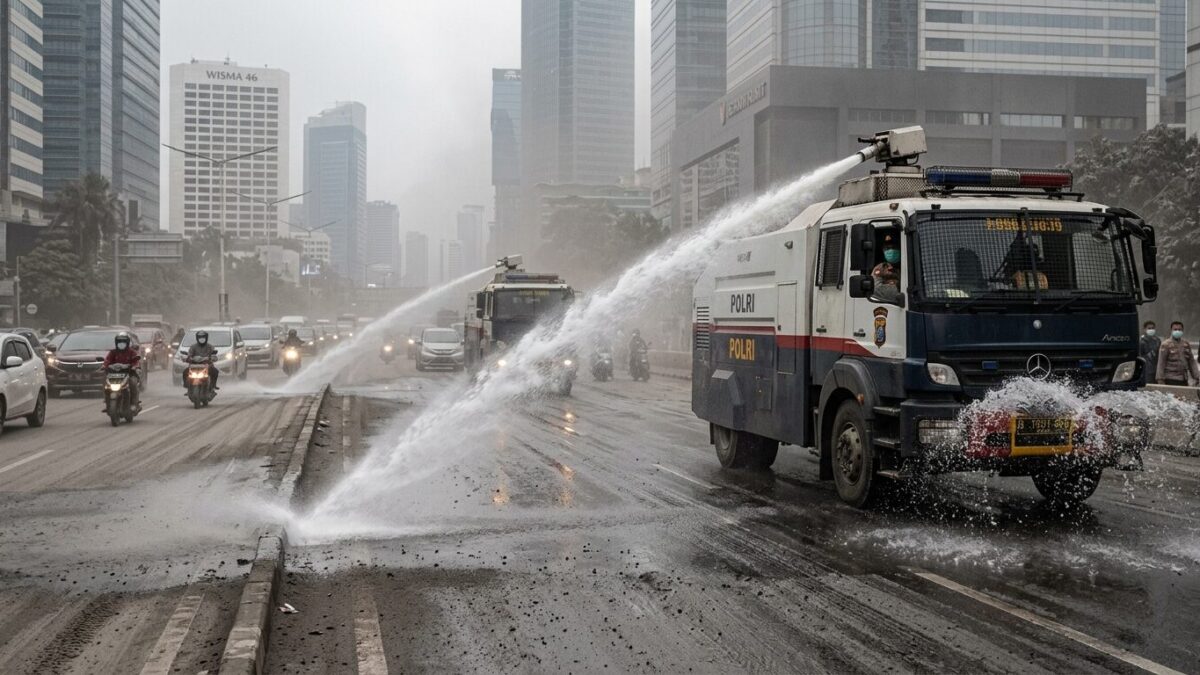
JAKARTA — Indonesian police have deployed hundreds of officers and armored water cannon trucks across Jakarta, South Tangerang, and Bekasi to wash down major thoroughfares. The emergency operation aims to suppress layers of fine volcanic ash drifting from the erupting Mount Anak Krakatau, which has begun to affect daily activities in the greater metropolitan area.
Units from the Mobile Brigade Corps (Brimob) of the Jakarta Metro Police—specifically Battalions A, B, C, and D—utilized high-pressure Armored Water Cannon (AWC) vehicles to clear debris from arterial roads. Beyond the cleansing effort, personnel distributed face masks to commuters and pedestrians while conducting outreach to inform the public about the health risks associated with inhaling volcanic material.
"We are deploying our personnel and equipment to manage the situation on key roadways. In addition to the water spraying, our officers are actively educating the public on the importance of wearing masks, maintaining personal health, and following government directives," said Jakarta Metro Police Mobile Brigade Commander Senior Commissioner Henik Maryanto on Monday, Sept. 7, 2026.
Strategic Deployment Across the Capital
The operation is segmented by specialized battalions to maximize coverage in high-traffic zones. In Central Jakarta, Battalion A has taken charge of major arteries spanning the Horse Statue, Bank Indonesia, Sarinah, and the Hotel Indonesia Roundabout—areas that serve as the city’s primary business hubs. Simultaneously, Battalion B is focused on clearing routes in East Jakarta, specifically the Cipinang-Rawamangun to Pulogadung corridor, which remains densely populated.
The scope of the operation extends to satellite cities, where Battalion C is conducting road treatments along Jalan RE Martadinata and Jalan Pondok Cabe Raya in South Tangerang. In the industrial heartland of Bekasi, Battalion D is clearing debris from Jalan Raya Tegal Danas and the Cikarang Central area. This coordinated regional approach is designed to mitigate the secondary suspension of dust particles that occurs when traffic moves across ash-covered surfaces.
Mitigating Health Risks
The decision to initiate these cleanup efforts stems from concerns over the respiratory impact of volcanic silica ash. Fine particulate matter can pose significant health challenges for vulnerable populations, including children and the elderly, by irritating the respiratory tract and eyes. By wetting the streets, authorities aim to bind the ash to the ground, preventing it from becoming airborne again as vehicles pass through.
For many residents, the immediate threat of ashfall is a rare occurrence that requires swift behavioral shifts. The police force's dual strategy of physical surface cleaning and public health advocacy—distributing masks and providing on-site instructions—reflects an attempt to minimize the immediate disruption to urban life. Operational units remain stationed across these designated sectors to ensure major transit routes remain manageable for both vehicular and pedestrian traffic.