First Asian hornet nest found in Somerset as UK teams race to stop spread
Britain has recorded its first Asian hornet nest in Somerset, after a beekeeper spotted one of the predatory insects near his hives and alerted local
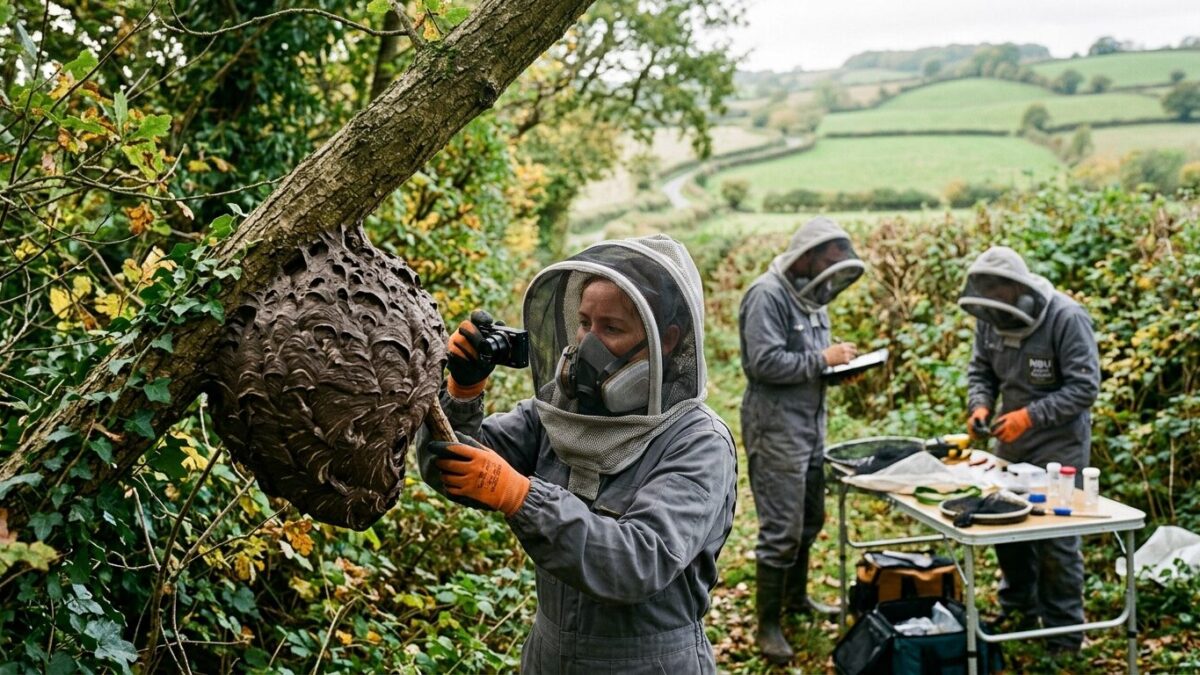
Britain has recorded its first Asian hornet nest in Somerset, after a beekeeper spotted one of the predatory insects near his hives and alerted local action teams. The find has sharpened concern that the invasive species is pushing further across England, with experts warning that every nest destroyed matters.
The nest was found last week in woodland in Somerset and was tracked down after responders tagged the hornet, which led them to a bramble patch in a clearing. The nest was then destroyed. Lynne Ingram, who leads Somerset’s Asian Hornet Action Team, said she hoped it would be the county’s “first and last” nest.
A race before the queens fly
Teams are working against the clock. Ingram said the effort now is to remove nests before queen hornets mate and hibernate next month. If that window closes, the insects can spread again when conditions improve. That makes each report from the public more than a routine sighting; it can decide whether a local outbreak fizzles out or takes hold.
The public has been urged to stay alert and report possible sightings through the Asian Hornet Watch app. The insects are identified by their bright yellow legs, black thorax with a single orange band, and orange face. In Somerset, a single sighting near beehives was enough to trigger a search that ended in woodland.
Why beekeepers are on edge
Asian hornets are native to China, but they are viewed as a serious invasive threat in parts of Europe and the UK because they prey on insects including honey bees, bumble bees and butterflies. The species is said to threaten more than 1,000 native UK species it consumes, and beekeepers are among the first to notice trouble because hornets hover around hives and pressure colonies.
The Somerset discovery came as the wider UK response gathered pace. It was the 53rd nest found in England this year, after 163 nests were located in 2025. On the Isle of Wight, specialists used bait stations and radio trackers after a member of the public photographed a hornet and reported it through the same app, eventually leading them to a nest high in an oak tree on Monday, 7 September. That nest will be destroyed and analysed to see how developed the colony was and whether it had begun producing new queens.
Pressure rising beyond the county
The concern is not confined to England. In Guernsey, pest experts said they had removed the biggest Asian hornet nest found there this season, after staff used a cherry picker to reach it in La Guet, Castel, on 7 September. Agriculture, Countryside and Land Management Services estimated about 2,000 hornets were inside.
Annelotte Baas-Jehan, the island’s invasive non-native species policy and coordination officer, said the larger nest required a higher dose of pesticides, which made the removal take longer. She said the team had trapped more queens this year than before and had seen an increase in nest numbers. “We’ve trapped more queens this year than previously and seen an increase in the amount of nests,” she said.
The Guernsey team believes there were 12 secondary nests found in 2026 and that four more may still be out there, compared with eight secondary nests discovered in 2025. Baas-Jehan said the team would open the nest in a lab to count the cells in the comb and estimate how many hornets lived inside. “We can then start counting to see how many hornets were in the nest,” she said.