Burnham insists defence spending must not squeeze welfare as UK budget fight deepens
Andy Burnham has set up a sharp test for Britain’s next spending battle: fund defence, yes, but not by cutting the social safety net. The
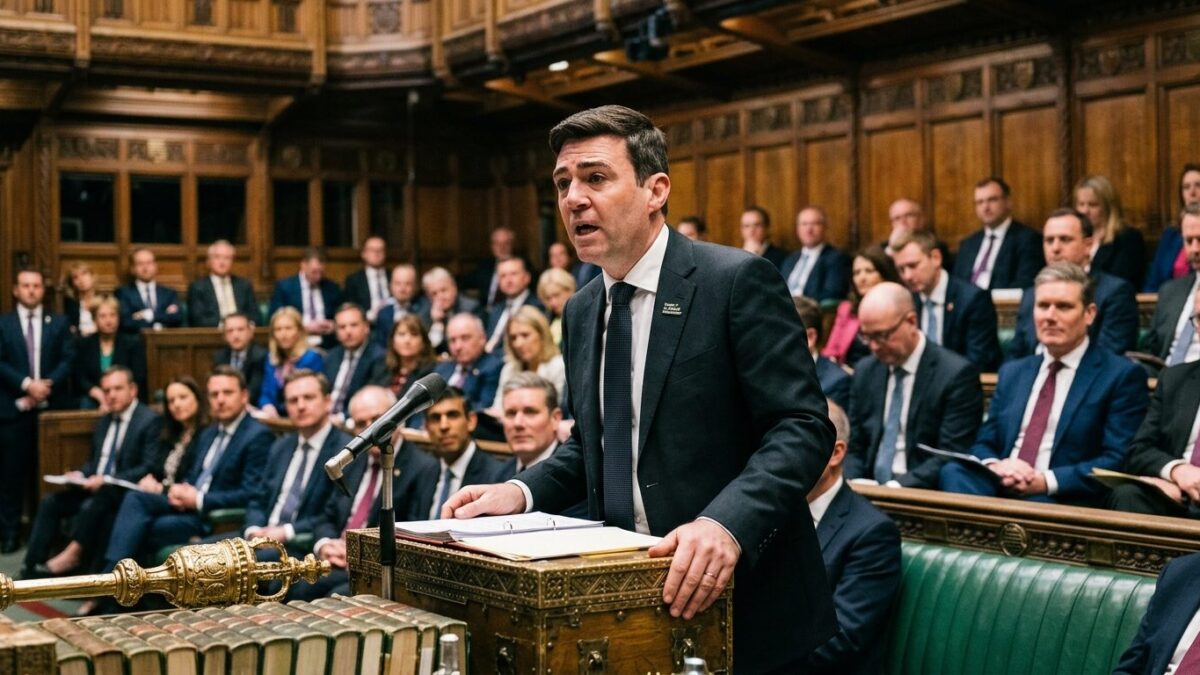
Andy Burnham has set up a sharp test for Britain’s next spending battle: fund defence, yes, but not by cutting the social safety net. The prime minister said national security “can’t come at the expense of social security” as he faced pressure in Prime Minister’s Questions over how he would pay for higher military spending.
The exchange landed in Parliament with real political force. Conservative leader Kemi Badenoch pressed Burnham on whether he would commit to spending 3% of GDP on defence by 2030, and how he would cover the bill. Burnham said the government’s commitment to defence was “absolute” and said a target date for reaching 3% would be set in the spring.
Defence target, welfare fight
Burnham rejected the idea that higher defence spending must be paid for through blunt welfare cuts. Instead, he said he would bring down the welfare bill “the Labour way” — by changing education, supporting young people and providing more mental health support. The message was clear. Security spending, in his view, cannot be built on what he called damage to social security.
That puts him on a collision course with the Conservatives, who accused him of putting the benefits bill ahead of the country’s defence needs. A Conservative spokesperson said the public had heard “loud and clear” that Burnham would not cut welfare to fund the armed forces, and attacked him for prioritising what they called a ballooning benefits bill over national security.
Burnham’s team later stressed that national security is “the most important duty of any government” and said he had been consistent about getting the welfare bill down. But they drew a line between reform and what they described as “crude cuts” that could leave people worse off.
Politics beyond Westminster
The row reflects a wider argument playing out across Europe and the US, where governments are trying to rearm while also facing pressure on public services and welfare budgets. NATO members have already been pushed to lift defence outlays, and in Britain the question is not only how much to spend, but who pays.
Burnham’s remarks also came after the Conservatives set out their own plan to fund defence, including money from changes to housing benefit and a reimposition of the two-child benefit cap. He warned that taking £4 billion from housing support would risk mass homelessness and leave hundreds of thousands of children in temporary accommodation.
For now, the fight is moving toward the spring, when the government says it will set a date for reaching 3% of GDP on defence. The argument over how Britain pays for it is already out in the open.