Houthi strikes hit Saudi energy routes, rattling global oil markets
Flames tore through Saudi Aramco’s refinery in Jazan on the Red Sea after a Houthi missile and drone strike, putting fresh pressure on one of
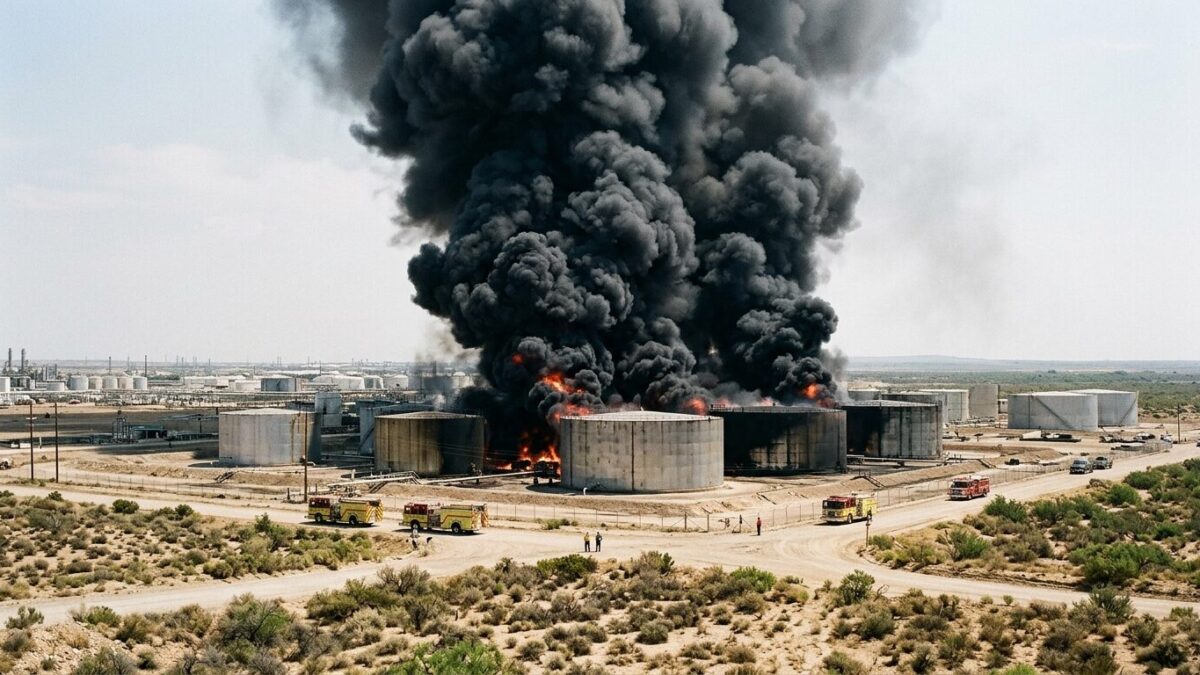
Flames tore through Saudi Aramco’s refinery in Jazan on the Red Sea after a Houthi missile and drone strike, putting fresh pressure on one of the region’s last major energy routes to world markets. Oil prices jumped toward $100 a barrel as traders weighed the risk of more attacks on Saudi infrastructure and wider fighting across the Gulf.
The strike landed hard because Jazan sits on the Red Sea side of Saudi Arabia’s energy network, part of the kingdom’s remaining primary lifeline for exports out of the region. That route matters far beyond the Gulf. A disruption there would ripple through global supply, shipping and prices within hours.
Houthis claim a wider attack
Houthi military spokesman Brig. Gen. Yahya Saree said on Telegram that the group launched a “qualitative, large-scale military operation” targeting Aramco facilities in Abha, Najran, the Economic City, Jazan and Khamis Mushait Air Base with “dozens” of ballistic missiles and drones. He said the strikes were precise and caused major damage. Precise, he insisted. Saudi officials confirmed the attacks and said they would retaliate.
Saree said the strikes were a response to what he called Saudi aggression that hit Houthi-held areas with 121 air strikes over the previous three days. The claim could not be independently verified.
Pipeline fears spread beyond one site
Separate reports pointed to another possible hit on Saudi Arabia’s East-West oil pipeline, the 746-mile line that runs from Abqaiq in the Eastern Province to Yanbu on the Red Sea. The pipeline was built in the 1980s to give Saudi Arabia an export route outside the Strait of Hormuz. In the current crisis, that makes it crucial.
Satellite images from NASA’s FIRMS system showed eight thermal anomalies in the area, including several with high detection confidence. But the data did not confirm the cause, and no independent verification established whether the pipeline itself was struck.
Unverified images posted on social media claimed to show fire and a long black smoke plume rising from the area after multiple hits. The material remains unconfirmed.
Wider regional risk
The attacks come as oil infrastructure across the Gulf has become an ever more tempting target in a widening regional confrontation. Kharg Island, which handles about 90 percent of Iran’s crude oil exports, has stayed untouched despite repeated warnings about its vulnerability. In another recent flashpoint, U.S. strikes hit bridges and one of Iran’s major ports while Iran answered with new attacks across the Middle East.
That background matters for markets. Saudi Arabia’s Red Sea export routes, the Strait of Hormuz, Iran’s Kharg Island and UAE ports all sit inside a fragile chain. Break one link and the price shock travels fast.
For now, Saudi officials are signaling retaliation, while traders watch whether the next blow lands on another refinery, pipeline or port.