Francis Halzen Wins Nobel Prize for IceCube Neutrino Research
Won the Nobel Prize in Physics for his contributions to the IceCube Neutrino Observatory and the discovery of high-energy neutrinos from astrophysical sources…
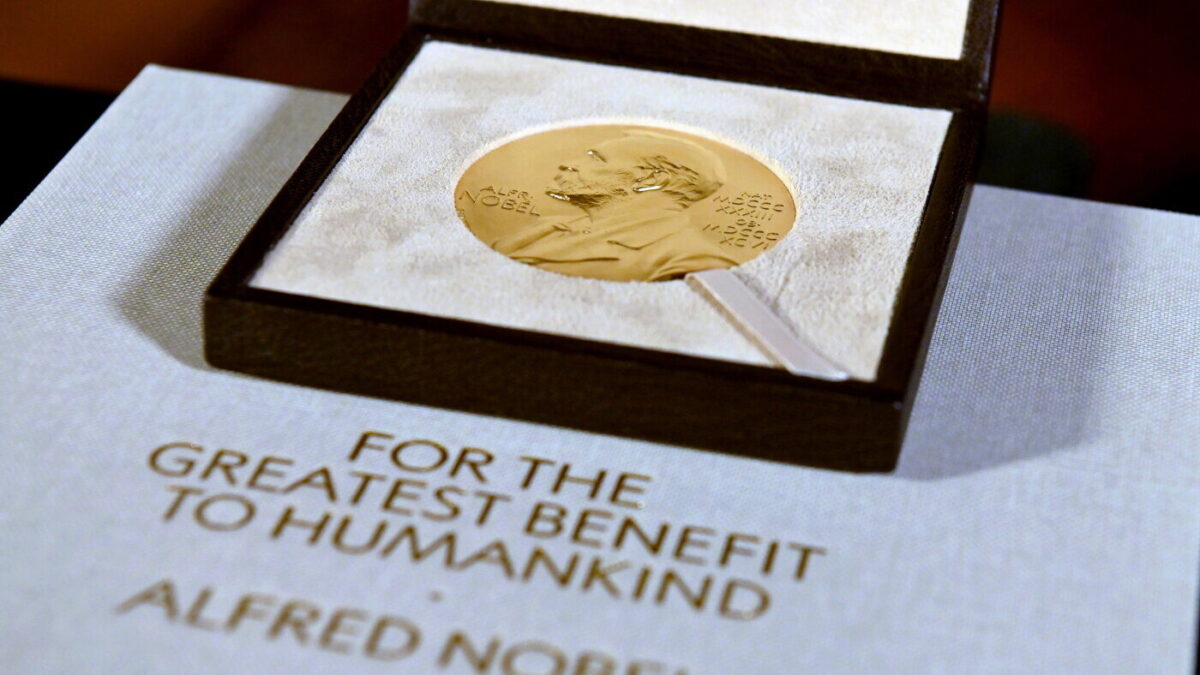
STOCKHOLM — Francis Halzen won the Nobel Prize in Physics on Tuesday for work that helps scientists detect particles arriving from distant cosmic sources. The award recognizes his contributions to the IceCube Neutrino Observatory and his discovery of high-energy neutrinos of astrophysical origin.
The research gives scientists a way to study phenomena in the universe through particles that pass through matter almost unnoticed. Halzen, an 82-year-old Belgian-born scientist affiliated with the University of Wisconsin–Madison, received the news by phone while in Italy.
“It was a great surprise and I obviously didn't expect it,” Halzen told the Nobel committee.
The Royal Swedish Academy of Sciences announced the award in Stockholm. The prize carries 12 million Swedish kronor, according to NPR and Deutsche Welle.
Mark Pearce, chair of the Nobel Committee for Physics, said Halzen had led an international team of researchers and engineers behind the observatory. His scientific vision, Pearce said, had opened a new kind of astronomy.
How IceCube reads the universe
Neutrinos are tiny particles with an exceptionally small mass. They are produced by stars such as the sun, and trillions pass through human bodies every second, according to NPR.
Scientists cannot observe neutrinos directly as they travel. Instead, they detect the flashes of light or charged particles created when a neutrino collides with other matter. IceCube, a research facility at the South Pole in Antarctica, was built to capture and study those rare interactions. The University of Wisconsin–Madison is its lead institution.
Halzen’s effort to capture neutrinos at the South Pole dates back to the 1980s. That long-running idea became an observatory capable of detecting high-energy neutrinos that originate beyond Earth. The particles can carry clues about the objects and processes that produced them.
The impact reaches beyond the observatory itself. By studying these signals, researchers can investigate how the universe evolved and examine questions in physics, including the nature of dark matter and the properties of neutrinos, according to the IceCube collaboration as cited by Deutsche Welle.
It was a risky undertaking. Halzen told Deutsche Welle that the project was “kind of an adventure, where success was not guaranteed.” He also thanked the people who joined the effort and said the discoveries required luck.
The work depends on an international collaboration. Deutsche Welle reported that IceCube brings together about 450 physicists from 58 institutions in 14 countries. Pearce credited Halzen’s leadership in building the instrument and guiding the research.
Halzen said he hoped the award would reflect on the people who believed in the project. His research began decades before the observatory became a tool for studying the universe through neutrinos.
Source: npr.org