Greens Propose A$25.1 Billion Public Grocery Network in Australia
Australia’s Green Institute has proposed acquiring 200 Coles and Woolworths supermarkets and opening hundreds more publicly owned stores. The plan is estimated…
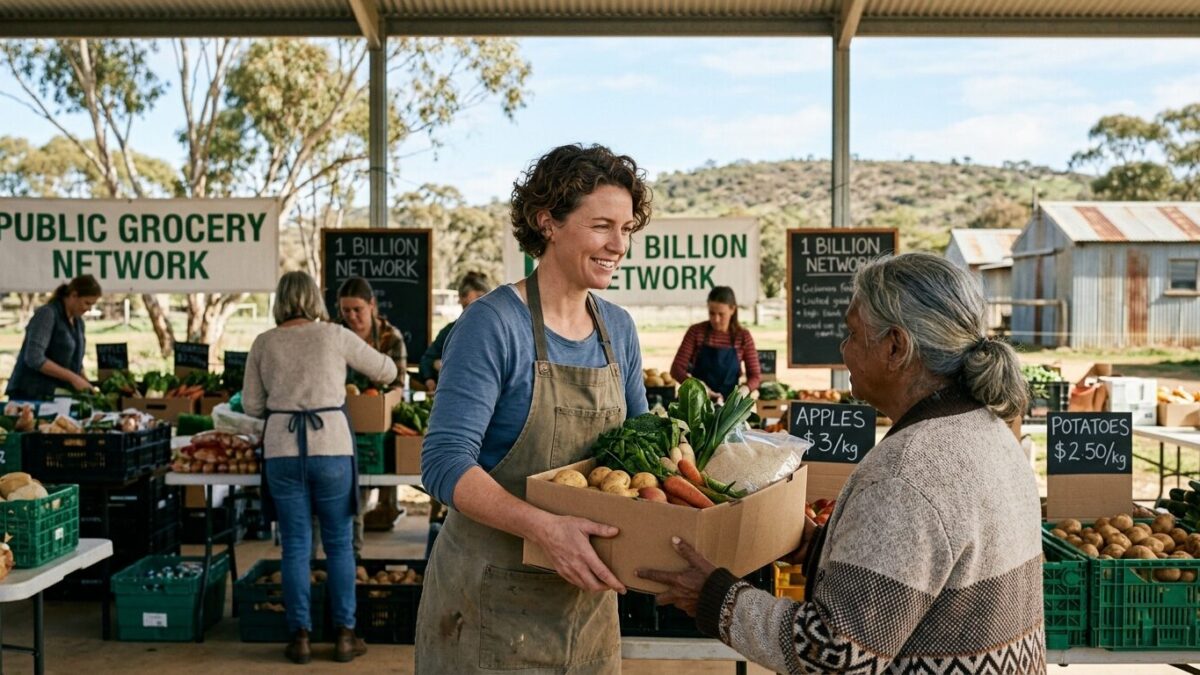
Rising grocery costs have left many Australians worried about affording food. The Green Institute has proposed that the federal government acquire 200 Coles and Woolworths supermarkets and build a publicly owned grocery network, arguing it could cut the cost of essentials by 30%.
The plan, put forward by former Greens MP Max Chandler-Mather, would cost an estimated A$25.1 billion over five years. It would also fund more than 400 new stores and distribution centres, according to Nine.com.au; The Guardian reports a more detailed proposal for 424 new supermarkets and 10 distribution centres.
The proposal would put public operators alongside the major chains, with the stated aim of offering lower prices on essential food. Its scale would make it a substantial intervention in Australia’s grocery market, but the sources do not report a government decision to adopt it.
Public stores proposed as prices climb
The Green Institute, the Australian Greens’ research arm, says the plan would save an Australian family of four $3,134 a year. The Guardian reports Chandler-Mather estimates the stores could reduce the average shop by as much as 22%, or save a four-person household $60 a week. Those estimates use different measures; neither source presents the figures as achieved savings.
The institute proposes taking over major supermarket sites and building new stores. The Guardian says the network would include three acquired distribution centres, alongside 10 new ones. It says the stores would be concentrated in areas of highest need and offer discounts on essentials including fruit and vegetables, bread, milk and meat.
A statutory authority would set prices each month and minimum wholesale rates for suppliers under the proposal described by The Guardian. Its membership would include specialists in supermarket operations, nutrition, food science and farming. Chandler-Mather says the network would become self-funded after the initial investment.
The immediate concern behind the pitch is household budgets. A YouGov survey cited by Nine.com.au found 94% of respondents were concerned about grocery costs, while 79% said supermarket bills were harder to afford than a year earlier. More than one-third of surveyed Australians had skipped meals, the report said.
That concern has a direct practical consequence: food costs are shaping what some households can afford to eat. The Green Institute says lower prices at publicly owned stores would ease that pressure, but the proposal would require major public spending upfront and compulsory acquisition of private supermarket sites.
Support for the idea, dispute over prices
The Green Institute commissioned YouGov to test support for publicly owned supermarkets. The Guardian reported 84% backed the idea, while Nine.com.au cited the same share as saying they would support public supermarkets. The Guardian said support was strongest among Greens voters, at 96%, and voters aged 25 to 34, at 88%.
“A publicly owned supermarket with cheaper food is wildly popular, because it makes people’s lives better,” newly elected Greens leader David Shoebridge told The Guardian. He said the party should be discussing policies that improve people’s material conditions.
Chandler-Mather blamed Coles and Woolworths for high costs. “Australians are sick of being ripped off by profit-hungry Coles and Woolworths, while politicians in Canberra sit on their hands,” he said, according to Nine.com.au.
The companies dispute accusations of price gouging. Nine.com.au reported that the supermarket groups point to eight separate inquiries that found no evidence of the practice, while Coles says it makes less than three cents in profit for every dollar in sales.
Recent analysis from consumer group Choice, cited by Nine.com.au, found grocery prices rose across Australia’s four major supermarket chains by 7% between May and June this year. The proposed public network would cost A$25.1 billion over five years, according to the estimate reported by both outlets.
Source: nine.com.au