Indonesia Wildfires Send Smog Across Southeast Asia
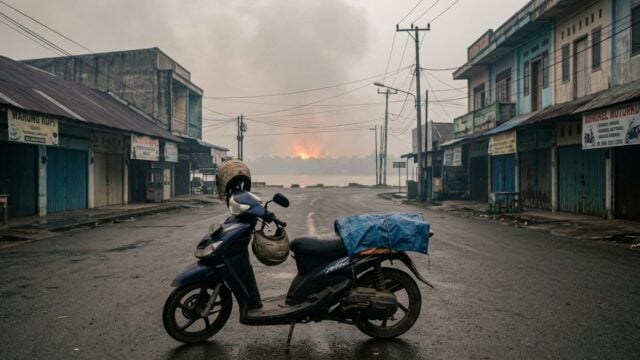
Wildfires in Indonesia have sent hazardous smog across Southeast Asia, obscuring Singapore’s skyline and prompting school closures in Malaysia. The fires have…
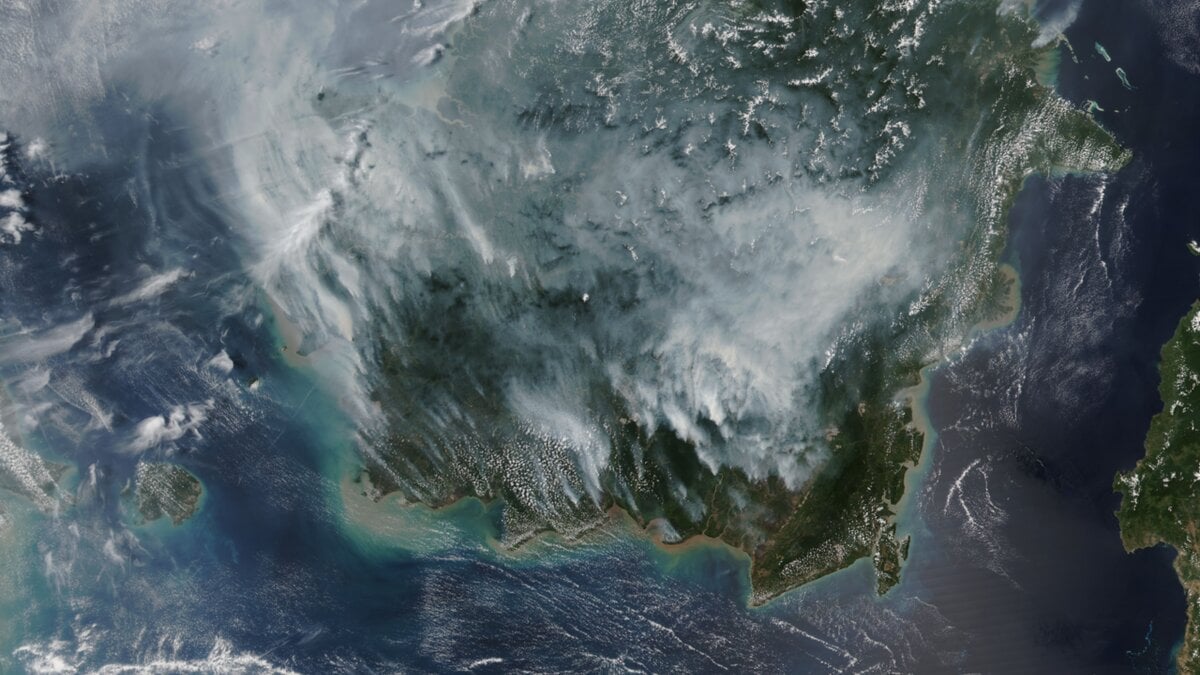
Smoke from Indonesia’s wildfires has crossed borders, turning hazardous air into a regional public health concern. The smog has obscured Singapore’s skyline and forced some schools to close in Malaysia as Indonesia faces its worst wildfire season in a decade.
Air quality on the islands of Kalimantan and Sumatra has reached hazardous levels, according to the BBC. The fires have burned across Indonesia’s forests and peatlands, while smoke has also drifted into neighboring countries.
The impact is visible beyond Indonesia. Singapore’s skyline has been obscured, and schools in parts of Malaysia have closed as the haze worsened. For residents, the fires are not only a land-management problem: smoke crossing national borders has made the consequences regional.
Independent forest monitoring platform Nusantara Atlas recorded 1,043,377 wildfire hotspots in Indonesia, burning a total of 900,000 hectares of land. The BBC reported that this year’s annual dry-season fires have been especially intense because of an unusually strong El Niño, a natural climate phenomenon that changes weather patterns around the world.
Indonesia steps up action over smog
Many fires are linked to clearing vegetation for agriculture, a practice known as slash and burn. Farmers have traditionally used the method to prepare nutrient-rich soil for new crops, but commercial farming fires can cover larger areas and prove harder to control, the BBC reported.
Indonesia bans slash-and-burn farming, but enforcement has long been difficult. Activists and government investigations have repeatedly accused some companies of using fire as a cheap way to clear land.
President Prabowo Subianto has called for tougher sanctions against the practice, describing it as “ecological terrorism.” Indonesian authorities announced last month that they had suspended the operating licences of 26 companies linked to wildfires and opened investigations into others. Officials said cases involving criminal elements would be taken to court.
Companies based outside Indonesia have also faced scrutiny. A Greenpeace report published this month identified businesses based in Singapore and Malaysia linked to land in Indonesia where fires were burning.
Singapore-based palm oil company First Resources was among those named. Greenpeace recorded more than 30 haze source points between August and September on land managed by two of the company’s Indonesian subsidiaries, according to the BBC.
First Resources told the BBC it maintained a “strict zero burning policy across all planting activities and implement robust fire prevention, monitoring and firefighting measures throughout our operations”.
Greenpeace also named Malaysian plantation group Kuala Lumpur Kepong. Its subsidiary PT Menteng Jaya Sawit Perdana managed land in Indonesia where 19 haze source points were recorded.
Kuala Lumpur Kepong said a “majority” of the fires began outside its concession area and had all been extinguished. “We do not condone or permit the use of open burning for land preparation or any other purpose across our operations,” the company said.
Singapore has a law that allows authorities to act against local and foreign companies found to be contributing to haze. The BBC reported that Singapore passed the Transboundary Haze Pollution Act in 2014 and issued summonses to several Indonesian companies the following year, after a severe haze episode. Jakarta objected, saying the move harmed bilateral ties.
The smoke’s spread has renewed attention on both the difficulty of controlling fires and the challenge of holding companies accountable across borders. Nusantara Atlas recorded 1,043,377 wildfire hotspots in Indonesia.
Source: bbc.com