Space We’ve Gone Exploration: Voyager scientist warns of shift
Voyager imaging team member Garry Hunt says space activity has shifted from exploration toward exploitation as the spacecraft approaches a light-day from…
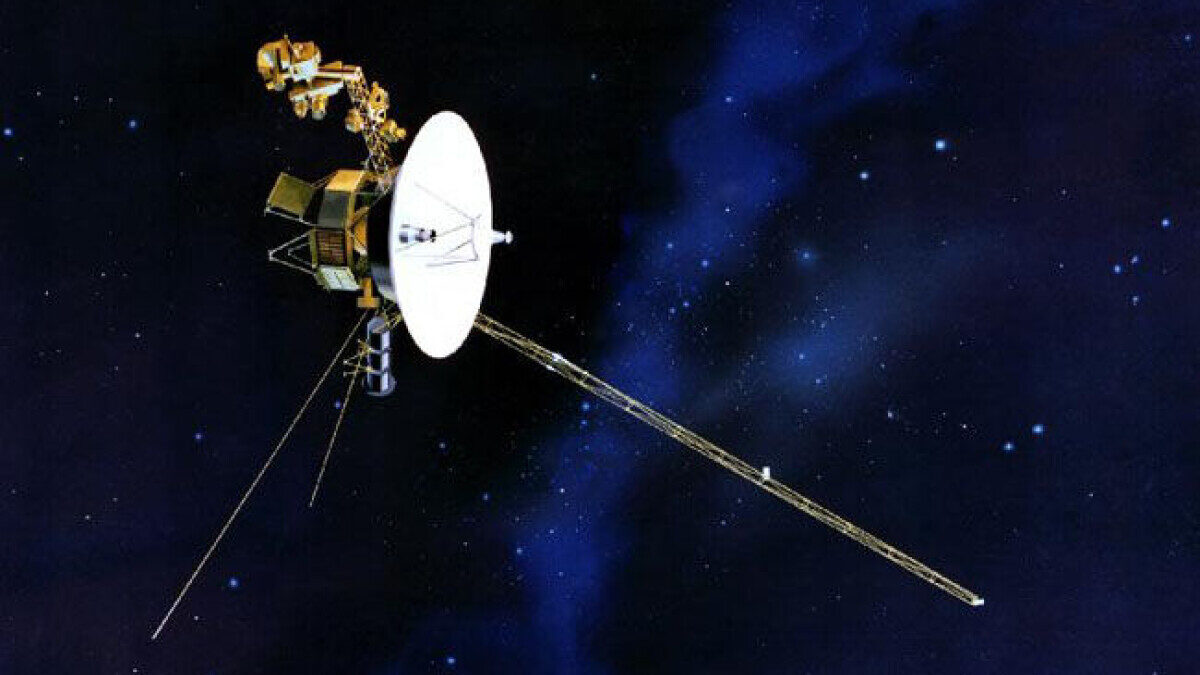
For a mission built to investigate worlds beyond the familiar planets, Voyager’s continuing journey raises questions about what space exploration is for. Dr. Garry Hunt, a member of the original Voyager imaging team, said the field has shifted toward exploitation as Voyager 1 approaches a distance of one light-day from Earth.
Hunt discussed his work and the probes’ future on The Register’s Kettle podcast, published on October 19. The spacecraft were sent to explore the outer planets, an undertaking that scientists at the time saw as a way to study the solar system’s origins and the origins of life.
The distinction matters beyond the mission itself: Hunt’s account links the scientific case for exploring distant worlds to wider questions about the direction of space activity. The Register introduced him as the UK’s sole representative on the eight-member imaging team.
Why NASA sent Voyager to the outer planets
Hunt recalled that Jupiter, Saturn, Uranus and Neptune would align in a way that made a journey between them more economical. He said the arrangement offered a quicker route requiring less fuel, creating an opportunity to send two spacecraft to the major planets.
NASA funded the mission in the mid-1970s, with the launch planned for 1977, according to Hunt’s account in the podcast transcript. At the time, scientists had not visited the outer planets and regarded them as an unknown world.
“We thought that the major planets were keys to understanding the origin of the solar system, indeed the origin of life,” Hunt said. He described sending missions there as a priority.
The project also called for a team spanning scientific disciplines. Hunt said NASA invited proposals for instruments and selected ten. Imaging had been suggested as an instrument, but the agency wanted scientists able to conduct detailed work across physics and chemistry, rather than a team limited to astronomy.
NASA selected eight people from the applicants, Hunt said. He recalled that nearly a thousand people had been proposed, and that he was chosen as the team’s UK representative.
Images and observations that outlasted the encounter
The imaging team helped produce some of Voyager’s best-known pictures, including the Pale Blue Dot and portraits of the outer planets, The Register reported. Those images and observations gave the mission a lasting public presence alongside its scientific work.
Voyager’s probes launched nearly half a century ago and are still operating, according to The Register. The podcast discussion also turned to the mission’s future and the state of science in the UK, the US and beyond.
Hunt’s account places the original mission in a period when scientists saw distant planets as a route to fundamental questions, not simply as destinations. The probes’ continued operation gives that original purpose an unusually long reach. Voyager 1 is approaching one light-day from Earth.
Source: theregister.com