Rioters France Rip Streets as Anger Spreads Across Europe
Violent protests in France have drawn attention to anger over living costs, public services and a sense of powerlessness among young people. Reporting from The…
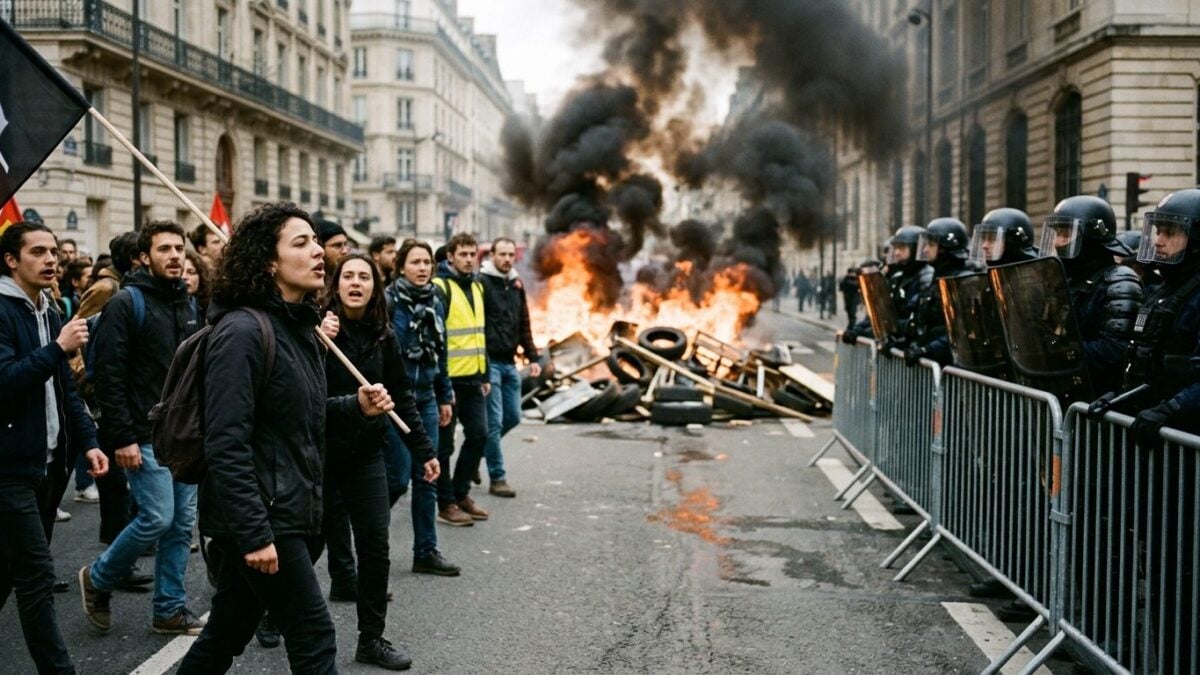
The streets became a flashpoint for anger over daily costs and public services. Rioters France rip streets as protests that began around student grievances broadened into a larger expression of discontent, with violence breaking out alongside largely peaceful marches.
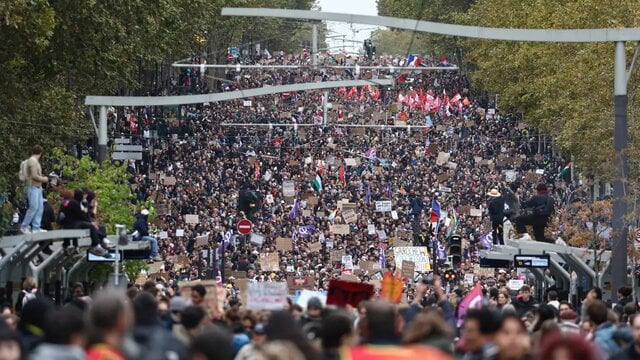
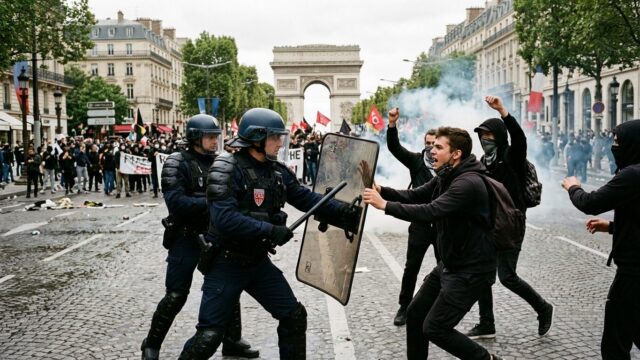
More than 500,000 people marched in France at the weekend, CNBC reported, citing demonstrations over living costs and pressure on public services. Most protesters were peaceful, but some looted and vandalized shops, set fire to city halls and attacked police officers.
The unrest has consequences beyond damaged buildings. It has put pressure on governments to address household costs and strained public services while responding to violence, and it has sharpened debate over why people feel their prospects are worsening.
Rioters France rip streets amid wider grievances
The Age’s account argues that anger in France cannot be explained by immigration alone. It describes protesters from middle-class families alongside young people from immigrant backgrounds who feel excluded, united by frustration but not necessarily by a single cause.
The article cites Spanish sociologist María Silvestre, who said young Europeans are experiencing “a strong sense of uncertainty and a lack of control”. The Age writer also said their own research found many Australian young people feel helpless, and that a lack of personal agency is associated with low life-satisfaction.
That argument complicates a familiar interpretation of the unrest. The Age says the violence has fed a narrative of failed integration, but argues that this does not fully explain why people joined the protests or why their anger has spread.
The causes vary by country and group. CNBC reported that demonstrations across Europe reflected complaints about expensive housing, fuel and energy costs, and conditions in schools and universities. Protests also took place in Italy, Spain, Portugal and Albania, with immediate triggers differing between countries.
Short answer: no single trigger.
Andrew Kenningham, chief Europe economist at Capital Economics, told CNBC there was no one “single trigger” for the riots. He said higher energy costs could play a role, while noting that the increase was smaller than in 2022, when comparable violent protests did not occur.
Cost of living and public services drive protests
In France, the demonstrations began last month when high school students criticized poor schooling conditions, including inadequate facilities and teacher shortages, CNBC reported. The protests later widened into complaints about living standards and declining public services.
A separate Guardian account from Paris described a protest that included students, workers and people demonstrating as individual citizens. One student said he had come to support high school students and demand more money for public schools, from primary schools to universities.
The Guardian also reported that rising petrol prices had prompted people to join the demonstrations. The price had reached a record €2.4 per litre at the end of the previous month, the article said, linking that concern to the movement that began in 2018.
Many marchers remained peaceful. The Guardian account estimated that between 550,000 and 800,000 people took to the streets across France in protests of this kind. In Paris, the reporter later described clashes, including stun grenades, bottles thrown at police and a shop window smashed during looting.
The contrast matters for residents and businesses. Peaceful demonstrations give people a visible way to press demands, while violence can disrupt streets, damage property and draw police action into the same crowds. The reporting also shows why a single explanation risks missing the different pressures people brought to the protests.
Economic strain is part of the wider picture, according to CNBC. The outlet quoted Kenningham as saying that slow economic growth and government debt leave politicians with less room to increase public spending or cut taxes, making it harder to offer people the prospect of a better life.
The French unrest has also become a political challenge. CNBC reported that opposition parties are seeking to capitalize on public discontent with President Emmanuel Macron ahead of France’s 2027 presidential election. Prime Minister Sébastien Lecornu has proposed a 2027 budget aimed at narrowing the country’s deficit, projected at 5.4% of gross domestic product this year.
The demonstrations have spread across borders, but their causes are not identical. Housing costs featured prominently in Portugal, while protesters in Albania cited university conditions and tuition fees, according to CNBC. The Age also pointed to calls for protests in Germany and similar unrest in Italy, Spain and Portugal.
Across those accounts, the shared thread is not a single demand. It is anger over conditions people say are holding them back, expressed in marches that have, in parts of France, turned into violence.
Kenningham told CNBC that politicians were “not able to offer hope of a better life for many Europeans”.
Source: theage.com.au