How Spiders Spin Silk Dope Into a Tougher-Than-Kevlar Fiber
A team led by chemist Gregory Holland at San Diego State University has described how molecules in liquid spider dope reorganize into semiliquid droplets…
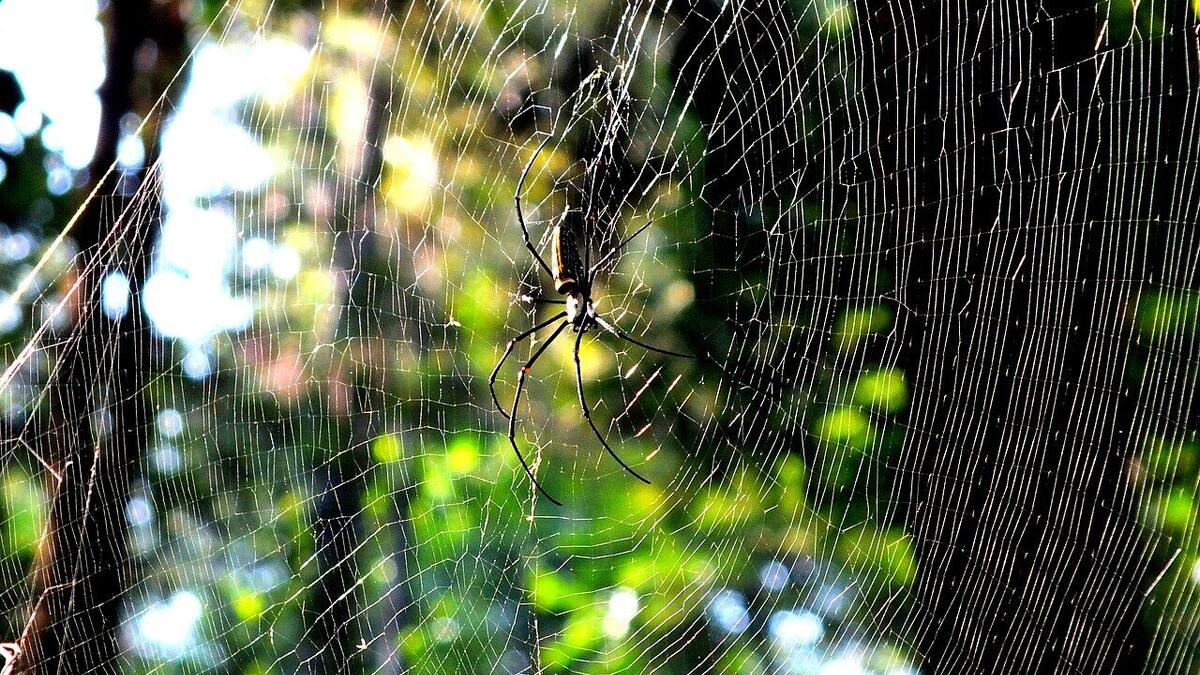
Researchers led by chemist Gregory Holland at San Diego State University have described how spiders spin silk dope, a liquid blend of proteins, water and salt, into one of nature's toughest materials. The team found that molecules in the liquid reorganize into semiliquid droplets called condensates before turning into solid fiber, according to a report by Quanta Magazine.
The result is an atomic-level look into what the report calls the spider's silk factory. Mapping the molecular mechanisms behind the process is "really the holy grail" for the field, said Holland, who is also a spectroscopist.
Why the fiber matters
Spider silk is tougher than Kevlar, the synthetic fiber used in bike tires and bulletproof vests, and stronger than steel. It is also flexible and biocompatible with human bodies.
Scientists want to turn it into high-performing materials for seat belts, helmets and naval materials. Some also imagine scaffolds to help repair brain cells. Attempts to make spider silk in the lab have fallen short, though, because researchers do not know enough about how a spider converts its silk dope into a solid.
The speed of the natural process is striking. A spider knocked off a wall spins a soup of proteins into climbing gear within milliseconds, then hauls itself back up on a thin strand.
A factory with many products
Spiders can spin up to seven types of silk, and a single spider can often make several of them. Aciniform silk wraps up insects for later snacking. Rubbery flagelliform silk reinforces the capture spiral to absorb shock. Dragline silk anchors webs and spiders to walls.
Properties differ by type, and even silks of the same type vary slightly between species. The differences relate to how the molecules are assembled.
A century of clues
In 1907, scientists discovered that spider silk is made of long, modular proteins, later named spidroins. They belong to the same group of fiber proteins as collagen and keratin. More than half a century later, X-rays began to reveal the fiber's structure: flat protein sheets, known as beta sheets, embedded in a less ordered, non-crystalline matrix.
In the early 2000s, researchers inspecting spidroins in solution did not see the fixed structures typical of most proteins. The spidroins had intrinsically disordered regions that fluttered around, forming and re-forming various shapes. That raised a puzzle: how does such an unstructured soup organize into strong, solid fibers?
One early theory held that proteins in the dope align with one another, as in a crystal, while staying dynamic, in a transitional state known as liquid crystal. Another compared spider silk to silkworm silk, whose proteins form small spheres called micelles that then compress into fiber.
Droplets enter the picture
In 2007, researchers noted that spidroins engineered in the lab formed liquidlike globs. Such structures soon became inescapable in modern biology. In 2009, scientists at the Marine Biological Laboratory in Massachusetts and the Max Planck Institute in Germany discovered droplets of aggregated RNA molecules in fertilized worm eggs. These were condensates, liquid- or gel-like bubbles of concentrated proteins suspended in solution.
The new findings also serve as a practical guide to how condensates form. Nature has used them repeatedly to organize molecules for genetic processes and to build impressively strong biological materials.
"It's becoming clear that [condensates are] a common strategy that's being used across a range of different organisms," said Matthew Harrington, a biological materials scientist at McGill University who was not involved in the study. By unpacking how nature uses condensates, scientists hope to re-create some of its most rugged materials.
Source: quantamagazine.org