Swift Space Telescope Nears Re-entry After Failed Rescue Attempt
The Swift Observatory could return to Earth around Friday, with a small chance that pieces of the aging NASA telescope will survive the fiery descent.
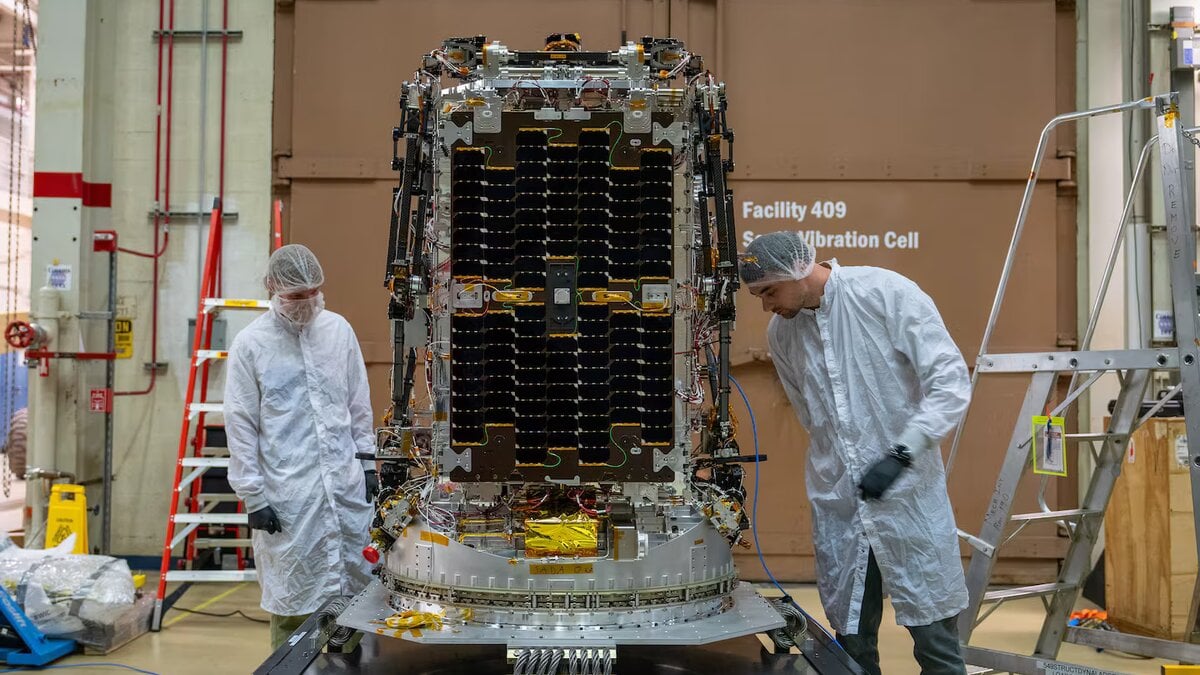
The Swift Observatory could return to Earth around Friday, with a small chance that pieces of the aging NASA telescope will survive the fiery descent. The U.S. Space Force is tracking its falling orbit, while broad areas across several continents remain within the potential re-entry zone.
The failed rescue effort left Swift descending, and the spacecraft is now nearing the end of its 22 years in orbit. Most of the 1.5-ton observatory is expected to burn up in the atmosphere. NASA mission chief scientist Brad Cenko said some dense tungsten components and parts of its mirrors could make it through.
Debris footprint remains uncertain
Any surviving fragments are most likely to land in the ocean. But the possible re-entry zone also covers parts of Africa, Australia, India, Southeast Asia, and Central and South America. The Space Force is monitoring the telescope’s path as it drops, though the material does not establish a precise landing location.
That means the risk to people on the ground depends on whether fragments survive and where they come down. The reported assessment points to a possible debris hazard, not a confirmed impact area. Most of the observatory is expected to disintegrate before reaching the surface.
The rescue attempt’s failure has left Swift with no recovery described in the current account. NASA and the Space Force are tracking the descent, but no further rescue or debris-mitigation plan is identified.
A mission built to catch cosmic explosions
Swift launched on Nov. 20, 2004, to study gamma-ray bursts and supernovas, among the universe’s most powerful explosions. Its approaching re-entry has left the team grieving the loss of an observatory that delivered observations for more than two decades, while also recognizing the mission’s scientific contribution.
NASA is also looking at ways to extend the lives of other observatories. The agency issued a request for information on Oct. 29 seeking commercial ideas for servicing Hubble, raising its orbit or arranging a controlled re-entry or disposal when its mission ends. That effort concerns Hubble, not Swift, whose expected return is now being tracked by the Space Force.
Swift has spent 22 years in orbit.