New Respect Orders Offer Hope for Towns Facing Anti-Social Behaviour
Respect Orders let police and councils in England bar adults behind persistent anti-social behaviour from town centres. Breaching one is a crime.
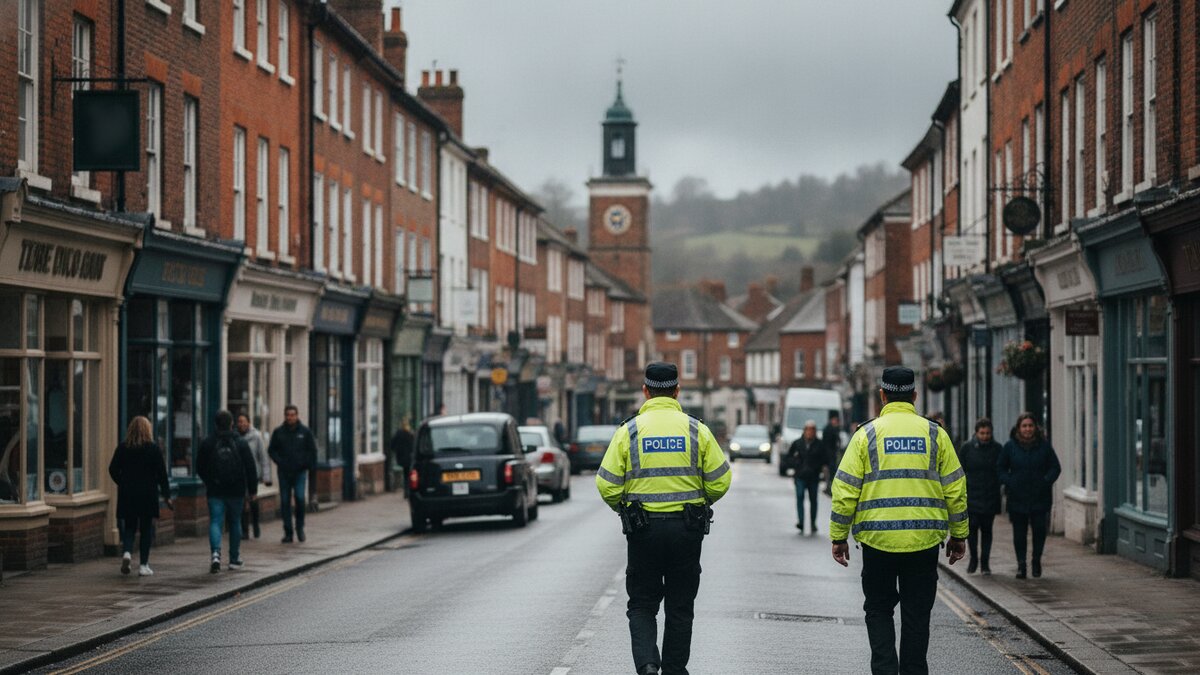
New Respect Orders have given police and councils in England powers to act against adults persistently causing anti-social behaviour, after concerns from businesses and residents in Newcastle-under-Lyme. The measures allow authorities to restrict offenders from town centres and other hotspots, while courts can require steps such as drug or alcohol treatment or anger management.
They are intended to change what happens when the same people repeatedly cause problems in public places. A breach is a criminal offence, policing minister Sarah Jones said, and offenders could face prison.
What the new powers mean for a town centre
The orders came into force on Monday, October 26. Police and councils can use them against persistent offenders, and courts can attach requirements aimed at addressing causes of their behaviour. The measures therefore combine limits on where a person can go with possible interventions, rather than relying only on removing someone from a particular place.
Sarah Jones visited Newcastle-under-Lyme to promote the powers. She described the intended scope as adults who are repeatedly causing anti-social behaviour in town centres. The BBC reported that Jones said breaching an order would be a criminal offence and could lead to prison.
Chief Insp Cliff Goodwin, who oversees policing in Newcastle and the Staffordshire Moorlands, said the orders would give officers an enforcement option they did not necessarily have under injunctions. “That's going to allow officers to arrest people who are in breach of these orders,” he said.
That is the practical change for people reporting repeated incidents: police can arrest someone who breaches the conditions, and the case can be brought before the courts. Goodwin said he hoped the approach would give communities a greater sense of control. He also said Newcastle’s anti-social behaviour problems were no different from those in other places across the country.
Signs residents and businesses are noticing
For Sharron Foley, who runs a cafe in Newcastle-under-Lyme, the problem shows up in ordinary decisions about whether customers feel comfortable visiting. She said drinkers carrying cans, suspected drug use and abuse in the street had become familiar sights. Older customers, she said, were particularly worried about coming into town.
“It's not a good place at the minute,” Foley said. “I don't feel the town is safe any more.”
She said she has not experienced problems inside her business, but described anti-social behaviour in the town centre as a daily occurrence. She has also kept the glass screen installed in the cafe during the Covid pandemic, saying it offers protection.
“People ask me, 'why have you got it still up when there's no Covid about', but for me, it's protection,” she said.
The effect she describes is concrete: concern about behaviour outside can discourage people from visiting a business, even when incidents have not happened inside it. Foley said some customers were reluctant to come in, and that she did not feel able to confront people in the street because of the possible repercussions.
Her account is one resident’s experience, not a measure of how often incidents occur across the town. The BBC report also records Goodwin’s view that Newcastle’s problems are not unlike those elsewhere in the country.
Existing orders and the role of reporting
Respect Orders are being introduced alongside existing Public Space Protection Orders (PSPOs). Those orders already cover Newcastle-under-Lyme town centre, local parks and public spaces, as well as car cruising. Newcastle-under-Lyme Borough Council is consulting on a PSPO for Kidsgrove town centre.
The council’s leader, Jonathan Gullis, urged residents to report incidents. “We urge residents to take the trouble to report every single incident of anti-social behaviour they witness,” he said, adding that reports can help the council take action against individuals, specific places or premises.
That request gives residents a direct part in how authorities identify recurring problems. Reports can help target action, while the new Respect Orders add powers for cases involving persistent offenders. The source does not specify how many orders police or councils expect to issue.
Staffordshire Neighbourhood Watch Association welcomed the measures. Its vice-chair, David Spencer, said the organisation supported stronger powers for police and partner agencies to tackle persistent offenders and address the causes of anti-social behaviour.
“In terms of connecting people, and people openly feeling more confident to report things, then hopefully this is all part of what we can do to tackle anti-social behaviour,” Spencer said.