Your walking speed hold clues to health and longevity
A study followed 4,067 adults in the U.K., whose average age was about 69, and found that faster walking was associated with a lower risk of death over nearly…
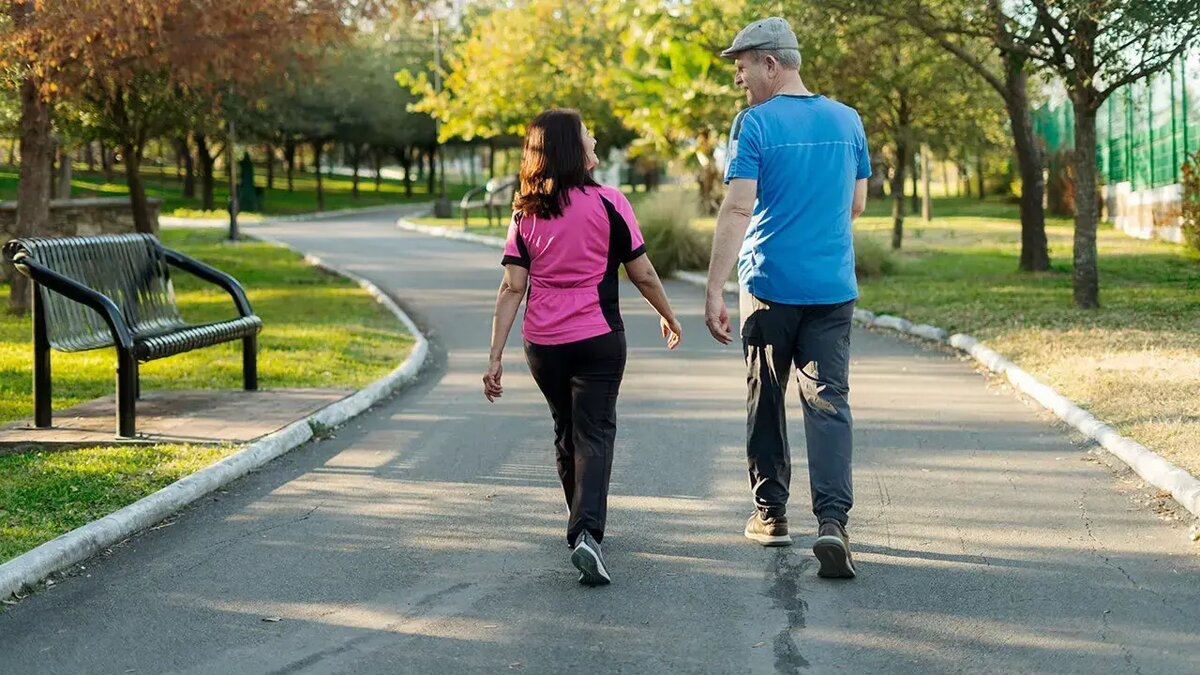
Researchers found that your walking speed hold a clue to health and longevity among 4,067 adults in the U.K., who were about 69 years old on average. Faster pace was associated with a lower risk of death over nearly 12 years, though the study does not show that walking faster itself adds years to life.
The findings point to walking pace as a possible marker of how the body is functioning. A total of 739 participants died during the follow-up period.
What did the walking study find?
Published in JAMA Network Open, the study tracked participants’ usual walking speed in two settings. They completed a short test at their normal pace and wore a wrist activity tracker for nine days to record their speed in everyday life.
Faster walking in both settings was linked to a lower risk of death, even after researchers accounted for other health and lifestyle factors. The study observed an association; it did not establish that increasing walking speed directly reduces mortality.
The participants were generally healthier than the larger group, the researchers noted. They also said wrist activity trackers do not have a single standard method for measuring everyday walking pace. More research is needed to determine whether the findings apply to other groups.
Why walking pace can matter
Beth Templin, a board-certified geriatric clinical specialist and CEO of HouseFit Physical Therapy & Fitness in St. Louis, said walking speed offers a broad snapshot of physical function. She was not involved in the study.
“In physical therapy, we call walking speed the 'sixth vital sign' because it's a snapshot of how well many body systems are working together,” Templin said.
Walking briskly requires strong legs, a healthy heart and lungs, balance, and coordination between the brain and nervous system, she said. A slowing pace may signal that one of those systems is declining, sometimes before a change appears on a lab test.
That makes pace a potentially useful observation, not a diagnosis. The study does not establish a walking speed that guarantees longer life, and its findings should not be read as proof that simply pushing harder will change an individual’s lifespan.
Can exercise help improve walking speed?
Templin said adding steps alone may not be enough for older adults seeking to improve pace and fitness. “Build the engine, not just the habit,” she advised, adding that speed depends on strength and balance.
She suggested leg-strengthening movements such as standing up from a chair without using the hands and doing heel raises while holding a counter. She also recommended short intervals of brisk walking: after warming up, walk faster for one minute, slow down for two minutes, then repeat and gradually increase the faster periods.
Templin emphasized the limits of the evidence. “This study shows an association, not proof that walking faster by itself adds years,” she said.
In the study, 739 of the 4,067 participants died during nearly 12 years of follow-up.