Sorong inflation control tightened as food prices rise
Sorong inflation control is being tightened with daily price checks, market inspections, and supply monitoring as staple food costs edge up.
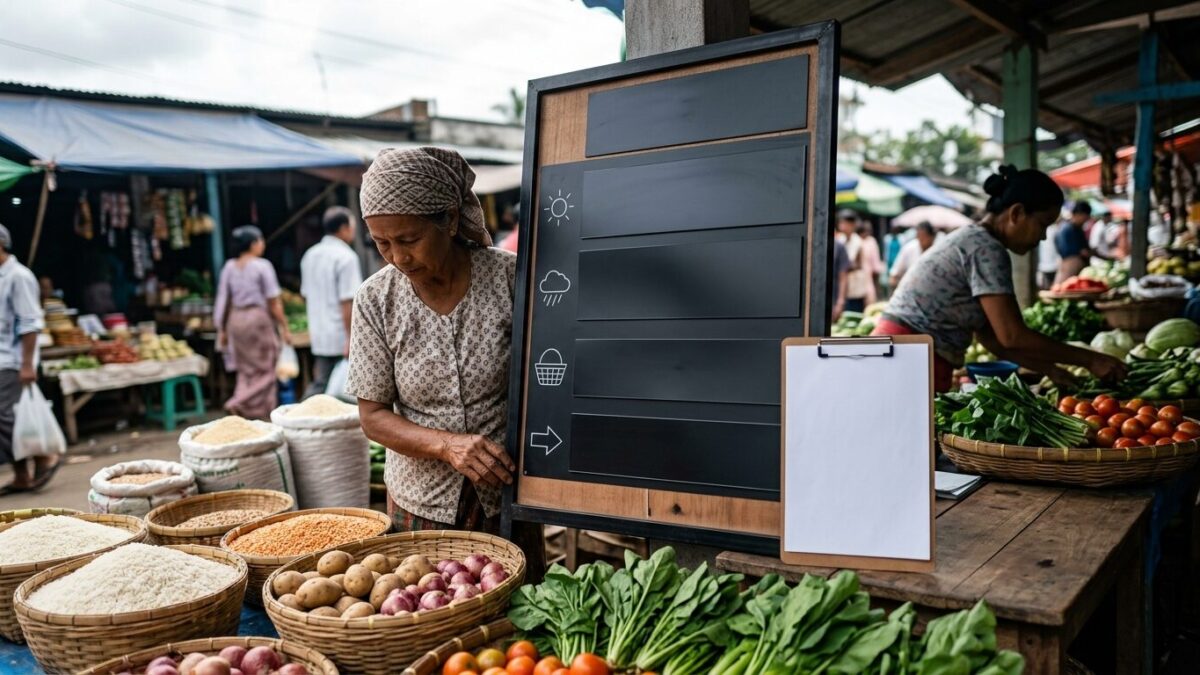
AIMAS — Sorong inflation control tightened after the local government saw price pressure still coming from several staple goods. The Sorong Regency government, in Southwest Papua, stepped up monitoring of prices and stocks on Saturday to keep supply safe and prevent sharp jumps.
Stocks are still enough, but prices are creeping up
Head of the Sorong Regency Industry, Trade, Cooperatives, and UMKM Office Marten Pajala said staple food stocks in the area were still sufficient. Even so, a number of commodity prices have gone up, though not sharply.
“Stocks are sufficient and continue to be available. There is indeed a tendency for prices to rise, but the increase is not too large and is still within reasonable limits,” Marten said in Aimas, Southwest Papua, on Saturday.
That line matters. Supply that looks safe on paper does not always keep prices steady. Once distribution is disturbed, or transport costs climb, market prices move fast.
The local government sees two main triggers behind the current increase: adjustments in non-subsidized fuel prices and fluctuations in the rupiah against the US dollar. Both factors affect distribution costs and the price of goods that reach consumers.
Price checks are now daily
To ease that pressure, the Sorong Regency Industry, Trade, Cooperatives, and UMKM Office carries out daily monitoring of prices and stock availability. The results are reported regularly to the central government as part of the inflation control system.
This daily work keeps the local government supplied with the latest data. Not guesses. Field data helps officials see which commodity is moving, how fast the increase is happening, and which market needs faster intervention.
The Sorong regional inflation control team also goes directly into the field through surprise inspections at distributors, markets, and shops. The checks aim to make sure no one is selling above the prices set by the government.
“We continue to monitor so prices stay under control and the public is not harmed by sales practices that exceed the rules,” Marten said.
Cross-agency coordination is the backbone
Inflation control in Sorong does not rest on the trade office alone. The local government also relies on coordination across regional work units so supply from upstream to downstream stays intact.
The Agriculture Office is pushing higher production of commodities whose prices often swing through support for farmer groups. The approach is meant to increase local supply and slowly reduce dependence on supplies from outside the region.
In livestock, the relevant office is maintaining supplies of beef, chicken, and eggs. The fisheries office, meanwhile, is making sure fish remains available. These three commodities often matter most because households feel the impact quickly in daily cooking.
The local government also holds periodic market operations and cheap market events. The step gives residents access to more affordable staple goods, especially when market prices start to squeeze household spending.
BPS data shows pressure is still there
Data from Statistics Indonesia offers a clear picture. In May 2026, Sorong recorded annual inflation, or year on year, of 2.16 percent with a consumer price index of 107.22.
The main pressure came from the food, beverage, and tobacco group, which rose 2.66 percent. The housing, water, electricity, and household fuel group increased 4.30 percent, while transport rose 2.12 percent.
Month to month, Sorong inflation in May 2026 was recorded at 0.49 percent. For the year to date, the figure stood at 0.82 percent. The data shows prices are still rising, though not at an extreme level.
| Sorong inflation indicators | May 2026 |
|---|---|
| Y-o-y inflation | 2.16 percent |
| CPI | 107.22 |
| M-to-m inflation | 0.49 percent |
| Y-to-d inflation | 0.82 percent |
Those three spending groups matter to households. Food, electricity, and transport directly shape daily expenses. When one of them rises, the pressure is felt quickly even if the increase looks small on paper.
Why price monitoring matters for residents
For residents, price monitoring decides how far a monthly shopping budget can stretch. If stock is available but prices keep climbing, people still carry the extra burden. That is why the local government is trying to hold back increases at the wholesale market instead of waiting until prices reach the final consumer.
Sorong’s move also matters because it helps shape market expectations. When distributors and traders know inspections are routine, room for price games usually narrows. The impact reaches daily goods such as rice, eggs, chicken, chilies, and other household needs that people buy most often.
In Southwest Papua, goods distribution is still heavily shaped by distance and logistics costs. A small move in fuel prices or the exchange rate can quickly spread into market prices. That is why the local government treats daily monitoring as a main tool, not a side program.
With stocks still adequate and inspections ongoing, the local government is now leaning on data discipline and close market oversight. One number remains the focus: May 2026 y-o-y inflation at 2.16 percent. Officials are expected to keep watch in the weeks ahead as they test whether tighter checks can keep prices from climbing further.