10 Fuel-Saving Tips for Automatic Cars in Traffic in 2026: Save Up to 30%
Fuel-saving tips for automatic cars can cut monthly fuel costs in traffic. Here’s how to save up to 30% without sacrificing comfort.
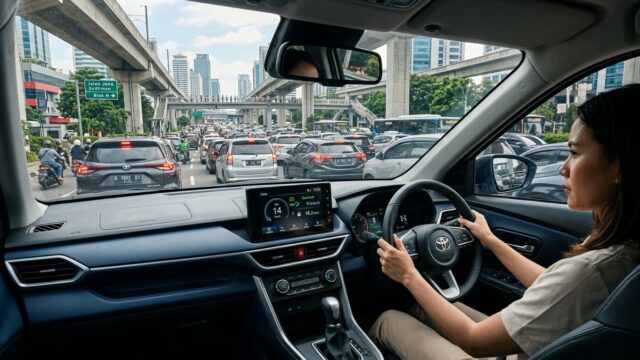
JAKARTA — 10 Fuel-Saving Tips for Automatic Cars in Traffic in 2026: Save Up to 30% matters now because automatic cars can use 15% to 30% more fuel than manuals when drivers handle stop-and-go traffic badly. In Indonesian cities where congestion never really lets up, that difference lands directly in the monthly budget.
With Pertalite priced around Rp10,000 per liter and Pertamax in the Rp12,300 range, even a short daily commute can turn expensive. Office workers, ride-hailing drivers, and families who crawl through Jakarta, Surabaya, Bandung, Palembang, or Makassar traffic feel it first.
Why automatics burn more in traffic
The main reason is mechanical. Automatic cars rely on a torque converter and frequent gear changes between first and second in slow traffic. The engine keeps revving up and down, fuel injection keeps working, and the car wastes more energy than it would on a smooth road.
In heavy congestion, fuel consumption can fall to around 1:6 to 1:8. On a clear toll road, the same vehicle may reach 1:14. That gap is huge. For drivers who commute every day, it means the difference between a manageable bill and a monthly headache.
The fix is not magic. It is habit.
Driving habits that save fuel fast
The first move is simple: use auto hold or idling stop if your car has it. Many automatic cars from 2020 onward already come with the feature. When the car stops for more than three seconds, the engine shuts off and restarts when the brake is released. That alone can save about 5% to 10% fuel.
Keep a wider gap from the vehicle ahead. Watch the flow three cars in front, not just the bumper in front of you. If the light is still red and the queue is long, ease off the accelerator early instead of braking hard at the last second.
Press the gas gently. Sudden throttle input hits automatics harder than many drivers think.
Use D with Eco Mode in traffic. Sport mode keeps the revs high, which burns more fuel. Manual mode, when the lever is shifted by hand, also delays gear changes. Eco Mode can save 10% to 15% compared with Sport mode in stop-and-go conditions.
One habit drivers often miss: resting one foot on the brake while pressing the gas at the same time. That forces the engine to work against itself. Automatic cars already have creep function, so the car will roll forward slowly when the brake is released. Use that. It is there for a reason.
Small checks that make a big difference
Air conditioning eats into engine power. In a jam that barely moves, some drivers switch it off for a short spell and crack the windows open. That can help, but comfort and health still matter. On a scorching afternoon, nobody needs to sit in a heat trap just to save a few drops of fuel.
Tire pressure also matters more than many owners expect. Underinflated tires increase rolling resistance, so the engine works harder. Check the pressure every two weeks and follow the specification printed on the driver-side door pillar. Properly inflated tires can save about 3% to 5% fuel.
Then there is weight. Every extra 50 kilograms can lift fuel consumption by around 2%. Clear the trunk. Old boxes, unused tools, random bags. They all cost money at the pump.
Maintenance that keeps the engine efficient
Routine servicing still carries the biggest long-term effect. Engine oil should be changed every 5,000 to 10,000 kilometers, automatic transmission oil every 40,000 kilometers, and the air filter every 20,000 kilometers. Dirty automatic transmission oil can cause slippage, which wastes power and fuel at the same time.
Engine decarbonization every 40,000 kilometers helps clear carbon buildup from the combustion chamber. If fuel use suddenly gets much worse, the O2 sensor and MAF sensor deserve a check. Both help the ECU calculate fuel injection.
That matters for city drivers because stop-start traffic magnifies every small fault. A clogged filter or a lazy sensor may not feel dramatic on a short trip, but over a month the drain becomes visible at the pump.
Choose the fuel your engine actually needs
Many drivers still overspend because they assume pricier fuel automatically means better efficiency. It does not. An LCGC car with a 10:1 compression ratio is fine with Pertalite RON 90. Filling it with Pertamax does not make the car go farther per liter; it just raises the fuel bill by about Rp2,300 per liter.
Turbo engines with higher compression are different. They need Pertamax Turbo or fuel that matches the manufacturer’s recommendation. Running below spec can cause knocking and, over time, engine damage.
That is the real point. Fuel choice should match the engine, not the ego.
What the monthly savings look like
For a driver covering about 40 kilometers a day, the numbers add up quickly. If an automatic car currently returns 1:8 in traffic and the driver improves habits, the consumption can rise to roughly 1:10 or 1:10.5.
| Condition | Consumption | Fuel/Day (40 km) | Cost/Day | Cost/Month |
|---|---|---|---|---|
| Before (usual technique) | 1:8 | 5 liters | Rp50,000 | Rp1,500,000 |
| After (10 tips) | 1:10 | 4 liters | Rp40,000 | Rp1,200,000 |
| Difference | — | 1 liter | Rp10,000 | Rp300,000 |
That is a potential saving of Rp300,000 a month from better driving habits and basic maintenance alone. For families, that money can cover groceries, tolls, or another tank of fuel.
Manual cars still tend to be 15% to 20% more efficient in traffic when driven well, but automatics remain far more practical for long jams. In dense city driving, comfort and economy can sit in the same car if the driver pays attention.
As one workshop technician put it, “A lot of fuel is wasted before the car even moves. The driver’s foot decides that.”