9 Fuel-Saving Tips for Automatic Motorbikes in Traffic 2026
Fuel-saving tips for automatic motorbikes that can cut daily costs in traffic, from riding style to CVT care and tire pressure.
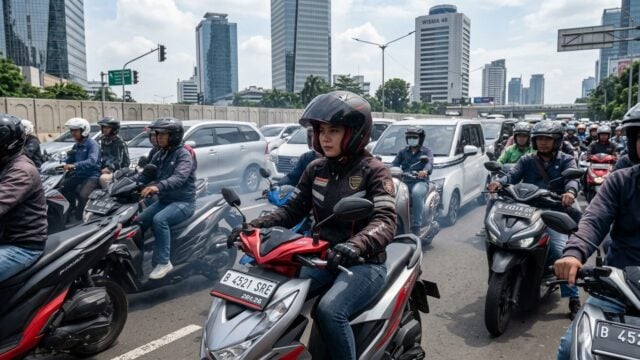
JAKARTA, JOURNALARTA.COM — 9 Fuel-Saving Tips for Automatic Motorbikes in Traffic 2026 are not just about riding a little more carefully. For commuters, ride-hailing drivers, and couriers stuck in city traffic, they can mean the difference between spending Rp37,500 a day on fuel or trimming that bill by nearly Rp200,000 a month.
That gap matters. With Pertalite priced at Rp10,000 per liter, a scooter that normally returns 60 km/liter can slide to 35–45 km/liter once stop-and-go traffic takes over. A daily ride of 150 km makes the math feel immediate, not theoretical.
The main pressure point sits in the CVT, the automatic transmission used by most scooters. Hard launches, unstable revs, and bad maintenance all push fuel use up fast. The upside is simple: riders can control a lot of it without spending much.
Riding habits that save fuel fast
Open the throttle gently. That one change does more than many riders expect. A CVT uses rollers to shift ratios, and a sharp twist sends the engine into a less efficient range before the bike has even settled into motion. Ease from 0 to 20 km/h, then build speed gradually.
If your scooter has Idling Stop System, or ISS, use it. On newer Honda Beat, Vario, and Scoopy models, the feature cuts the engine after three seconds of stopping. At long red lights, savings can reach 8–12%. Many riders switch it off out of habit. The pump notices.
Keep speed steady when traffic allows it. The efficient CVT zone often sits around 30–40 km/h, with the engine turning in the 4,000–5,000 rpm range. In dense traffic, that window is narrow, but it still helps when the road opens for a few hundred meters. Stop. Go. Stop. That pattern burns more.
Tire pressure gets ignored far too often. A tire that is only 5 psi low can raise fuel use by around 5%. A common reference point is 29 psi at the front and 33 psi at the rear. Carrying a passenger or heavy goods? Raise the rear to 33–35 psi. Most gas stations will check and top it up for free.
Maintenance details riders miss
The CVT needs attention every 8,000 km. Dirty rollers and a worn v-belt force the engine to work harder while the bike crawls forward. That is wasted fuel, plain and simple. A proper service at an official AHASS or Yamaha workshop keeps the throttle response lighter and the scooter more efficient.
Do not ride with the rear brake half-engaged. Some riders do it without realizing it, especially in tight traffic. The engine ends up fighting the brake, and fuel gets burned for nothing. Let off the throttle and use engine braking when you can. Save the rear brake for the actual stop.
If traffic locks up completely because of a train crossing or a protest, shut the engine off. Modern automatic starters use an ACG, or Alternating Current Generator, which starts smoothly and does not drain the battery much. Waiting two to five minutes while idling costs more than pressing the starter again.
Accessories can also drag mileage down. Large rear boxes, top boxes, and auxiliary lights add weight and wind resistance. Every 10 kg of extra load can mean around 1 km/liter less. If you do not need it every day, take it off.
Engine oil matters too. The owner’s manual remains the best guide: Beat and Vario are fine with SAE 10W-30, while Nmax and Aerox need 10W-40. Oil that is too thick makes the engine work harder. Oil that is too thin can evaporate faster and lose protection. Replace it every 4,000 km.
The money saved adds up quickly
For a Vario 125 rider covering 150 km a day, the difference is easy to see in cash terms. Before any changes, fuel use at 40 km/liter comes to 3.75 liters a day, or Rp37,500 at Rp10,000 per liter. After better habits and maintenance, 48 km/liter drops that to 3.12 liters, or Rp31,200.
| Condition | Fuel Use | Liters/Day | Cost (Rp10,000/L) |
|---|---|---|---|
| Before tips | 40 km/L | 3.75 L | Rp37,500 |
| After tips | 48 km/L | 3.12 L | Rp31,200 |
| Difference | +8 km/L | -0.63 L | Save Rp6,300/day |
That looks small at first glance. It is not. Over 30 days, the saving reaches Rp189,000, enough for a light service and an oil change. For people who earn on the road, that is real breathing room.
Hidden habits can make scooters thirstier too. Opening the air filter or fitting random aftermarket filters lets dust in and can confuse the ECU. Delaying spark plug replacement weakens ignition. Dirty injectors that only get cleaner at 10,000 km intervals can waste fuel. And three people on one scooter? The engine works harder, the CVT heats up faster, and mileage drops.
One more note for riders who have modified the CVT: heavier rollers by 1–2 grams compared with stock can lower rpm and save fuel, but pickup gets slower. Factory settings are already balanced for daily use in traffic, so changes only make sense if economy is the main target.
Honda Beat remains the most efficient of the common automatic scooters, with a claimed 60 km/liter. Vario 125 sits around 51 km/liter, while Nmax is around 42 km/liter. Beat and Vario, with a compression ratio around 10:1, are fine on Pertalite. Nmax and Aerox, with an 11.6:1 compression ratio, are better matched to Pertamax for cleaner combustion and less knocking over time.
As roads stay crowded in Jakarta, Surabaya, Bandung, and Palembang, fuel-saving habits are no longer a niche concern. They shape how far a worker can travel, how much a courier can keep from each delivery, and how often a family has to top up the tank just to keep the week moving.
“Small habits at the throttle and in maintenance can save real money every month,” a workshop technician said, pointing to the CVT cover as he explained how quickly wear and poor riding style eat into mileage.