Matic Oil vs Manual Oil in a Scooter: Why Mixing Risks Damage
Matic oil vs manual oil: learn why JASO MB and MA2 matter, plus the damage mixing them can cause to your scooter.
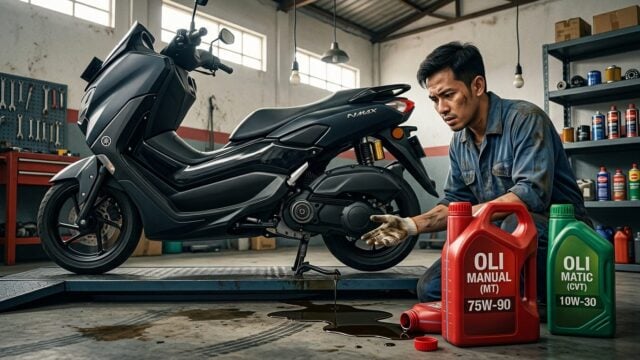
JAKARTA, JOURNALARTA.COM — Putting the wrong oil into a scooter can quietly turn into an expensive mistake. A bottle meant for manual motorcycles may look harmless on the shelf, but once it goes into a scooter’s engine, the wrong friction level can affect the CVT, throttle response, and even long-term engine health.
The core issue is simple: scooter oil and manual motorcycle oil are built for different jobs. Scooter oil follows JASO MB to keep friction low so CVT components can move smoothly, while manual oil uses JASO MA2, which needs higher friction so a wet clutch can grip properly. The two are not interchangeable, and that difference matters the moment the engine starts running.
Matic Oil vs Manual Oil: The Risk of Mixing It Up in a Scooter
Technically, the label tells a story before the engine does. Scooter oil usually comes with JASO MB, often paired with SAE 10W-30 or 10W-40, because scooters use CVT systems that need a slicker oil flow. Manual bike oil, by contrast, often carries JASO MA2 and may appear in SAE 10W-40 or 15W-40 grades, designed to support a wet clutch and gear shifting.
That difference in friction modifier content changes how the oil behaves under pressure. In a scooter, the oil needs to help the drivetrain move with minimal drag. In a manual motorcycle, it needs enough grip so the clutch can transfer power without slipping. Same bottle size. Very different physics.
Here is the basic split riders should know:
| Aspect | Scooter Oil (JASO MB) | Manual Oil (JASO MA2) |
|---|---|---|
| Clutch system | No wet clutch, uses CVT | Uses a wet clutch |
| Friction modifier | Low friction | Higher friction |
| Typical viscosity | 10W-30 / 10W-40 | 10W-40 / 15W-40 |
| Main purpose | Smoother CVT movement, lighter throttle feel | Better clutch bite and gear changes |
That table is the whole story in plain terms. Scooter oil is made to be slippery. Manual oil is made to be grippy.
What happens inside a scooter
The most common mistake happens when riders buy oil in a hurry or when a neighborhood shop runs out of scooter-specific stock. A bottle marked for manual motorcycles goes into a Beat, Vario, or similar scooter, and the problem begins gradually.
First comes CVT slip. The higher friction modifier in JASO MA2 can interfere with the low-friction environment a scooter needs, so the throttle opens but the bike doesn’t respond cleanly. Acceleration feels lazy. The engine sounds busy. The scooter moves like it is holding back.
Fuel use can rise by 20-30 percent, according to the figures commonly used in workshop explanations for mixed-oil use. That extra burn hits riders directly at the pump. Not dramatic at first. Still annoying. And costly over time.
Then wear starts to build. The V-belt and rollers can deteriorate faster because the CVT is working in conditions it was not designed for. A V-belt that might normally last around 25,000 km can wear out at 15,000 km, or even sooner, if the wrong oil keeps getting used.
Heat follows. Manual oil is generally thicker, and a scooter oil pump is tuned for lighter grades such as 10W-30. When circulation slows, engine temperature can climb. Oil evaporation can also speed up, with losses of as much as 200 ml in 1,000 km in the scenario described by the source material. That puts the engine outside its normal range.
The repair bill is where the mistake really hurts. A CVT service plus V-belt replacement can run about Rp400,000-Rp700,000. The oil difference itself may only be around Rp10,000. That gap is hard to ignore.
Why the reverse is risky too
Using scooter oil in a manual bike creates the opposite problem. JASO MB is designed to reduce friction, which is useful in a scooter, but that same slipperiness can make a wet clutch lose bite in a manual motorcycle.
The engine revs. The bike hesitates. Gear changes can feel rough and jerky because the oil is not built to handle that level of clutch and transmission friction. For manual bikes, JASO MA2 is the safer fit. No shortcut there.
For everyday riders, the risk is not abstract. A small mistake at the service counter can turn into missed work, extra transport costs, and an unplanned workshop visit. In a country where scooters dominate daily commuting, the wrong oil choice can affect a lot of owners at once, especially those who buy oil based on price alone or trust a bottle with the wrong bike illustration on the front.
How to spot the right bottle
Before buying oil, check the label for “Scooter” or “Matic.” That word matters more than the color of the bottle or the brand’s ad campaign. Then look for the JASO code on the back. If it says JASO MB, it belongs in a scooter. If it says JASO MA or MA2, it belongs in a manual bike.
Viscosity still matters, too. For daily riding, SAE 10W-30 works well for many scooters, while SAE 10W-40 is often chosen for older engines or longer trips. The source material lists 2026 prices at roughly Rp48,000 for AHM MPX2 Matic, Rp52,000 for Yamalube Matic, and Rp60,000 for Shell Advance Scooter.
Oil change timing also matters. The suggested interval in the source material is every 4,000 km or every two months, whichever comes first. Riders who stretch that interval may save a few rupiah now, then pay more later when the engine starts running hot or the CVT feels off.
If the wrong oil has already been used for only 100-200 km, the advice is to drain it right away and refill with the correct JASO MB scooter oil. A CVT cleaner spray can help remove leftover additive traces from the wrong oil. If the scooter has already passed 10,000 km, the V-belt should be checked closely, because early wear can show up fast once the system has been stressed.
One wrong fill will not instantly destroy an engine. But after repeated use of the wrong specification, the damage compounds. The safest move is still the simplest one: read the code, match the bike, and don’t treat scooter oil and manual oil as if they do the same job.
As one workshop rule of thumb puts it: scooters belong with JASO MB, and manual bikes belong with JASO MA2. The price gap is small. The repair gap is not.