US-Iran Talks in Switzerland Show Major Progress on Conflict
US-Iran talks in Switzerland made major progress, with a 60-day peace roadmap and steps to reopen the Strait of Hormuz.
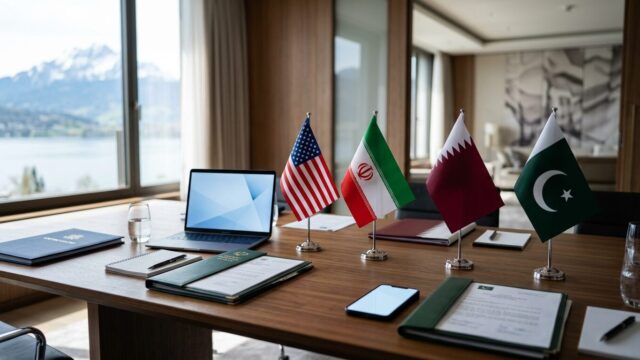
LUCERNE — The first round of US-Iran talks in Switzerland ended with what mediators described as major progress, putting a 60-day peace roadmap on the table and easing fears of a wider regional war. The focus keyword, US-Iran Talks in Switzerland Make Major Progress on Conflict, fits the scale of the breakthrough: a possible pause to fighting, a reopening of the Strait of Hormuz, and a new diplomatic channel between the two sides.
Qatar and Pakistan, which served as mediators, said senior committees from both sides agreed on a concrete framework during the talks in Lucerne and at the Bürgenstock resort. The target is a final deal within 60 days. That timeline matters. Fast. Because energy markets, shipping lanes and front-line fighting all sit on the same fragile fault line.
Hormuz, Lebanon and the 60-day race
Iranian Foreign Minister Seyed Abbas Araghchi said the talks delivered major progress, especially on ending the fighting in Lebanon. The initial understanding includes a commitment to halt hostilities on all fronts and reopen the Strait of Hormuz, one of the world’s most sensitive shipping routes.
For the global economy, that is the biggest immediate gain. The Strait of Hormuz carries about 20.5 million barrels of crude oil a day, or roughly 20% of world consumption, along with about 80 million tons of liquefied natural gas each year, equal to 26% of global LNG trade. Any disruption there can hit prices fast, and consumers usually feel it at the pump and in utility bills soon after.
| Energy commodity | Daily volume through Hormuz | Share of global trade |
|---|---|---|
| Crude oil | About 20.5 million barrels | 20% of total world consumption |
| Liquefied natural gas (LNG) | About 80 million tons per year | 26% of global LNG trade |
In return for safe passage through the strait, the United States agreed to lift the military blockade on commercial ships entering and leaving Iran’s main ports, according to the terms outlined in the talks. The package is meant to restart commerce that had been badly strained by months of tension.
Direct line to prevent sea incidents
To reduce the risk of attacks or interceptions at sea, the two sides agreed to establish a direct military communications channel. That step is small on paper. It is not small in practice. One mistake in the Strait of Hormuz can quickly drag commercial shipping and naval forces into a larger confrontation.
A de-confliction cell was also formed with representatives from the United States, Iran and Lebanon, with Qatar and Pakistan helping to facilitate the process. Its immediate job is blunt: stop active military operations in southern Lebanon and keep the talks from collapsing while the battlefield remains unstable.
The pressure is real. Since the memorandum of understanding was signed last week, clashes between Israeli ground forces and Hezbollah have intensified at several border points, before Washington pushed for a new ceasefire formula. The diplomatic track is running against a live war.
Trump warning adds pressure in Lucerne
The talks were shadowed by sharp political messaging from US President-elect Donald Trump, who warned Tehran on social media to stop backing proxy groups or face a hard US response. His comments added heat to an already tense negotiation room.
Iranian parliamentary negotiator Mohammad Bagher Ghalibaf pushed back during a press briefing. “If their threats were truly effective, they would not be in this desperate position at the negotiating table right now,” he said. “We are focused on real action on the ground, not political bluster.”
US Vice President JD Vance, who led the American delegation in Switzerland, said the new Trump administration wants a more pragmatic chapter if Tehran takes concrete steps to stop regional instability and end uranium enrichment ambitions tied to nuclear weapons. That remains the hardest issue in the room.
Money, reconstruction and the hard part left
The initial deal also includes a $300 billion reconstruction plan for war-hit civilian infrastructure, with the funds to be managed by an international donor body under strict Qatari oversight. The aim is to keep the money from becoming just another promise. Washington also signaled a gradual easing of sanctions if the broader agreement holds.
What happens next will decide whether the Switzerland track becomes a real settlement or just a temporary pause. The nuclear file still hangs over everything, and the 60-day window now becomes the real test. One number will matter more than the rest: $300 billion, the size of the reconstruction package tied to the fragile diplomatic opening.