
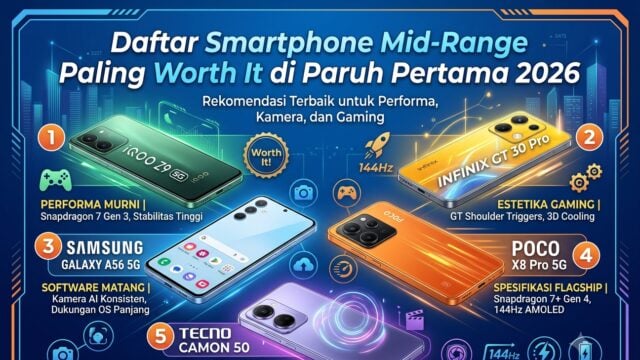
JAKARTA, JOURNALARTA.COM — Indonesia’s mid-range smartphone market leveled up fast in the first half of 2026. In the Rp3 million to Rp6 million range, phones that once chased only basic functions are now arriving with features that used to belong exclusively to flagships.
For buyers, that shift matters. More choices, yes — but the risk of picking the wrong one has grown just as fast. One model might dominate on performance, while another leads in camera quality, software longevity, or battery life. That’s exactly why a clear breakdown is worth having before you walk into a store or hit add-to-cart.
Mid-range in 2026 is no longer an afterthought
The change shows up in the core specs. A 144Hz display, a battery above 5,500 mAh, and fast charging above 80W are no longer luxury items. In the mid-tier, these have quietly become the new baseline. The market is aggressive now. Brands are racing to deliver real value so buyers don’t feel compelled to step up to a flagship.
That trend is visible in the five models that stood out most in the first half of 2026. Each has a clear identity. Some are built for gaming, others lead in photography, and some sell stability — the kind of smooth, reliable daily experience that benchmarks don’t always capture.
| Model | Main Strength | Best For |
|---|---|---|
| iQOO Z9 5G | Snapdragon 7 Gen 3, stable gaming performance | Gamers who want raw performance |
| Infinix GT 30 Pro | GT Shoulder Triggers, 3D vapor cooling | Gamers who want physical controls and a futuristic design |
| Samsung Galaxy A56 5G | Stable software, long-term update support | Users who prioritize ecosystem reliability and consistent cameras |
| Poco X8 Pro 5G | Snapdragon 7+ Gen 4, 144Hz Flow AMOLED, UFS 4.0 | Spec hunters who want a flagship feel |
| Tecno Camon 50 | 50MP main camera with OIS | Content creators and frequent video shooters |
What makes each model stand out
The iQOO Z9 5G has a sharp focus. It’s built for users chasing stable frame rates and power efficiency. The Snapdragon 7 Gen 3 puts it firmly on a gamer’s radar — the kind of player who won’t compromise on everyday performance.
The Infinix GT 30 Pro takes a different approach. It’s not just fast. It brings GT Shoulder Triggers and a wide 3D vapor cooling system. Both features pay off during long sessions in competitive games. No gimmick. The benefit shows up immediately.
Samsung’s Galaxy A56 5G plays a safer game. Its edge comes from software consistency, reliable camera output, and a long-term update commitment. For a lot of people, that matters more than raw specs. A phone is used every day — not just for benchmark runs.
Poco X8 Pro 5G targets the spec hunters. The Snapdragon 7+ Gen 4, 144Hz Flow AMOLED display, and UFS 4.0 storage make everything feel quick. Opening apps, switching games — the snappiness is easy to feel from the first minute.
Tecno Camon 50, meanwhile, has a more specific identity: photography. The 50MP main camera with OIS adds real value when shooting on the move or recording video on the go. For content creators, that often matters more than impressive numbers on a spec sheet.
How to choose the right one
Buying a mid-range smartphone in 2026 isn’t just about checking RAM and battery size. Buyers need to weigh their primary use case. If gaming is the priority, the chipset and thermal management need to come first. If photos and video are the main reason you’re buying a phone, camera hardware and OIS make more sense to focus on.
Software updates are worth checking too. OS and security support for at least two to three years ahead directly affects how long a device stays useful. A phone with impressive specs on paper can still disappoint if its updates are slow, buggy, or cut off early.
After-sales service networks deserve a look as well. It’s a factor many buyers overlook — until something goes wrong. Build quality and IP ratings round things out. For users who spend time outdoors or in unpredictable conditions, an IP54 or IP67 rating adds a real layer of protection against dust and splashes.
The intensity of competition means buyers are the ones winning here. Brands can no longer coast on a big name. They have to deliver genuine value. And in 2026, that genuine value is clearly visible in the mid-range tier.
“Consumers are smarter now. They’re not just looking for the highest specs — they want the best combination of performance, camera, and durability,” said one industry analyst tracking the Indonesian smartphone market.
With that in mind, a mid-range phone in 2026 is no longer a compromise. In many cases, this is actually the tier where buyers are most likely to find a phone that’s genuinely, completely balanced.
📝 Leave a Comment
Comment as . Reviewed by an admin before it appears.