iPhone Fold Stock Could Be Tight at 2026 Launch
Apple’s first iPhone Fold may see tight stock at launch in Q3 2026, with Ming-Chi Kuo citing manufacturing complexity and waits of up to six weeks.
JAKARTA — The arrival of Apple’s first foldable phone, often called the iPhone Fold, is expected to trigger long lines and tight stock at its debut. Technology industry analyst Ming-Chi Kuo projects that Apple will be able to produce only around 500,000 to 1 million units in the third quarter of 2026.
The limited supply is driven by the complexity of the device’s innovative design. Manufacturing challenges in the early production stage often become a stumbling block, much like what happened when Apple launched the iPhone X several years ago. At that time, the transition to an OLED display and the integration of TrueDepth Face ID slowed the production line before it eventually stabilized.
Production Challenges and Market Enthusiasm
Although the device’s expected selling price is predicted to reach a staggering US$2,500, or around Rp40 million, consumer interest remains high. Based on discussions with cellular operators and retail chains, Kuo sees the potential for market demand to exceed Apple’s supply capacity in the early stages of the device’s arrival.
This condition is expected to create a resale premium phenomenon, or a sharply higher resale price in the secondary market. Consumers who miss out on stock in the early period may have to wait up to six weeks or more until the end of December 2026.
Apple is expected to ramp up production capacity significantly only after the initial phase has passed, with a distribution target of seven to eight million units by the end of the same year.
Digital Clues Behind the iPhone Fold Rumor
So far, Apple has not issued an official announcement regarding the foldable device. However, findings in the iOS 27 beta system code have strengthened speculation about its arrival.
Developers discovered several code lines such as foldState and angleDegrees, as well as variables that control the number of integrated screens on the device, indicating that the operating system has been prepared to support a dual-screen or foldable display.
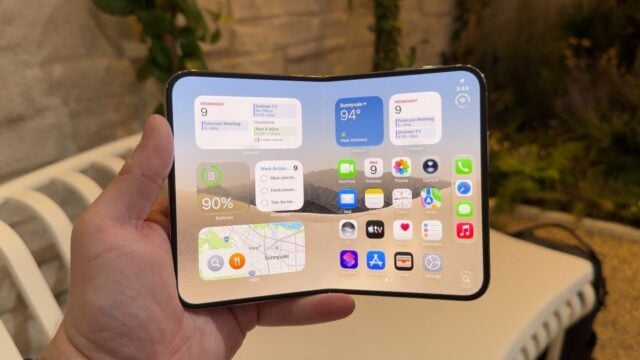
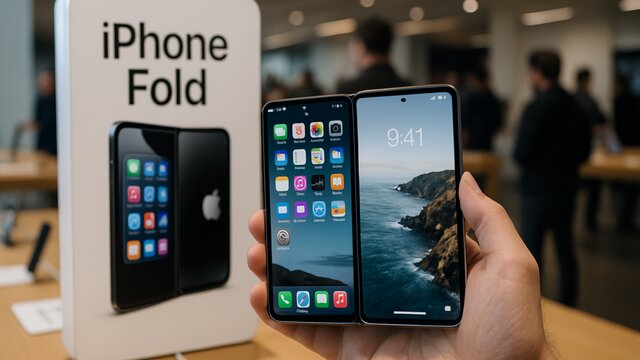
In terms of design, the iPhone Fold is rumored to feature a 5.5-inch outer display and a 7.8-inch inner display. Apple is reportedly using flexible OLED display material reinforced with a laser-perforated metal plate to reduce pressure and minimize fold marks in the center of the screen.
When folded, the physical shape is said to be closer to a square, providing a wider screen area than current rivals in the foldable phone market.
Real Impact for Consumers
For the Indonesian market, shortages of high-end Apple devices like this are nothing new. Gadget fans in the country usually have to compete in tight pre-order systems or rely on import channels that sell at prices far above the official retail price.
If Kuo’s projection proves accurate, consumers hoping to buy the iPhone Fold early will need extra budget and the patience to wait in a fairly long queue because of limited global availability.
Apple’s strategy of maintaining production quality by slowing distribution at the start reflects its caution in entering a new segment. The device’s eventual success or failure will determine whether Apple can dominate the foldable phone market, which is currently still controlled by South Korean vendors.