NANOG Gene Found Crucial in Early Human Embryo Formation
NANOG gene plays a key role in early human embryo formation, a study finds. Here’s what it could mean for fertility research.
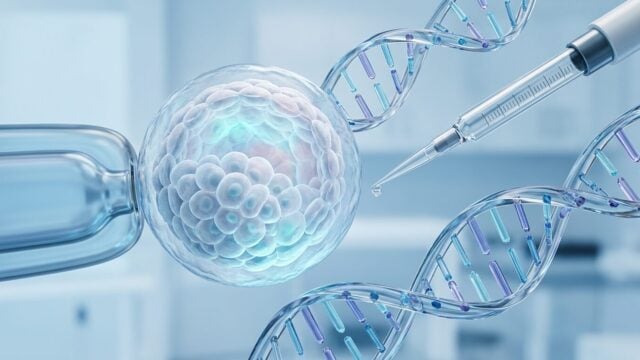
JAKARTA — The NANOG gene has been shown to play a crucial role in the earliest stage of human embryo formation, according to a study reported by The Verge. An international team led by developmental biologist Kathy Niakan of the University of Cambridge found that when the gene was switched off using base editing, normal embryos lost their developmental direction and failed to form the basic cells that should become a fetus.
The finding matters because strong evidence about NANOG has long come from mouse experiments. Now researchers are seeing a similar pattern in humans, although the mechanism is not identical. That means the first days of human life still cannot be understood by animal models alone.
NANOG gene and the earliest work of the human embryo
In the earliest stage, one cell divides into two, then four, then dozens. During this phase, the embryo moves very fast while receiving genetic signals that regulate one another. NANOG enters the scene early. The gene encodes a protein also called NANOG, a transcription factor that controls which genes are active and which stay silent.
Think of NANOG as a traffic controller inside the cell. It makes sure protein building blocks show up at the right time and in the right amount. When that control slips, cells can head in the wrong direction. In this study, when NANOG was switched off, epiblast pluripotent cells could not turn into stem cells as they should. Instead, the cells were pushed toward supporting tissues such as the yolk sac or placental cells.
In plain terms, the embryo seemed confused about which building path to take. Its biological energy shifted toward support systems, not the blocks that build the fetus.
Why the researchers chose base editing
The researchers did not use the DNA-cutting approach of CRISPR/Cas9, which breaks both strands. They chose base editing, a technique that changes only one genetic letter. That small change is considered more precise and may reduce the risk of unwanted DNA changes, such as genomic rearrangements or effects elsewhere in the genome.
The approach is still relatively new in human embryo research. So far, many base editing studies have been done on tripronuclear embryos, meaning embryos that are not suitable for IVF and are usually not used in reproduction procedures. The problem is that those embryos have chromosomal and developmental abnormalities, so they do not represent normal human embryos.
This is where the study gains value. The scientists used “normal” embryos, either left over from donor and egg-sharing programs or created from donor gametes. The embryos were also not allowed to develop beyond 14 days, following the ethical limit commonly used in many countries.
What changed when NANOG was switched off
The result was clear. When NANOG function was disrupted, the epiblast, which should become the main source of body tissue, did not develop normally. Those cells failed to transition into stable stem cells. Instead, they moved toward forming supporting cells.
In the researchers’ explanation, NANOG in humans is essential for early embryo development, but it does not work exactly like it does in mice. In mice, NANOG is also closely linked to yolk sac formation. In humans, that role appears less important than it is in rodents.
That difference matters. It is the lesson. Many people assume mouse research is enough to understand humans. But at some critical points, our bodies take a different route.
Why the NANOG gene finding matters beyond the lab
The discovery will not change clinical practice right away. Dusko Ilic, a stem cell scientist at King’s College London who was not involved in the study, said the immediate value of the work is still mechanistic, not clinical. He also warned that the findings do not prove embryo editing is safe for medical use.
“The work also shows the potential of base editing as a research tool, but it does not demonstrate that embryo editing is safe for clinical use,” Ilic said. He added that links to infertility, implantation failure, or miscarriage remain prospective.
Still, the implications are significant. If researchers understand the earliest stages of human embryo development more clearly, they may also be able to trace the causes of reproductive problems. Robin Lovell-Badge of the Francis Crick Institute, who advised the research team, said this kind of knowledge matters for reducing “distress, disappointment and sometimes debilitating disorders” in families trying to conceive.
In Indonesia, the relevance is felt too. Discussions about fertility, IVF programs, and stem cell research continue to grow, even though human embryo research remains tightly restricted by ethics and regulation. That makes studies like this more useful as a map of knowledge than as a shortcut to new therapy.
What scientists are looking for is not sensation. They are mapping the fragile points at the start of life. From there, they hope to understand why some embryos fail very early, long before pregnancy is visible in a doctor’s office.
Looking ahead, research like this will likely get even more careful. The bigger question is not just whether one gene matters, but how early genes work as a tightly linked chain. And in that chain, NANOG is only the beginning.
Brief summary:
1. The NANOG gene is shown to be important for early human embryo formation.
2. The team used base editing on normal embryos, not tripronuclear embryos.
3. The finding helps mechanistic research, but not clinical use yet.
Short FAQ:
Does this mean embryos can be edited for therapy? Not yet. The study does not prove clinical safety.
Are mouse results always the same as in humans? No. This study shows important differences.