Social media ban for under-16s spreads across countries
Social media ban for under-16s is spreading as the UK joins Australia. Here’s why governments are moving, and why Big Tech is fighting back.
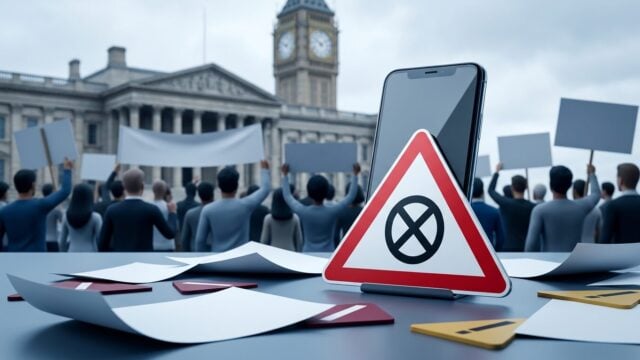
LONDON — social media ban rules for a minimum age of 16 are spreading across more countries, and the UK is now the latest to announce such a move after Australia sparked a fresh wave of regulation.
At the same time, major technology companies are pushing back. They are lobbying, objecting to the rules, and arguing that this kind of policy is moving too fast and is not applied consistently across platforms.
The social media ban is spreading
This month, the UK said it will set a minimum age of 16 for access to major social media platforms. The rollout is scheduled for spring 2027. That puts Britain alongside Australia, which moved earlier to impose age limits on services such as Instagram, Facebook, YouTube, X, TikTok, and Snapchat.
According to reporting by The Guardian, which forms the basis of this piece, the policy is no longer just an isolated idea in one country. Austria, France, and Norway are also weighing similar age restrictions. Indonesia and Malaysia have already introduced bans for users under 16 on certain platforms. In Brazil, children under 16 can access social media only if connected to a parent’s account.
The point is simple. The fight over who gets into the world’s busiest digital spaces is no longer just an ethical debate.
It has reached lawmakers’ desks.
Warnings from parents and a former Meta insider
Arturo Béjar, a former senior engineer and consultant at Meta who later became a whistleblower, has emerged as one of the loudest voices backing the restrictions. He says he has spoken with parents in several countries, and they share the same worry once their children start spending time online.
“I have spoken with parents from several countries, and I have never met the parent of a young child who was not afraid when their child was old enough to go online. Or a young person who had never experienced something bad that could actually have been prevented,” Béjar said.
Béjar also testified in a U.S. case that found Meta liable for allegedly deliberately designing products to be addictive and misleading consumers about platform safety. The California trial has helped strengthen political pressure in many countries to take a tougher stance.
“They keep showing the world why we cannot trust them,” Béjar said.
Meta has denied the ruling and said it will appeal. The company also said teen mental health is “very complex” and cannot be reduced to one single cause. Meta added that it remains committed to building a safe and supportive environment for young people.
Political pressure and Big Tech lobbying
Behind the tougher rules, the technology industry has been moving aggressively too. In the European Union, major tech companies are said to have spent about €150 million, or around £130 million, on lobbying last year. That figure is up by a third in just two years.
Meta is said to be the biggest spender, with about €10 million. Campaign groups Corporate Europe Observatory and LobbyControl say social media remains a key topic in meetings with the European Commission, even though artificial intelligence is the biggest focus for the tech giants.
A member of the European Parliament said the companies are “bombarding” Brussels with messages against a social media age ban. In the United States, they are also pressing against the Kids Online Safety Act, or KOSA, a bill that would require platforms to take preventive steps against a range of harms affecting children.
Issue One says Meta is the largest tech lobbyist in the U.S. The group says the company has one lobbyist for every six members of Congress. Between 2020 and 2024, major tech companies spent a total of US$260 million on federal lobbying.
Meta said it wants “a consistent national standard for online safety for young people.”
Why the UK move matters
Even though an independent expert panel appointed by the UK government is said to have offered a “nuanced” view of social media’s impact on teenagers, Prime Minister Keir Starmer chose a firmer path. For some observers, the decision signals that governments are no longer waiting for perfect evidence before acting.
The Guardian said a source at one affected tech company was frustrated that not all rivals are taking online safety seriously. According to the source, the lack of consistency across platforms makes strict rules easier to justify.
“It is hard to sell safety measures to politicians when there is not enough consistency among your competitors,” the source said. The source added that the end result could look like Australia, where, in their view, the move did not push platforms to design safer products and instead encouraged many attempts to work around the restrictions.
“You throw the baby out with the bathwater,” the source said.
That view is becoming more common. It is coming not just from politicians, but from former platform executives and parents who are tired of seeing children grow up in what feels like an overly wild digital environment.
The U.S. remains the big exception
While many countries are moving ahead, the United States remains the major exception. The home of the social media giants has struggled to pass a federal ban because of political deadlock, First Amendment protections, and the deep role Big Tech already plays in the national economy.
Darrell West of Brookings Institution said state-level bans are unlikely to spread widely. At the federal level, he sees little chance of success because too many lawmakers still oppose technology regulation.
But Theo Bertram, director of the Social Market Foundation and a former TikTok executive, sees a different direction. He calls the UK decision a global turning point.
“In the history of legislation, there are usually one or two countries that are the exception. Then when countries with global regulatory influence, like the UK, join Australia, that becomes a turning point,” Bertram said.
He said tech companies are now being criticized not only by mainstream politicians but also by a public that is losing trust. “In the age of populism, these companies are getting criticism from outside mainstream politics too. Tech companies are losing public opinion, and politicians will move with that,” he said.
And the direction is already visible. From London to Canberra, from Brussels to Jakarta, the minimum age for social media is no longer seen as a fringe idea. The real debate now is not whether rules will arrive, but how fast and how strict they will be. One number keeps coming up: 16.