US-Iran talks: Mediators hail ‘roadmap’ for final agreement
US-Iran talks produce a roadmap for a final deal, including a 60-day sanctions pause, nuclear inspections, and Hormuz security.
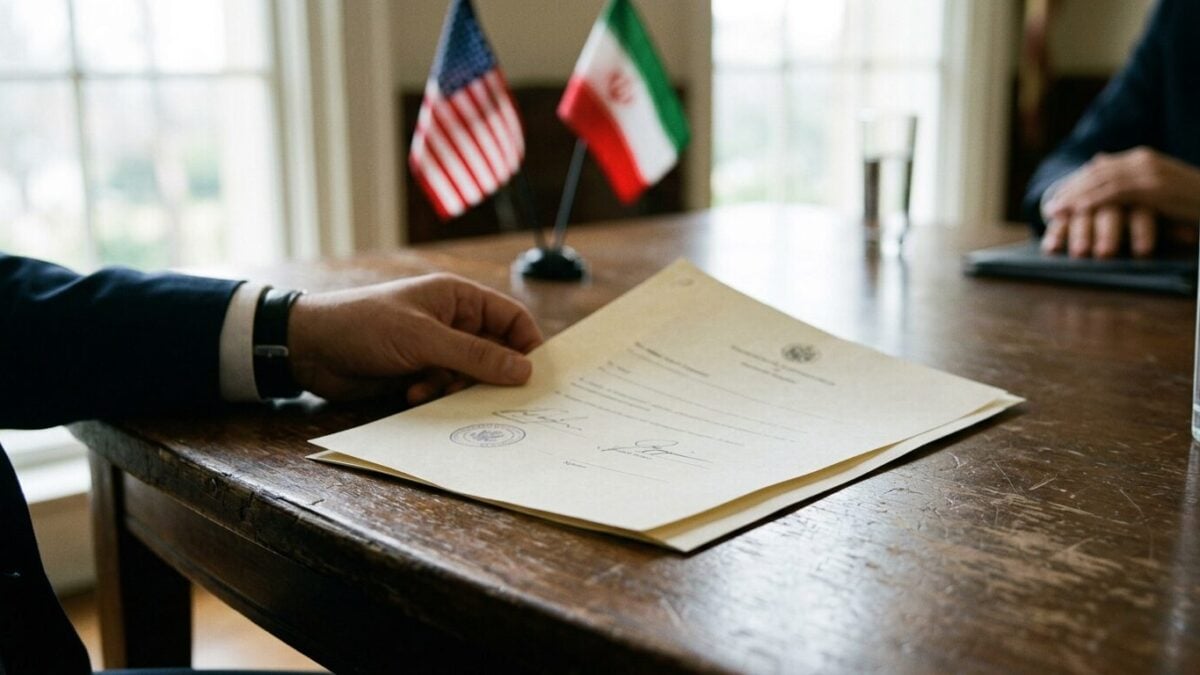
WASHINGTON — US-Iran talks: Mediators hail 'roadmap' for final agreement after Washington agreed to suspend economic sanctions on Iran for 60 days in exchange for nuclear inspections and safer passage through the Strait of Hormuz. The deal is being cast as the first real opening after months of mounting regional tension.
The immediate stakes are global. The Strait of Hormuz carries a large share of the world’s seaborne oil, and any disruption there can rattle energy markets, shipping insurance and military planning across the Middle East.
US Vice President JD Vance said the talks had produced a foundation for a final agreement, though he stressed caution. "This is a very crucial first step, but we remain cautious," Vance said at a news conference in Washington.
What Tehran must do next
Under the outline described by mediators, Iran must reopen access for inspections by the International Atomic Energy Agency, or IAEA. Tehran must also guarantee full safety for international cargo ships moving through the narrow waterway that links the Gulf to the Arabian Sea.
That condition matters because the strait is not just a shipping lane. It is a choke point. One-third of the world’s seaborne crude oil supply passes through it, making every threat of sabotage or seizure a market event.
Omani Foreign Minister Badr Albusaidi said his side held constructive talks in Muscat with Iranian Parliament Speaker Mohammad Bagher Ghalibaf and Iranian Foreign Minister Abbas Araghchi. He said the discussions centered on a bilateral memorandum of understanding, especially the clause on the Strait of Hormuz.
The written commitment, according to Albusaidi, is expected to ease pressure on insurers and shipping firms that had been bracing for more attacks or interference. During the height of the conflict, shipping insurance premiums surged as much as 400 percent, a cost many carriers were forced to absorb or pass along.
Europe’s energy market will be watching closely. So will importers in Asia, where even brief disruptions in the Gulf often translate into higher freight charges and a sharper oil bill within days.
Security officials have also been tracking the military backdrop. Maritime intelligence reports have pointed to mine threats in the area, while some merchant vessels have switched off automatic identification systems, or AIS, to avoid being tracked by hostile groups.
Pressure points in Israel, Lebanon and the Gulf
President Donald Trump responded forcefully at the White House while signing an executive order, warning that the United States would not hesitate to use military force again if Tehran violated the agreement. He also pointed to Iran’s domestic strain, saying the country had been pushed into disorder by war and sanctions, with inflation reportedly rising to 45 percent.
The diplomatic track is not moving in a vacuum. Israeli Prime Minister Benjamin Netanyahu said his military would continue to preserve freedom of action in southern Lebanon, rejecting Iran’s demand to withdraw troops from a buffer zone intended to protect northern Israel from Hezbollah attacks.
That leaves the talks exposed to the kind of regional crossfire that has sunk previous ceasefire efforts. One misstep. That is enough.
To reduce the risk of a wider clash, Vance announced a separate de-escalation mechanism after a phone call with Lebanese President Joseph Aoun. The stated aim is to protect Lebanon’s sovereignty while keeping security guarantees in place for Israel along the northern border.
Those figures, drawn from estimates of armed-contact incidents along the Lebanon-Israel frontier in the three months before the draft deal, show why mediators are treating the next 30 days as the real test. The first month of the sanctions suspension will show whether Tehran can hold to the agreement, and whether the Strait of Hormuz stays open without another flare-up.