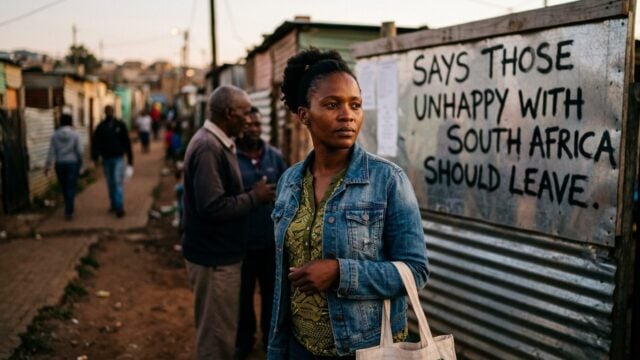
South Africa’s AfriForum and March and March Movement Form Controversial Alliance on Community Safety
A surprise partnership between a civil rights outfit and an anti-immigration group has ignited fierce debate in South Africa. AfriForum and the March and March

A surprise partnership between a civil rights outfit and an anti-immigration group has ignited fierce debate in South Africa. AfriForum and the March and March Movement announced Tuesday they would collaborate on community-level challenges ranging from crime to border security, drawing accusations of betrayal from critics while earning praise from supporters who see pragmatism at work.
The two organizations met to establish a joint working group. March and March founder Jacinta Ngobese-Zuma sat down with AfriForum CEO Kallie Kriel and his delegation to map out areas where their efforts could overlap. Their stated agenda spans grassroots organizing, workforce development, mother-tongue education, dispute resolution, and coordinated action against illegal immigration.
The Case for Partnership
Both sides framed the alliance as a practical arrangement among groups addressing genuine community problems. Ngobese-Zuma stressed that cooperation doesn't require complete ideological alignment. "The movement believes a healthy relationship between the two entities takes into account that, while they share many issues of common interest, there are also matters on which they will disagree," she said, emphasizing mutual respect and the willingness to challenge each other constructively.
Kriel echoed that logic. "One can choose to cooperate where we agree and where we share common interests," he noted. "We cannot allow differences on specific matters to stand in the way of cooperation that would benefit our children." He added that while protest against government failures has its place, direct community action matters more.
Political Firestorm
The backlash came swiftly and hard. Opposition parties seized on the announcement as evidence of questionable judgment. The Economic Freedom Fighters dismissed AfriForum in crude terms, with deputy president Godrich Gardee calling them "lizards"—signaling the EFF would not engage seriously with either group. The party has previously demanded law enforcement crackdowns on March and March protest activity.
The governing African National Congress took a sharper angle, branding AfriForum a "reactionary organisation" serving external interests and characterizing its recent actions as a "smear campaign" targeting senior party figures.
Among grassroots critics, the sting cut deeper. Land Party leader Gcobani Ndzongana penned an open letter challenging Ngobese-Zuma, with many in activist circles accusing her of "working with the enemy" and abandoning black communities. The framing pit racial solidarity against pragmatic cross-group organizing—a tension South African civil society has wrestled with for years.
What Comes Next
The two organizations plan to pursue joint legal action on matters of mutual concern, coordinate on rule-of-law issues, and deepen community capacity-building work. Whether the partnership survives the political pressure—or yields measurable results on the ground—remains unclear. For now, the alliance stands as a test case in whether South African organizations can move beyond partisan lines to tackle local problems, or whether ideology will ultimately trump cooperation.