Albanese pushes Queensland to back national AI data-centre plan ahead of state leaders’ meeting
Prime Minister Anthony Albanese has pressed Queensland to sign on to a national data-centre plan before state and territory leaders meet in Canberra on Wedne...
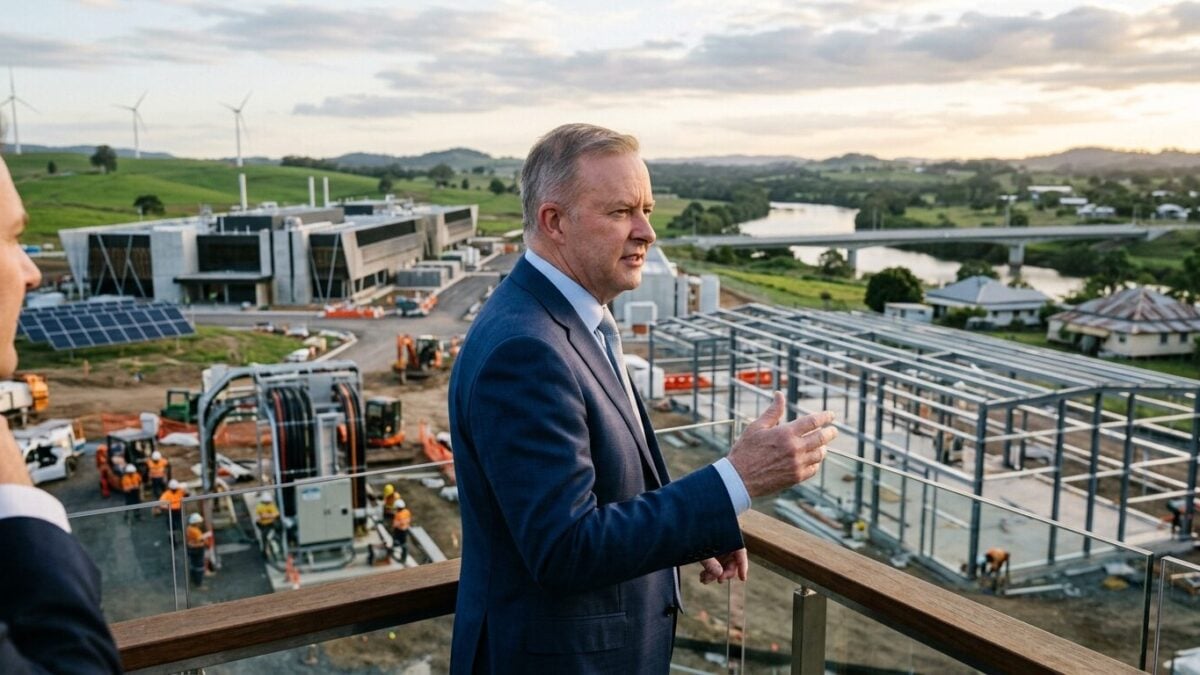
Prime Minister Anthony Albanese has pressed Queensland to sign on to a national data-centre plan before state and territory leaders meet in Canberra on Wednesday, sharpening a fight over how Australia’s AI buildout should be powered. The dispute lands as Labor also reminds premiers of their commitment to help fund a pared-back National Disability Insurance Scheme.
Albanese heads into national cabinet after a dinner with business leaders in Sydney, where he urged corporate chiefs to talk up Australia’s economy. The more immediate test, though, is whether he can lock in support for rules around artificial intelligence and the energy demands that come with it.
Renewables at the centre of the row
Queensland Premier David Crisafulli has held out against a federal plan that would require data-centre operators to create renewable energy to avoid pushing up electricity bills. The opposition Liberal National Party and Opposition Leader Angus Taylor want the boom in data centres powered by any energy source, including fossil fuels, a position that could unsettle the fragile bipartisan deal forming around AI policy.
Albanese said he expected to secure agreement. “I’m confident we can get consensus,” he said before Wednesday’s meeting.
He argued that any deal needs public support. “We want social licence… Which is why you need to have that additional investment to make sure [data centres are not] displacing energy and therefore increasing costs,” he said.
AI, energy bills and public consent
The clash goes to the heart of a broader problem facing governments from Canberra to London and Washington: artificial intelligence needs vast computing power, and that means more electricity, more infrastructure and more pressure on power prices if new supply does not keep pace. Australia is trying to sell itself as a clean-energy economy while also courting investment in digital infrastructure. That balance is proving awkward.
In Queensland, the argument is especially sharp because the state has become a key battleground in federal politics and in debates over energy reliability. Albanese has sought to frame the issue as one of restraint rather than obstruction — if data centres take power from existing users, households and businesses could feel the pinch.
The national cabinet meeting is also expected to take up a faltering gun buyback and fresh measures aimed at reducing domestic violence. But AI regulation and data-centre power supply are shaping up as the most closely watched economic issue on the agenda.
A broader message to business and states
At Tuesday night’s Business Council of Australia dinner in Sydney, Albanese told business leaders to be more upbeat about the economy. The call came after months in which some executives have sounded downbeat about conditions and investment prospects.
He has been pitching Australia as a place with the resources to make the AI transition work. Earlier this week, at Volvo’s Wacol manufacturing facility in Queensland, Albanese pointed to electric truck production as proof that clean-energy industry can be built locally. And only weeks ago, during talks with New Zealand Prime Minister Christopher Luxon, he cast Australia’s regional partnerships as a buffer against a “volatile and changing world”.
Now the question is whether Queensland will join the federal line on data centres, or force a longer argument over how the AI revolution gets powered. Wednesday’s meeting will show whether Albanese’s push for consensus holds.