Left and right find rare common ground in fight over AI data centers
Opposition to artificial intelligence data centers is pulling together an unlikely mix of Americans. In places as different as rural Nebraska and New Mexico,...
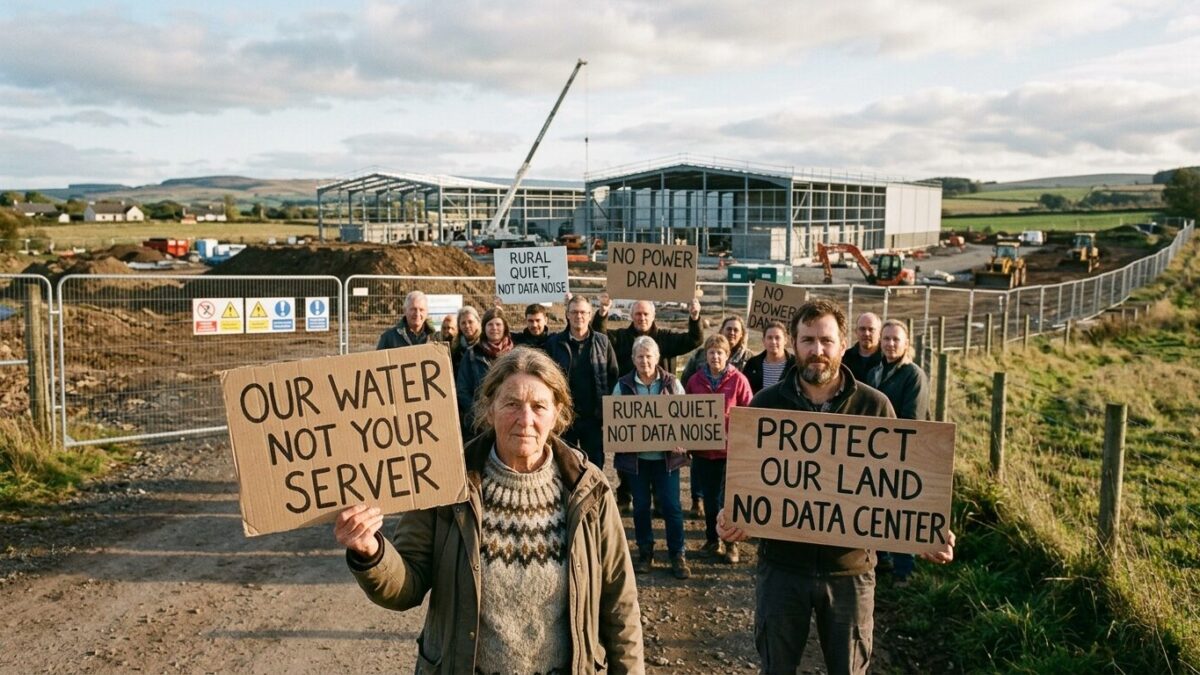
Opposition to artificial intelligence data centers is pulling together an unlikely mix of Americans. In places as different as rural Nebraska and New Mexico, farmers, environmental groups and labor activists are pushing back over land use, water supplies and electricity costs.
The fight is not following the usual partisan map. It is cropping up in Republican-leaning Nebraska, Texas and Wyoming, in swing-state Pennsylvania and in Democratic-leaning New Mexico, where residents have raised alarms about projects tied to the AI boom.
A firehouse meeting in corn country
In Murdock, Nebraska, a town of about 275 people surrounded by corn and soybean fields, opposition has been building around plans for new data centers. Conservative farmers and the state Sierra Club chapter recently turned up at a firehouse meeting to share the same concern: the projects are moving too fast.
Their complaints overlap in striking ways. They worry about farmland disappearing, water supplies shrinking and electricity bills rising. They also fear that giant corporations could remake small-town America into a chain of computing warehouses.
That coalition crossed familiar lines. People who normally find themselves on opposite sides of politics sat in the same room and argued from the same angle. Not about ideology. About what happens next to the ground beneath their feet.
New Mexico protests keep pressure on regulators
In Santa Fe, protesters gathered outside the New Mexico Environment Department on Friday, Aug. 21, to oppose the Project Jupiter data center. Another demonstration was held outside a state office the same day. Photos from the scene showed protesters holding their ground as the debate over the project played out in public.
Among them were Jacob Weinreich and his mother, Sharon Metcalf, who joined the protest against Project Jupiter. Their presence underscored how local resistance has spread beyond the usual activist lanes and into family-led street demonstrations.
A separate file photo showed a data center built by the Markley Group rising over a ballpark and a residential neighborhood in Lowell, Massachusetts, a reminder of how these facilities can sit close to homes and daily life. For many opponents, that image captures the worry in one frame.
Why the backlash matters
Data centers sit at the center of the artificial intelligence expansion, and that makes them hard to ignore. Supporters argue they are essential infrastructure for the new computing race. Critics see something else: huge buildings with heavy demand for power and water, arriving with little patience for local concerns.
The pushback now includes people who often disagree on almost everything else. Republican President Donald Trump and some union leaders support data center growth, while a broad mix of residents and activists is pressing for a slower pace.
That tension is what makes the debate unusual. It is one of the rare issues in modern American politics that cuts across party lines, class lines and geography at once. And for communities in the path of these projects, the argument is getting louder.
The meeting room in Murdock. The protest line in Santa Fe. The questions about water, land and power. That is where the next battle is being fought.