WA GST row erupts as Productivity Commission hits back at premier’s “east coast clowns” insult
Australia’s debate over how the goods and services tax is split has blown up into a public fight, with Western Australia’s premier and the Productivity
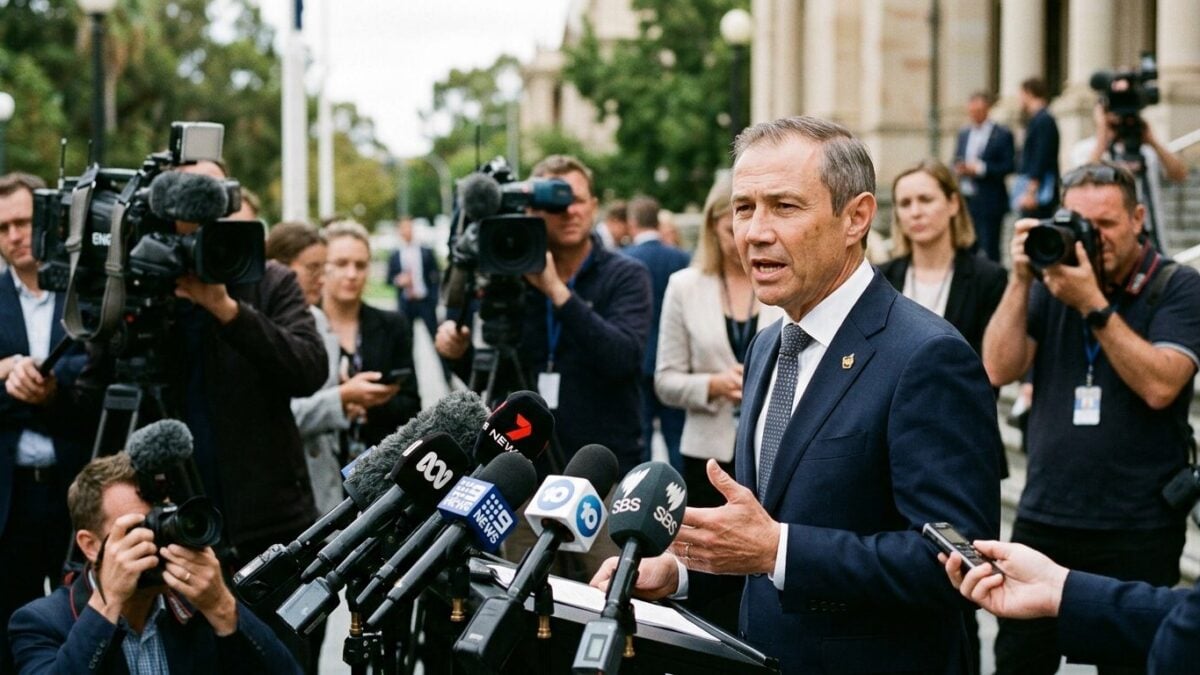
Australia’s debate over how the goods and services tax is split has blown up into a public fight, with Western Australia’s premier and the Productivity Commission trading barbs as Prime Minister Anthony Albanese heads into a meeting with state and territory leaders in Canberra on Wednesday. The clash now sits at the centre of National Cabinet talks, with WA refusing to budge and the federal government signalling it will keep the state’s current share in place.
Western Australian Premier Roger Cook triggered the latest round this month when he branded the federal economic advisory body “east coast clowns” after it described WA’s GST carve-up as a costly mistake and urged the deal be scrapped. The comment landed hard. So did the report.
Commission says its integrity was attacked
Productivity Commissioner Angela Jackson, who co-authored the report, said Cook had gone beyond ordinary political disagreement. She said his remarks had “crossed a line” and described attacks on the commission’s integrity as unacceptable.
Jackson said the body welcomes criticism of its work. That is part of the job. But she said calling the report deceitful and labelling the commission in personal terms undermined the independent role it plays in economic policy debates. She also said the episode reflects a broader trend seen in public debate internationally, where institutions are increasingly singled out for abuse rather than challenged on the merits.
The commission’s report argued the 2018 GST arrangement struck by the Morrison government had been a costly mistake. It said federal taxpayers have already paid $23 billion in top-up payments to Western Australia under the deal, and projected the arrangement would cost $6.6 billion in 2026-27 and $60 billion by the end of the decade.
WA digs in over its share
Cook has made clear he will keep pressing the case for Western Australia. He said he was doing what he always does: putting WA first. For him, the issue is not academic. It affects daily life, state finances and what he says is the state’s fair share.
“To the Productivity Commission it may be academic but for Western Australians it’s our lives,” he said, adding that he would fight for every dollar.
His criticism of the commission fed a sharp reaction from Canberra. Treasurer Jim Chalmers defended the federal government’s approach, while Albanese has already said he will preserve WA’s existing GST arrangements. During a visit to Perth this week, the prime minister repeated that commitment despite pressure from the commission and other state leaders.
National Cabinet test for Albanese
The timing matters. Albanese is due to face state and territory leaders at National Cabinet on Wednesday, where the GST dispute is expected to be raised directly. WA wants its current deal locked in. The commission wants it scrapped. And the federal government is standing by the status quo, at least for now.
The row has turned a technical fiscal formula into a political flashpoint with national stakes. It also exposes a familiar tension in federations: richer states and resource-heavy regions often argue they deserve to keep more of their own revenue, while other governments push for a distribution that smooths out the gaps.
For now, the arguments are only getting sharper. Jackson is scheduled to meet and the pressure on Albanese to explain his position is unlikely to ease once National Cabinet starts.