UWC honours Adila Hassim for public-interest legal fight spanning health, rights and genocide case
The University of the Western Cape will confer an honorary doctorate on Advocate Adila Hassim SC on Friday, recognising a legal career built around people
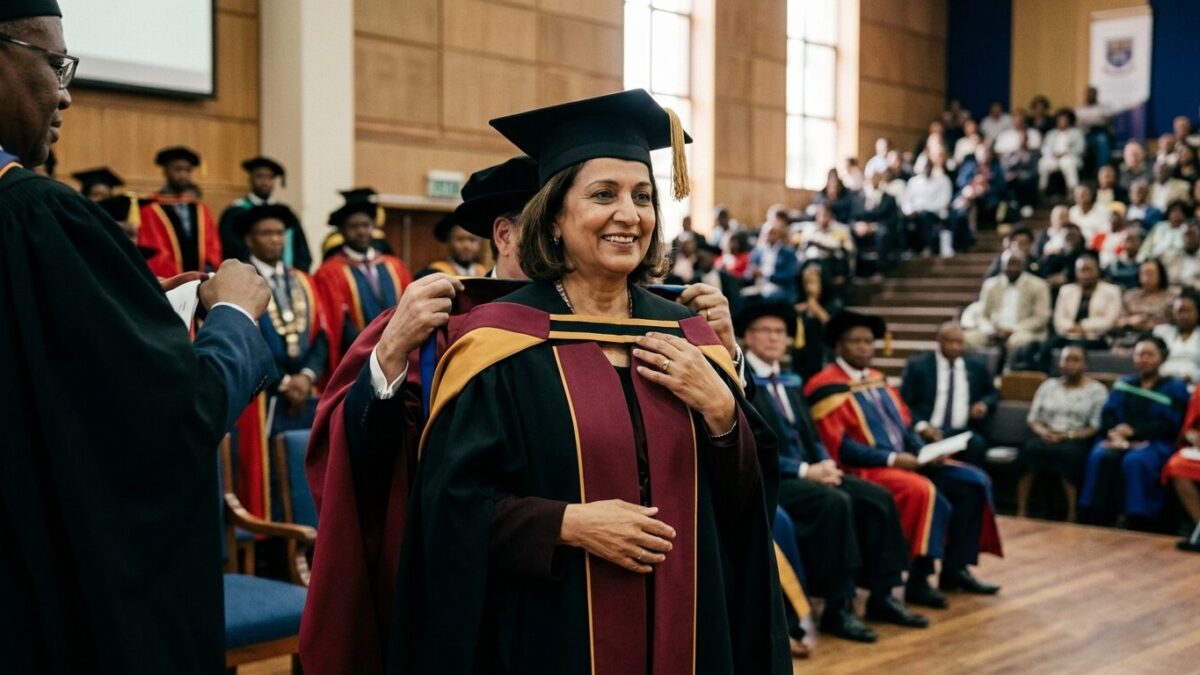
The University of the Western Cape will confer an honorary doctorate on Advocate Adila Hassim SC on Friday, recognising a legal career built around people who rarely have the loudest voice in the room. The university says the award reflects more than two decades of public-interest litigation and Hassim’s work on cases touching healthcare, education, occupational disease and mental healthcare.
UWC said the honour also marks her role on South Africa’s legal team before the International Court of Justice in January 2024, when the country took Israel to court under the Genocide Convention. For the university, the domestic fights and the international case are part of the same record. Same principle. Same lawyer.
A career centred on access
According to UWC, Hassim’s work has repeatedly focused on people whose rights are hard to assert in practice: patients seeking care, learners pressing for education, mineworkers facing occupational disease and mental healthcare users navigating a strained system. That body of work, the university said, shaped its decision to confer the doctorate.
The emphasis matters well beyond South Africa. Around the world, courts are often where unequal access becomes visible — where a hospital queue turns into a constitutional argument, or a school exclusion becomes a test of state duty. Hassim’s record sits squarely in that tradition of public-interest law, where legal argument is used to push institutions toward accountability.
From domestic courtrooms to The Hague
One reason UWC singled out Hassim is the link between her local litigation and her international work. In January 2024, she was among the lawyers who represented South Africa before the ICJ in proceedings against Israel. The university said it did not view the two strands as separate achievements.
That connection gives the honour a wider resonance. South Africa has long cast its constitutional and rights-based legal battles as part of a global conversation on equality, dignity and state responsibility. Hassim’s career, as framed by UWC, moves along that same line: from clinics and classrooms to one of the world’s highest courts.
Part of a wider ceremony
The honorary degree is part of a broader UWC ceremony in which several public figures were recognised on Friday. Other honourees included struggle icon Charlotte Maxeke, former Irish president Mary Robinson, UN investigator Francesca Albanese, Professor Emeritus Loyiso Nongxa and the late Mandisa Monakali.
According to media reports from the event at the Old Mutual Conference Centre in Kirstenbosch, the night drew attention for its focus on women leaders and public service. Maxeke was honoured posthumously, almost 125 years after becoming the first Black South African woman to earn a university degree. For Hassim, the recognition lands in a room already steeped in the history of access, rights and education.
The ceremony placed her among seven trailblazers. And it closed with a clear signal about what the university chose to value: law used not as distance, but as leverage for those with the least power.