New Landmasses Emerge After Anak Krakatau Eruption in Sunda Strait
Mount Anak Krakatau's September 2026 eruption has created two new land formations in the Sunda Strait, sparking debate over their permanent existence.
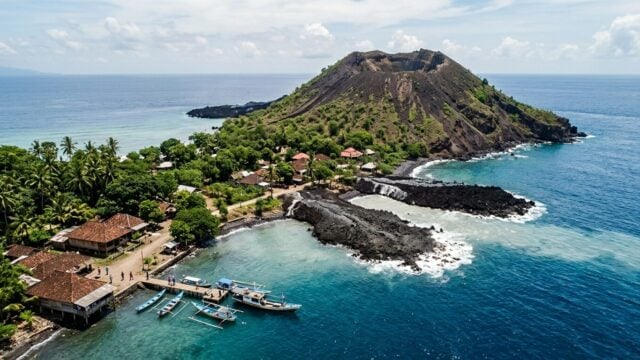
JAKARTA — The volcanic activity of Mount Anak Krakatau in the Sunda Strait has caused dramatic shifts in regional topography following a series of violent eruptions in September 2026. The geological event, which expanded the volcano's main landmass, has also spurred the formation of two distinct land fragments, raising questions among experts regarding their long-term stability.
For coastal communities throughout the region and those relying on transit corridors between Java and Sumatra, the volcano remains a point of intense concern. The eruption not only altered the landscape but triggered significant logistical disruptions, as dense plumes of volcanic ash forced the closure of airports and grounded air traffic across Indonesia.
Eruption Timeline and Geographic Shift
The latest eruptive phase began on Sept. 4, 2026, sustaining intense activity for roughly 25 hours before subsiding on Sept. 6, 2026. During this window, the volcano expelled substantial lava flows directed toward the northwest, west, and southwest. As these molten materials cooled upon reaching the sea, they solidified into fresh deposits, effectively expanding the island's footprint.
Comparative satellite imagery from Aug. 8, 2026, and Sept. 15, 2026, confirms that the primary landmass of Anak Krakatau grew by approximately 33 hectares (roughly 81 acres). Beyond these physical changes, the eruption’s impact rippled through the national aviation sector. Airborne ash clouds, carried by prevailing winds toward Jakarta and surrounding areas, forced massive flight disruptions. A total of 2,961 flights were either canceled, delayed, or diverted, affecting more than 340,000 air passengers.
Assessment of New Land Formations
Sentinel-2 satellite imagery captured on Sept. 20, 2026, identified two new formations separate from the volcano's main body. The first emerged to the northwest, roughly 760 meters from the Anak Krakatau shoreline, while the second appeared to the southeast, positioned approximately 495 meters from the volcano’s base.
While initial reports speculated that these formations might signify the birth of new islands, geologists and volcanologists are advising caution. Experts suggest it is premature to classify these deposits as permanent features. The energetic marine environment of the Sunda Strait—defined by strong currents and constant wave action—poses a significant risk of erosion. Without a stable geological core, these landmasses may be reclaimed by the sea before they can be considered permanent geographic additions.