Nikon Disqualifies Ning Xu’s Video, Reorders Contest Rankings
Nikon disqualified Ning Xu’s winning video from its Small World in Motion competition after determining that its use of generative AI violated the rules. The…
Nikon AI rules have cost Ning Xu the top spot in the Small World in Motion competition, after the company concluded that his video did not comply with its generative AI policy. The decision followed criticism from scientists who questioned whether the microscopic footage accurately showed the structures it claimed to depict.
The rankings have been changed. A video by Vietnamese researcher Nguyen Nam Nhat now holds first place, according to Nikon’s updated results. Nikon also said it would revisit the rules and evaluation procedures for future editions of the contest.
Why Nikon disqualified the video
Nikon announced its decision after re-evaluating the video and its supporting materials and consulting members of the judging panel. The company said the decision concerned the entry’s eligibility under the competition rules, not Xu’s professional reputation, scientific contributions or intent.
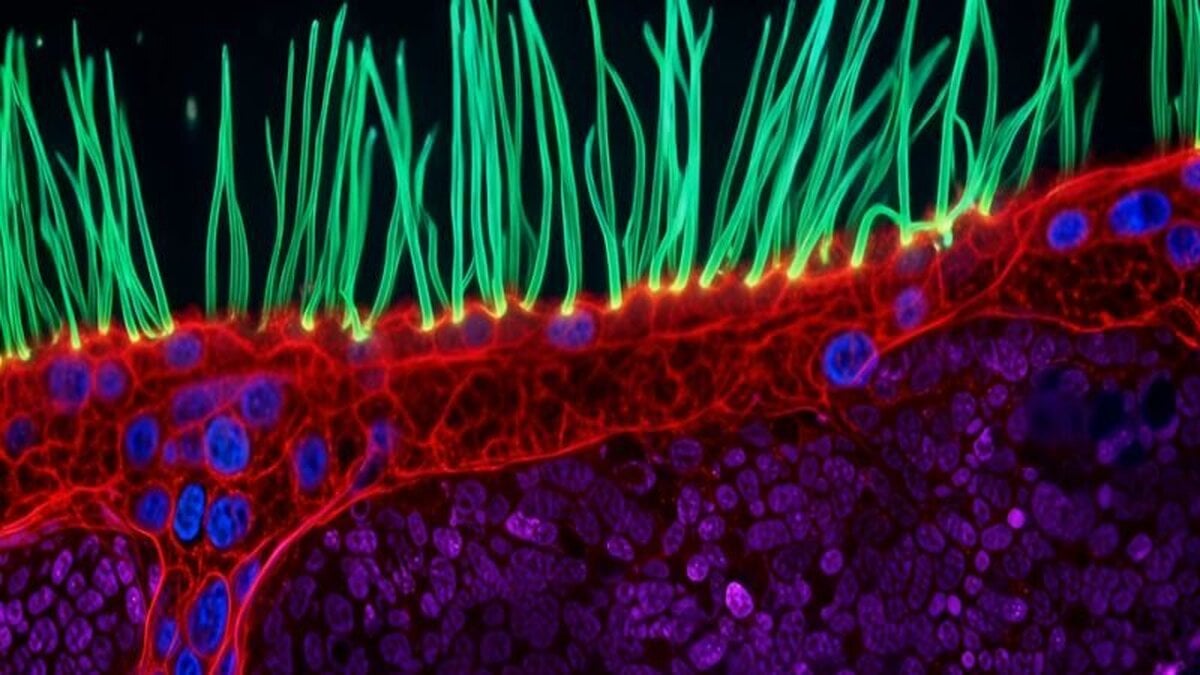
Xu’s entry showed airway cilia — tiny, hairlike structures — in a child with primary ciliary dyskinesia, a rare genetic disorder. The video drew criticism after scientists questioned whether some of the biological structures shown behaved as expected.
University of Florida associate professor Edward Phelps said there were “many serious problems with this video.” He argued that some structures in the footage did not act as expected and said the microscopy community deserved an explanation from Nikon.
Xu acknowledged using AI in comments on LinkedIn, but described it as post-processing. “AI was not used to generate the experimental movie, the cilia, or their motion,” he wrote. He said it was applied to reconstructed grayscale data to distinguish and color structures with similar morphology.
AI use raises questions for scientific images
The case puts a practical issue before competitions that rely on scientific imagery: where should organizers draw the line between processing an image and changing what it represents? Nikon’s statement establishes that Xu’s video failed the contest’s rules, while stopping short of judging his motives or wider scientific work.
That distinction matters because microscopic images can serve both as competition entries and as depictions of biological evidence. When viewers cannot tell how AI affected an image, confidence in what the footage shows can become part of the dispute. Nikon’s planned review of its rules and evaluation procedures is a response to that problem, though the company has not yet detailed what changes it will make.
The criticism also reached beyond the contest. University of Leicester scientist Robert Hirst, who raised concerns about the video, said: “This controversy has impacted a lot of patients, scientists, doctors and PCD support networks around the world.” Hirst said his work diagnosing PCD involved examining cilia waveforms, length, cell size and shape, and argued that the cells and cilia in Xu’s video did not resemble those from PCD patients.
Nikon’s disqualification changes the contest result, but the company’s next step is to reconsider how it evaluates entries involving generative AI. Nguyen Nam Nhat’s video now ranks first.
Source: cnn.com