Jet2 Plane Runs Onto Grass After Landing at Birmingham Airport
A Jet2 Boeing 737-800 moved onto the grass after landing at Birmingham Airport during strong winds linked to Storm Boelo. The flight had come from Venice, and…
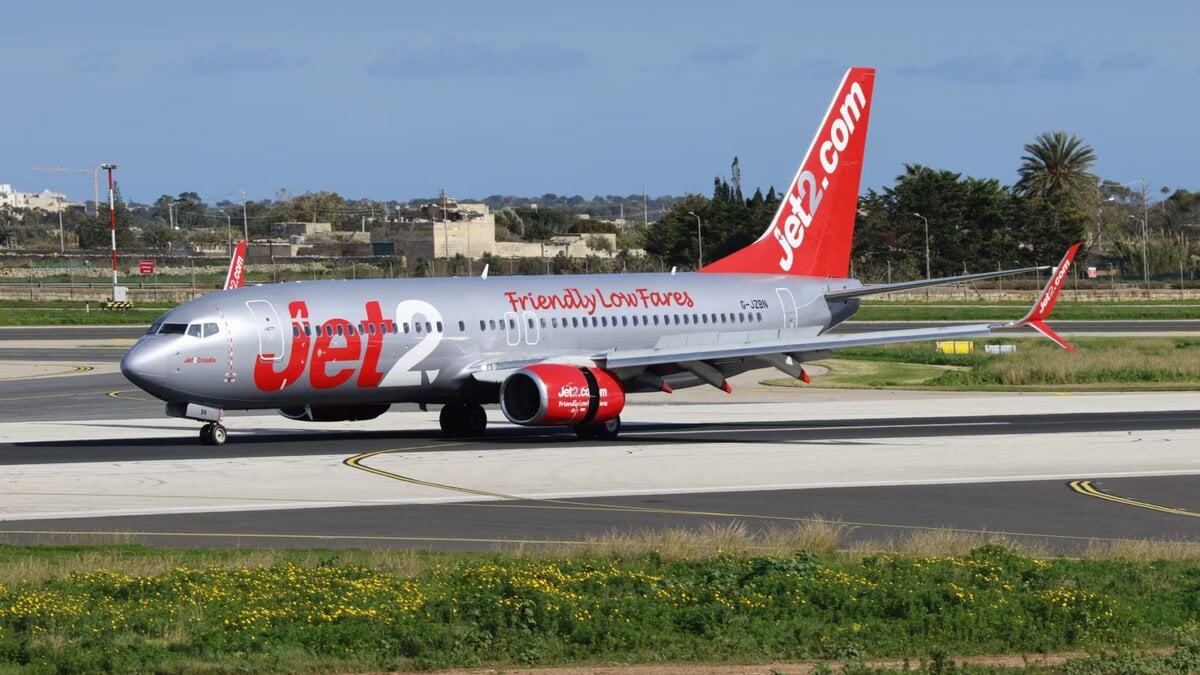
A Jet2 Boeing 737-800 moved onto the grass after landing at Birmingham Airport on Sunday, with footage of the runway excursion circulating on social media. The aircraft was operating flight LS1310 from Venice, and the airline attributed the incident to exceptional weather conditions caused by Storm Boelo.
The plane landed at approximately 14:19 local time on Runway 33, according to Simple Flying. Strong winds across parts of the UK accompanied the storm. The incident put the effect of gusty conditions on aircraft approaches and airport operations into sharp view.
Caught camera Jet2 Boeing amid strong winds
Jet2 confirmed the aircraft temporarily moved off the runway after landing. A spokesperson for the airline told BBC News: “Flight LS1310 from Venice to Birmingham temporarily moved off the runway after landing at Birmingham Airport earlier this afternoon, due to exceptional weather conditions caused by Storm Boelo.”
Turbine Traveller shared footage of the landing. Simple Flying reported that the aircraft veered onto grass as strong winds affected Birmingham Airport. The source did not report injuries or provide details about damage to the aircraft.
Weather observations cited in the report show winds from 270° at 18 knots, gusting to 29 knots, in the 10:50 UTC METAR. Wind direction varied between 240° and 320°. A forecast issued at 11:19 AM UTC predicted gusts of up to 35 knots, with temporary gusts potentially reaching 45 knots between 12:00 PM and 3:00 PM UTC.
Why gusts matter during landing
Runway 33 is oriented approximately northwest, Simple Flying reported. Westerly winds can therefore create a crosswind component, pushing an aircraft sideways relative to the runway. Pilots make corrections to keep the aircraft aligned, and gusts or sudden changes in wind speed can make that task more demanding during the final approach and touchdown.
The report says aircraft must operate within their specific crosswind limits, with pilots also considering runway conditions. It does not say whether any operational limit was reached in this case. The airline’s statement points to the storm conditions as the reason for the aircraft’s temporary movement off the runway.
For passengers, weather-related disruption can extend beyond a single landing. Simple Flying notes airports may alter runway configurations, adjust arrival rates, delay departures or divert flights when conditions warrant it. Strong winds can also make ground handling more difficult, while heavy rain may reduce visibility and complicate airport operations.
The Met Office forecast windy conditions across the West Midlands, while the strongest storm impacts were expected farther north. The report said gusts of 60-70 mph (97–113 km/h) were expected in Scotland, Northern Ireland and northern England, with potentially 80 mph (129 km/h) in exposed locations. Birmingham’s airport forecast indicated afternoon gusts reaching around 42 mph (68 km/h).
The morning airport observation recorded gusts of 29 knots.
Source: simpleflying.com