Berkshire Hathaway BRK.B Cheap? Model Sees Value Above Price
A Simply Wall St excess-returns model estimates Berkshire Hathaway’s intrinsic value above its current share price, while questions remain about returns on its…

Simply Wall St’s excess-returns model places Berkshire Hathaway’s estimated intrinsic value above its current share price, bringing the question of whether Berkshire Hathaway BRK.B cheap into focus as the company faces possible new AI-related investment commitments.
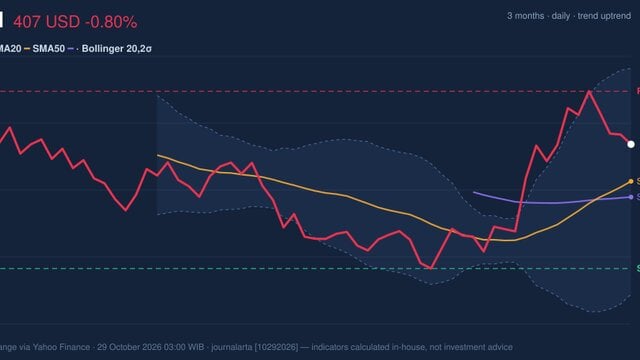
The analysis values the shares at $540.34 against a model estimate built from the company’s returns on equity. It comes as fresh attention turns to Berkshire’s possible involvement in Meta’s planned AI equity funding, after its role in Alphabet’s large equity deal in June.
Berkshire’s shares have returned 87.2% over the past 5 years, according to the Yahoo Finance article. That performance puts attention on whether the conglomerate can keep deploying its large pool of capital productively enough to support its valuation.
What the Berkshire Hathaway BRK.B cheap model assumes
The excess-returns framework compares the profit Berkshire Hathaway earns on its equity base with the return investors typically require. The model uses Book Value of $522,225.90 per share and Stable EPS of $65,319.23 per share, based on the median Return on Equity from the past 5 years.
It sets Cost of Equity at $41,036.47 per share, leaving an Excess Return of $24,282.76 per share. The calculation is supported by an average Return on Equity of 11.91%.
That is the model’s central case. It estimates a Stable Book Value of $548,342.09 per share, using estimates from 2 analysts, and compares the result with the current share price of $540.34. On those assumptions, estimated intrinsic value sits substantially above the market price.
The difference depends on the assumptions holding. Berkshire’s ability to earn returns above its funding cost matters because its capital base is large, and new investments could affect how effectively that capital generates returns over time.
AI deals put capital allocation in focus
The possibility of a Meta AI equity deal has sharpened questions about where Berkshire commits capital and what returns it may earn. The Yahoo Finance report says the potential commitment would come on top of Berkshire’s role in Alphabet’s large equity deal in June.
That matters to investors because the valuation case rests on Berkshire continuing to turn its equity base into profits above its cost of equity. If future commitments produce different returns, the assumptions behind the model may need to be reassessed. The report says the stock’s next move may depend on whether returns on capital are strong enough to justify its current price.
There is another valuation lens in the report: Berkshire Hathaway’s 13.5x P/E. The article says that earnings-based measure tells a different valuation story, underscoring that a model based on excess returns is only one way to assess the shares.
Simply Wall St also describes its Narrative framework, which lays out assumptions about growth, profitability, earnings and risk. Those assumptions can be revisited as new information becomes available, including as Berkshire’s capital decisions develop.
The analysis says the company’s leaders and their compensation can influence where capital goes and whether the valuation case holds over time. Simply Wall St describes the article as general commentary based on historical data and analyst forecasts, and says it is not financial advice or a recommendation.
Source: finance.yahoo.com