Internal Documents Reveal Scramble to Keep Cruise Sailing
Villa Vie Residences struggled to fund the MV Odyssey before suspending operations in Cambodia, leaving more than 200 passengers stranded. Documents show the…
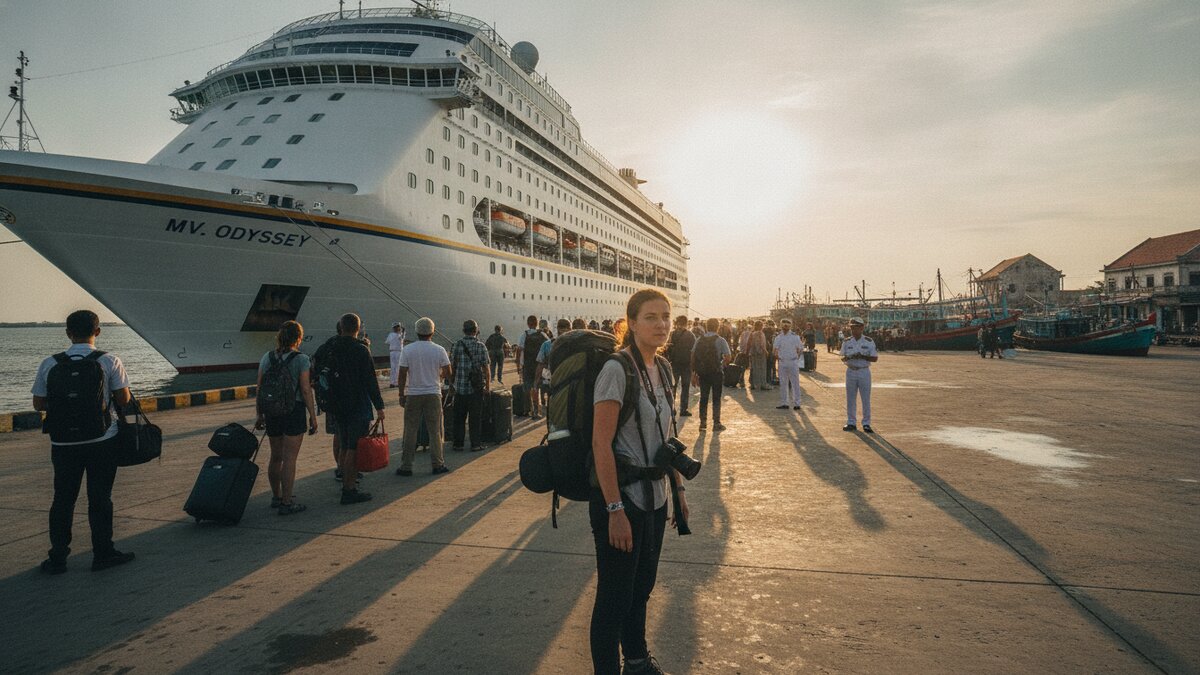
Villa Vie Residences ran short of money to operate the MV Odyssey before suspending the around-the-world cruise in Cambodia earlier this week, leaving more than 200 passengers and dozens of crew members stranded. Internal documents show the company owed money to suppliers and crew while trying to raise emergency funds.
The ship’s abrupt halt followed months of financial strain and attempts to keep the voyage moving. Residents had only hours to disembark after operations were suspended on Tuesday, according to accounts from people familiar with the final weeks aboard.
Passengers had bought cabins for several hundred thousand dollars to live on the ship during a continuous global cruise. The Odyssey began its voyage in October 2024, operated by Florida-based Villa Vie Residences.
Internal documents reveal scramble for emergency funds
In early August, while the Odyssey was docked in Singapore, Villa Vie warned that the ship could be detained and said it urgently needed to raise money. A resident, Darrell Carp, said the operator had run out of funds there.
“There's no question that we ran out of money in Singapore,” Carp said. He said he was out $250,000.
Residents were wary of giving more money directly to the company because they believed its finances were being mismanaged. Carp said passengers did not understand the scale of the debt and that payments for crew, provisions and fuel were already behind.
After passengers raised funds during the Singapore stoppage, one resident paid $400,000 directly to a fuel supplier from a personal checking account so the ship could continue its journey. Internal documents showed Villa Vie was several million dollars in debt at the time, with hundreds of thousands of dollars owed to a port agent, fuel companies, food vendors and crew.
The financial pressure had practical consequences on board. Documents said the ship was potentially days away from losing insurance, and Villa Vie planned to cut internet service to save money. At a town hall on Aug. 4, residents were warned the company might halt operations, lay off staff and repatriate the crew.
How did Villa Vie try to keep the voyage going?
Villa Vie introduced a program in early August to raise emergency cash by offering current passengers discounted cabins. The “Villa Incentive Program,” or VIP, was initially an idea from residents and was designed to give participants a larger ownership stake in the ship, according to passengers and a source close to the company.
The appeal came with urgency. A Villa Vie presentation’s final slide said, “Funds are due today.” By Aug. 18, the company posted, “We have the commitment of over 20 cabins on the VIP sales!”
The VIP sales brought in enough money to keep the ship operating for a time, but the company continued to struggle. A source familiar with the program said Villa Vie was still selling cabins to residents while operating at a loss.
That left passengers exposed to a business crisis they could not resolve simply by buying into the voyage. One source close to the company said a spike in fuel prices this year, after the U.S. attacked Iran, had been disastrous for the business model. The documents also showed that even at full occupancy, the ship would run at a $600,000 loss, with average monthly operating costs of $3.1 million.
Residents and crew faced the immediate consequences when the cruise ended in Cambodia. The attempt to bridge the shortfall had included a direct fuel payment of $400,000 from a resident’s personal account.