Five Foldable Phones Challenge Apple’s $2,000 iPhone Duo
Apple’s iPhone Duo arrives in a foldable market with established Android rivals. The Samsung Galaxy Z Fold 8 and Google Pixel 11 Pro Fold are among five…
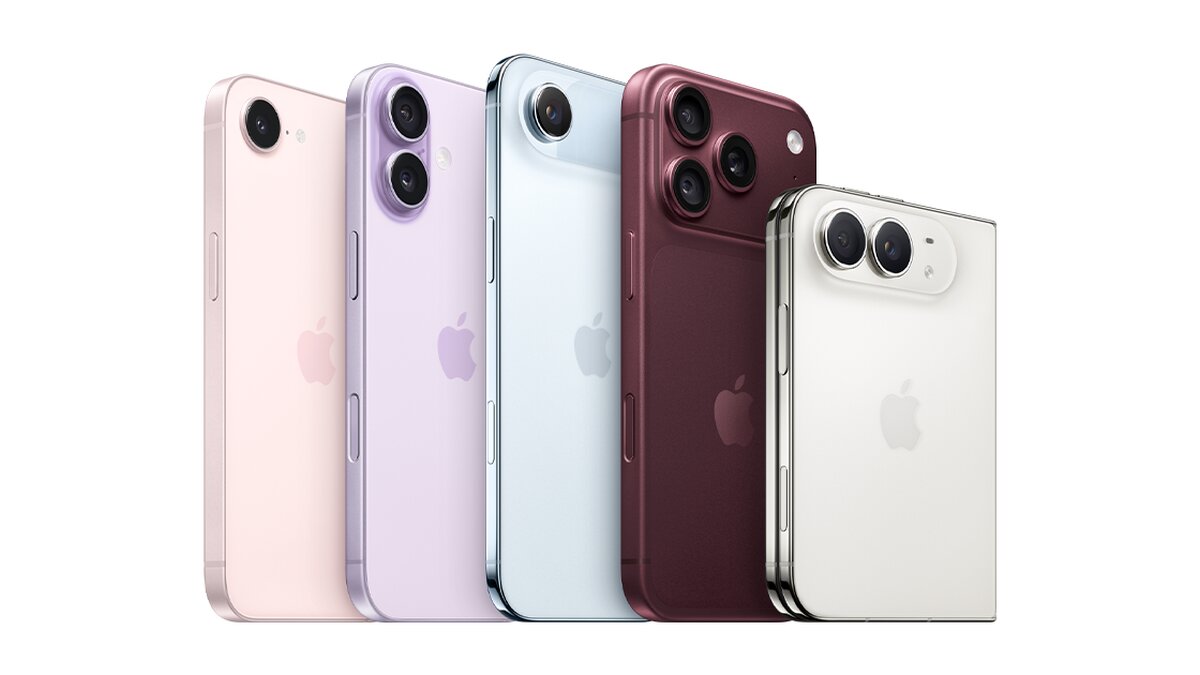
Apple’s $2,000 iPhone Duo faces established Android competition, giving buyers five foldable phones to consider before choosing the company’s first foldable. Apple unveiled the device alongside the iPhone 18 Pro series, with a passport-style design that opens from a 5.4-inch cover display to a 7.6-inch screen.
The alternatives matter most to shoppers who do not rely on Apple’s ecosystem or want to compare prices and form factors before buying. Samsung’s Galaxy Z Fold 8 and Google’s Pixel 11 Pro Fold both start at $1,900, below the iPhone Duo’s starting price.
How do Samsung’s foldables compare?
Samsung’s Galaxy Z Fold 8 takes a wider, more compact shape than its predecessor, bringing its footprint closer to the iPhone Duo. It has a 5.5-inch outer display and a 7.6-inch inner screen, both Dynamic LTPO AMOLED 2X panels with refresh rates of up to 120Hz.
Samsung says its “Flex Titanium technology” is designed to improve display durability while reducing the visibility of the crease. The phone runs on a Snapdragon 8 Elite Gen 5 processor and includes wide and ultrawide rear cameras. Samsung also promises seven years of One UI updates.
The price starts at $1,900 for the same 256 GB capacity as the iPhone Duo, making the starting-price difference concrete for buyers comparing like-for-like storage. Reviews have also pointed to reduced crease visibility and improved batteries, as Samsung begins incorporating silicon-carbon battery technology into its foldables.
Samsung also introduced the Galaxy Z Fold 8 Ultra, which has the taller form factor. The regular Galaxy Z Fold 8 is the wider option in the new lineup. A different shape can affect how comfortably a folded phone fits in a pocket and how much screen space users get when it is open.
What does Google’s Pixel 11 Pro Fold offer?
The Google Pixel 11 Pro Fold also starts at $1,900. Google says its new glass fiber composite back panel is “nearly impossible to crack.” The phone is slimmer and lighter than last year’s model, has an aluminum frame and carries an IP68 rating.
Its cover display measures 6.5 inches, while the inner screen spans 8 inches. Both OLED panels refresh at up to 120Hz and reach a peak brightness of 3,600 nits, narrowly exceeding the iPhone Duo’s peak brightness. The Pixel runs Android 17 and uses Google’s Pixel UI.
There are trade-offs. Google’s foldable does not officially support stylus input, and its aluminum frame may feel less premium or sturdy than the titanium frame on Apple’s phone. Its front-facing camera sits in a hole-punch cutout; Apple places its camera under the display, a design choice that comes at the cost of image quality.
That comparison has practical consequences: buyers choosing between the phones are weighing more than the opening price. Screen dimensions, frame materials, camera placement, stylus support and software update commitments all shape what each device offers after purchase. The iPhone Duo starts at $2,000, while Samsung and Google set their listed alternatives at $1,900.
The wider market has had more time to develop foldables. Samsung is already on its eighth generation of Galaxy Z Fold devices, while the Pixel 11 Pro Fold is Google’s fourth foldable, despite its name.
Apple’s iPhone Duo pairs OLED displays with refresh rates of up to 120Hz and uses a 2nm A20 Pro processor. Its inner screen has a nano-texture finish intended to make the crease difficult to spot from some angles, and its rear camera system includes wide and ultrawide cameras. Early hands-on impressions have been positive, particularly on its design and software.
For shoppers comparing the two listed Android alternatives with Apple’s phone, the starting-price gap is $100: the Galaxy Z Fold 8 and Pixel 11 Pro Fold begin at $1,900, against $2,000 for the iPhone Duo.