Allan Clarke to Lead Paris Festival of Aboriginal Cinema
Filmmaker Allan Clarke will become artistic director of the Festival du Cinéma Aborigène Australien in Paris. The 11th annual festival runs December 4-6 under…
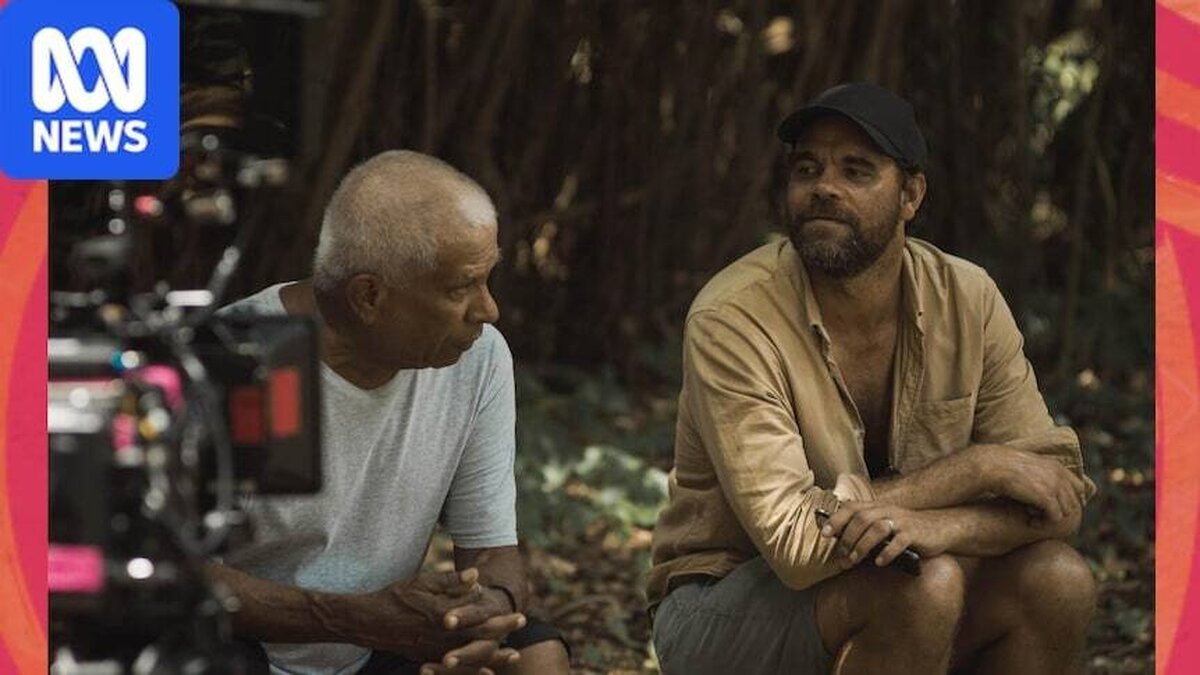
PARIS — Filmmaker Allan Clarke, who grew up in Bourke, will become artistic director of the Festival du Cinéma Aborigène Australien in Paris, where its 11th annual edition runs from December 4-6. The Australian First Nations film festival will present work under the theme “Kinetic — Tradition in Motion: Cinema in Revolt.”
Clarke is a Muruwari and Gomeroi filmmaker, writer and investigative journalist. He takes over programming from festival founder Greta Morton-Elangué, who said this is the first year she will not be in charge.
The change puts a filmmaker whose work includes documentaries The Dark Emu Story and The Bowraville Murders in charge of a program designed to bring First Nations cinema to an international audience. Films by Warwick Thornton, Wayne Blair and Danielle MacLean are among this year’s selections.
What does Allan Clarke want to bring to the festival?
Clarke says he wants the program to foreground filmmakers who challenge conventional storytelling and reshape familiar genres. “Coming in sort of fresh, I really wanted to highlight our filmmakers who are really challenging the status quo and who are consistently subverting and bending genres to tell our stories,” he said.
That approach connects to his own experience growing up in far-west New South Wales. Clarke recalled struggling to reconcile negative depictions of Indigenous people in the media with the community he knew in Bourke.
“I remember from a very young age in Bourke looking around and going, 'I can't reconcile those kinds of tropes and stereotypes and negativity with my actual loving community,'” he said.
Now living in Paris, Clarke said conversations in France have helped him explain why some portrayals do not reflect First Nations people’s own stories. He also wants to challenge the idea that Indigenous Australians are not modern or are not contributing to international culture.
“Largely what they have seen, whether that's in film or TV about us, has been made by non-Indigenous people,” Clarke said.
Why a dedicated festival matters
The festival gives First Nations cinema a platform in France beyond the occasional selection at a high-profile international event. Morton-Elangué said there had been no dedicated platform for this work in France or Europe before the festival.
“There are many great films coming and they often get selected in high profile [film] festivals like Cannes and Berlin and Toronto but in terms of a whole festival, there really was nothing anywhere,” she said.
For audiences, the dedicated program offers a chance to encounter stories from Indigenous filmmakers across different communities and genres. Gillian Moody-Ardler, head of First Nations content at Screen Australia, said international audiences were eager to connect with the work, including stories rooted in desert regions and coastal territories.
Clarke has also seen First Nations filmmakers take on genres such as romantic comedy and horror, then alter their conventions to tell their own stories. “We are taking these very well-established genres and subverting them,” he said.
Moody-Ardler described Clarke as a strong fit for the role, pointing to his empathetic treatment of difficult history without avoiding the hardest parts of his projects.
“It's really important for us to be sharing our stories to a broader audience than just domestically,” she said.
Morton-Elangué said handing over programming felt personal. “In a sense, it is like handing over a baby,” she said. Clarke’s response to the opportunity was direct: “This means everything to me.”