Mitsui Chemicals to Buy JSR for $11.6 Billion; Shares Fall 8.5%
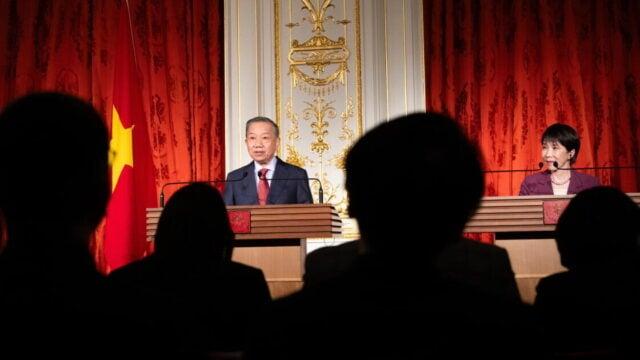
Mitsui Chemicals agreed on November 9, 2026 to buy chip materials maker JSR for 1.84 trillion yen ($11.6 billion). The deal is Japan's largest in chemicals. Mitsui's shares fell 8.5% as investors questioned the debt needed to fund it.
Mitsui Chemicals said on Monday, November 9, 2026, that it will acquire chip materials maker JSR from state-backed Japan Investment Corp (JIC) for 1.84 trillion yen ($11.6 billion). The Development Bank of Japan (DBJ) will also invest in the deal. It is the largest acquisition in Japan's chemicals sector, ahead of Showa Denko's $4.55 billion purchase of Hitachi Chemical in 2020.
Investors did not cheer. Mitsui Chemicals shares slumped 8.5% on Monday, extending losses from the previous week when news emerged that the company was the final buyer.
What JSR makes
JSR produces photoresists, light-sensitive chemicals used to transfer circuit patterns onto semiconductor wafers. Chipmakers rely on such materials to build advanced processors, including those used in AI systems and data centers.
Mitsui Chemicals is expanding its chip materials business. It said the purchase should add about 40 billion yen in annual profit. The company said the combined group would become Japan's largest semiconductor materials maker by sales, and it is targeting that profit gain by 2035.
How the deal is financed
Mitsui Chemicals will take out a bridge loan of 1.64 trillion yen, a short-term loan meant to be repaid later with other funding. It will sell up to 150 billion yen of new shares, according to a filing. Bank loans, debt issuance and mezzanine financing, a hybrid of debt and equity, will round out the package.
DBJ will invest 200 billion yen. Its stake will later be converted into non-voting preferred shares.
The price dwarfs the buyer's own value. Mitsui Chemicals had a market capitalization of 664.6 billion yen based on Friday's closing price, according to LSEG data.
The company warned that its ratio of debt to core earnings will temporarily exceed 4.0 after the deal closes. It plans to refinance the bridge loan within a year of closing to protect its credit rating. It also aims to restore a sound financial position within three years by selling JSR's life sciences unit and other non-core businesses.
Strategy and doubts
Mitsui Chemicals CEO Satoshi Ichimura told a press conference the purchase was "not simply about strengthening our semiconductor materials business, but a strategic deal to accelerate the transformation of our portfolio."
Market participants are questioning the business rationale and the heavy debt load. Shogo Ikeuchi, CEO of JIC Capital, offered a cautious view of the combination. The companies have strengths in different materials, but "simply having these materials does not mean they can immediately generate significant synergies," he said.
Ikeuchi added that using each other's technology, talent and business foundations "could create significant new growth opportunities."
JIC, which is overseen by Japan's finance ministry, bought JSR in 2024 for 900 billion yen. It said at the time that it planned to use the company to drive consolidation in semiconductor materials. It is now selling to a domestic chemical group while chip-related valuations are lifted by the AI boom.
Ikeuchi said seven or eight potential buyers were considered in talks held since spring. JIC put the greatest weight on whether the buyer could become "a semiconductor materials platform that supports Japan five or 10 years from now."