What Happens When You Stop Drinking: Your Body, Day by Day
Some alcohol damage starts repairing within days, some takes years, and one kind usually never comes back. Here is the order it happens in.
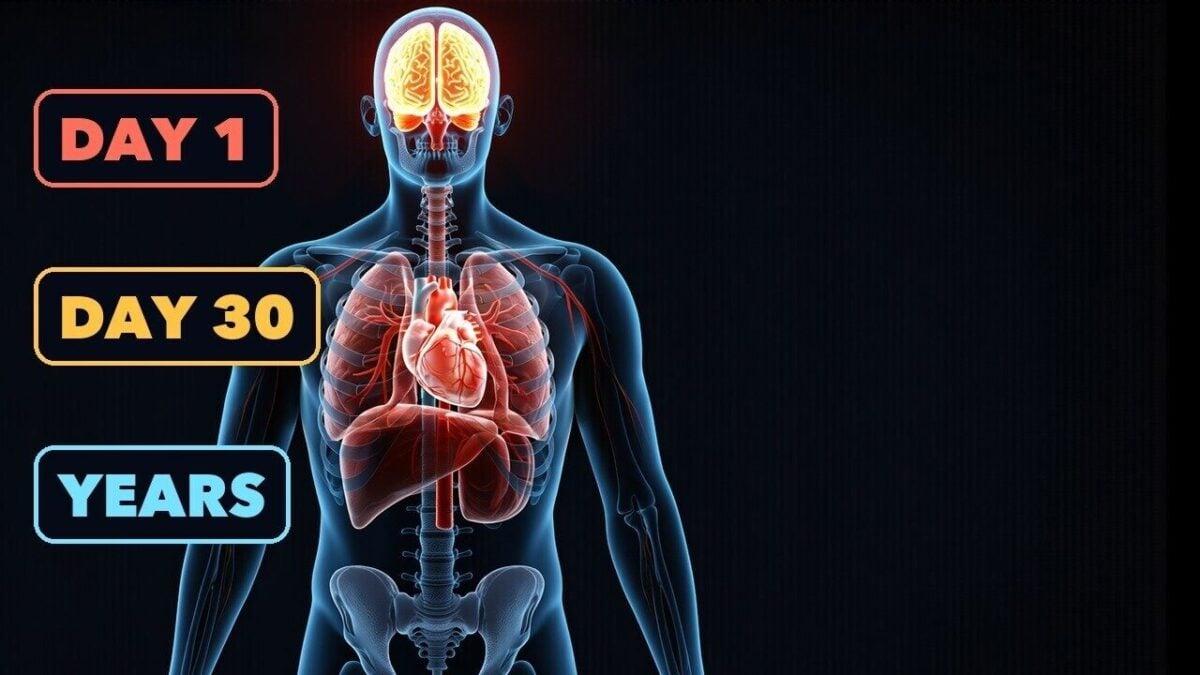
Your last drink starts a clock. Some of the damage alcohol does begins to repair within days, some takes years, and one kind usually never comes back. The order matters, because it tells you what to expect and when.
The short version
- First day: your liver clears the last of the alcohol and your kidneys stop flushing water.
- Days 1 to 7: regular drinkers can feel worse before they feel better: anxious, sweaty, shaky, with vivid dreams.
- One month: in a London study, insulin resistance fell by about a quarter and blood pressure by about 6%.
- Six months: in a heart-rhythm trial, the problem returned less often in people who stopped.
- Years: cancer risk falls slowly. Liver scarring (cirrhosis) usually does not reverse.
The timeline at a glance
| When | What is happening |
|---|---|
| 0 to 24 hours | The liver breaks down the last alcohol, passing through a toxic by-product called acetaldehyde. The hormone that tells your kidneys to hold on to water starts working again. |
| 6 hours to 7 days | Withdrawal in regular drinkers: anxiety, sweating, shaking, poor sleep. It usually peaks in the first days and fades within a week. |
| First weeks | Dreaming sleep rebounds, so dreams can turn vivid. Brain scans of people recovering from heavy drinking show tissue starting to recover. |
| One month | Lower insulin resistance, blood pressure and weight in moderate drinkers who took a month off. |
| Months | A fatty liver can usually recover. Sleep in former heavy drinkers keeps improving. |
| Years | Risk of mouth and esophageal cancer falls, slowly. |
The first day: the cleanup
Six hours after your last drink, your liver is still working through it. Alcohol becomes acetaldehyde, a toxic chemical, before the body breaks it down further.
Alcohol also blocks vasopressin, the hormone that tells your kidneys to save water. That is why a night of drinking sends you to the bathroom again and again. As the alcohol leaves, that signal returns.
Days one to seven: why you may feel worse first
Alcohol slows the brain down. In people who drink regularly, the brain adapts by revving itself up to feel normal. Take the alcohol away and the brain is still revving.
The result can be anxiety, sweating and shaking. Symptoms often start within 6 to 12 hours of the last drink and usually ease within three to seven days.
Important: if you drink heavily every day, stopping suddenly can be dangerous and can cause seizures. Talk to a doctor before you stop. Severe shaking, confusion, hallucinations or a seizure need emergency care.
The nights get strange
Alcohol suppresses REM, the stage of sleep in which you dream most. When the alcohol goes, REM comes back strongly, and dreams can be unusually vivid. For former heavy drinkers, settled sleep can take months to return.
The brain responds too. Scans of people recovering from heavy drinking show gray matter starting to recover within weeks, especially at the front of the brain, the part that plans and holds back impulses. Not everything returns, but the early change is fast.
One month off: what a regular drinker gains
You do not have to be dependent on alcohol to notice a difference. Doctors in London followed 94 moderate drinkers through one month without alcohol and compared them with 47 people who kept drinking. The study was published in BMJ Open in 2018.
After a month, insulin resistance, an early warning sign for type 2 diabetes, fell by about a quarter. Blood pressure dropped by about 6% and weight by about 1.5%. The people who kept drinking showed no meaningful change. Volunteers chose their own group, so it was not a randomized trial, but the gap was clear.
The liver gains as well. In the early stage of alcohol damage, when fat builds up in the liver, it can usually recover once drinking stops.
Six months: the heart
A trial in Australia, published in the New England Journal of Medicine in 2020, took 140 regular drinkers with an irregular heartbeat called atrial fibrillation. Half cut out almost all alcohol; half carried on.
Over six months, the rhythm problem came back in 53% of those who stopped and 73% of those who kept drinking. They also spent less time in an irregular rhythm.
Years: the slowest repair
Alcohol raises the risk of several cancers. The World Health Organization's cancer agency, IARC, found strong evidence that stopping lowers the risk of mouth and esophageal cancer. This repair is the slowest of all: it can take many years to approach the risk of someone who never drank.
The damage that does not come back
Drink heavily for long enough and the liver scars. That is cirrhosis, and the scarring usually cannot be reversed. Stopping still protects what is left, which is why doctors say it is never too late to quit.
Watch: the whole timeline in four minutes
The sooner the clock starts, the more of the body is still able to repair itself.
More short explainers on how the body works are on the FDS Creative YouTube channel.