
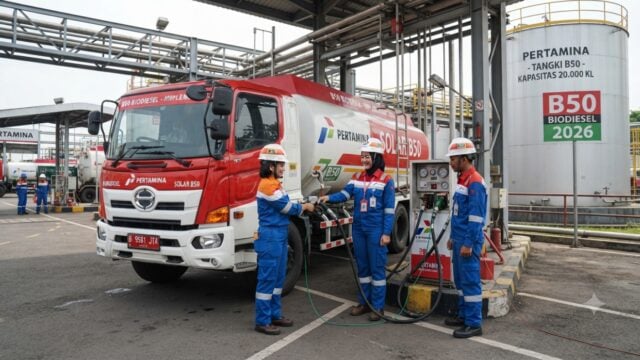
JAKARTA, JOURNALARTA.COM — B50 2026 is officially being prepared by the government as a 50 percent biodiesel blend in diesel starting next year. The policy is projected to reduce imports, save up to Rp 200 trillion in foreign exchange, and change fuel consumption patterns for millions of diesel vehicles in Indonesia.
For private car owners, truck operators, and logistics fleets, this policy is not just about clean energy. It has direct implications for operating costs, engine maintenance, and fuel availability at gas stations.
What B50 2026 means for the diesel market
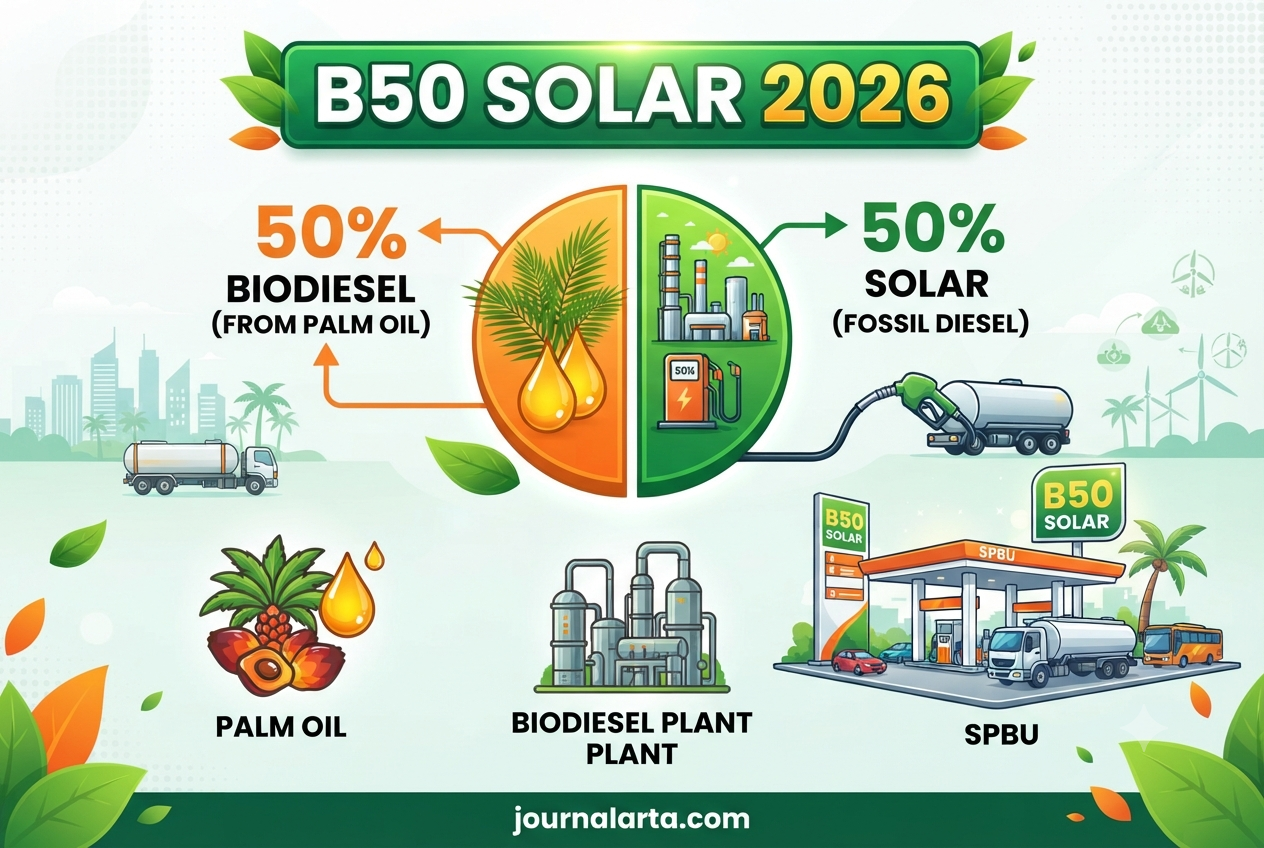
B50 means that every 1 liter of diesel contains 50 percent FAME, or Fatty Acid Methyl Ester, derived from palm oil, while the remaining 50 percent is fossil diesel. Indonesia was previously at the B35 stage since 2023, so the jump to B50 is the biggest change in the national biodiesel mix so far.
The government is pushing the move for three main reasons: reducing diesel imports, absorbing domestic palm oil output, and maintaining the energy trade balance. At the same time, the policy is also tied to emissions-reduction targets in the transport sector.
B35 vs B50 comparison
| Aspect | B35 | B50 |
|---|---|---|
| Biodiesel blend | 35% | 50% |
| Fossil diesel | 65% | 50% |
| Foreign-exchange savings target | Rp 90 trillion | Rp 200 trillion |
| Annual palm oil requirement | 13.15 million kiloliters | 18.8 million kiloliters |
| Start of implementation | 2023 | 2026 |
Read also: Check Today’s Fuel Prices
Those figures show that the supply burden is not small. FAME demand will rise sharply, so the palm oil supply chain, refineries, distribution, and delivery to gas stations must all run smoothly. If there is a disruption at any point, users at the end of the chain could feel the impact.
Impact on diesel prices and consumers
For subsidized Solar, the government says the price of Rp 6,800 per liter will not increase. Dexlite is also said to remain unchanged. The biodiesel price gap will be covered by BPDPKS funds sourced from export levies on CPO.
What needs closer attention is non-subsidized diesel such as Pertamina Dex. Production costs could edge up slightly because the biodiesel component is more expensive. For commercial vehicle owners using non-subsidized fuel, even a small increase can add to daily operating costs, especially if fleets are on the road long distances every day.
So what? The impact of B50 2026 will be felt first in the wallets of logistics operators, mining companies, and daily diesel vehicle owners. Fuel costs may shift, maintenance schedules may change, and fuel stock in remote areas will also depend on how ready distribution is. For general consumers, the effect may not be immediately visible at subsidized pumps, but it could spread into freight costs and logistics prices.
Is it safe for diesel engines?
The most common concern is engine compatibility. Based on technical tests that have been carried out, new vehicles meeting Euro 4 and Euro 5 standards are considered safe to use a high blend such as B50. The testing is also said to have covered tens of thousands of kilometers.
Older engines require special attention. Diesel filters may get dirty faster because biodiesel has a cleaning effect on tanks and fuel lines. For that reason, filter replacement intervals that are usually around 10,000 kilometers could be shortened to 5,000 kilometers in some vehicles, depending on usage conditions.
Another effect users often notice is a slight increase in fuel consumption, around 3 to 5 percent, because biodiesel has lower energy content than pure diesel. In vehicles that are parked for long periods, sediment buildup in the tank also needs to be watched. Engines can become troublesome if maintenance is neglected.
B50 2026 rollout schedule
The government is preparing a phased rollout. At the start of 2026, trials are planned for certain fleets such as public transportation and internal Pertamina operations. After that, distribution to the industrial and mining sectors will follow.
If the schedule goes according to plan, April 2026 will be a key phase because public gas stations are targeted to begin mandatory nationwide B50 distribution. July 2026 is scheduled as the evaluation moment, especially to check the impact on engines, fuel consumption, and supply stability.
Why this policy matters
B50 2026 is not just an energy policy. It is also an industrial, agricultural, and fiscal policy in one package. Palm oil farmers get a larger market, the government has an opportunity to reduce imports, and the state can ease pressure on foreign exchange. But the technical burden is also real: FAME production must stay stable, fuel quality must remain consistent, and diesel vehicle users must be more disciplined about maintenance.
At this point, the success of B50 will be determined by two simple things. Supply must run smoothly. Engines must be ready. If both are in place, the policy could give Indonesia’s energy balance some breathing room without leaving vehicle users at a loss on the road.
📝 Leave a Comment
Comment as . Reviewed by an admin before it appears.