Oil Price Drop Hits Energy Stocks: BBCA, PGAS, AKRA Feel the Pressure
Oil price drop weighs on energy stocks, with PGAS, MEDC, ESSA, ADRO, PTBA and AKRA each feeling different impacts.
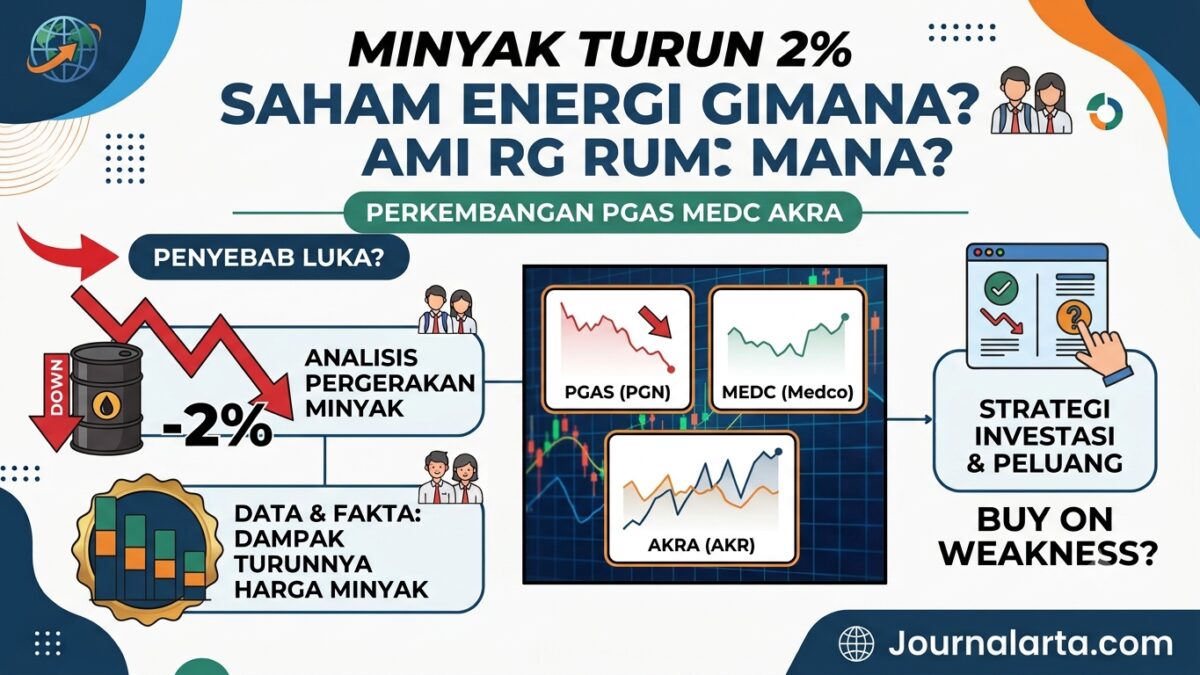
JAKARTA, JOURNALARTA.COM - The roughly 2% decline in global oil prices in Friday’s trading session on June 26, 2026, was quickly felt on the Indonesia Stock Exchange. Brent was at $73.76 per barrel and WTI at $70.43 per barrel, pushing all shares in the energy sector into the red.
The logic is simple: oil prices determine the selling price of oil and gas products. When selling prices fall, the revenue and profits of related companies can also come under pressure.
But the impact is not the same for every issuer. Some come under pressure, while others can actually gain. Here is the full analysis.
Why Are Energy Stocks So Sensitive to Oil Prices?
The link between oil prices and energy stock performance runs directly through business fundamentals. The impact breaks down by business type as follows:
1. Upstream oil and gas issuers (MEDC, ESSA, ELSA)
Global oil prices serve as the main benchmark for the crude oil they produce. Every $1 per barrel decline can immediately squeeze their profit margin.
2. Natural gas issuers (PGAS)
Domestic gas prices generally track movements in global oil prices. If oil prices fall, the pricing of gas sold to industry and PLN also tends to adjust.
3. Coal issuers (ADRO, PTBA, ITMG)
Coal is a substitute fuel for oil. In theory, when oil gets cheaper, coal demand can weaken because it becomes less competitive.
4. Fuel distribution issuers (AKRA)
Their profit comes from the spread between buying and selling prices. Lower oil prices create two-sided effects, bringing both risk and opportunity.
Impact on Oil and Gas Stocks: PGAS, MEDC, ESSA
PGAS
This is one of the stocks most sensitive to oil price movements. Around 60% of its revenue comes from gas sales to industrial customers.
Because gas selling prices refer to the average Brent price over the past three months, today’s 2% drop will create negative sentiment for short-term earnings performance.
Still, in the long run, the lower price can be beneficial because imported gas purchases become cheaper, which helps reduce the cost of goods sold.
MEDC & ESSA
As upstream companies, both depend heavily on oil prices. It should be noted that their lifting costs range from $45 to $50 per barrel. At current prices around the $70s, both issuers remain in safe territory and are still generating profits.
Today’s correction is more of a profit-taking move after prices had surged on the Strait of Hormuz incident, rather than a sign of weakening business fundamentals.
Impact on Coal Stocks: ADRO, PTBA, ITMG
In general, coal is seen as a competitor to oil. If oil gets cheaper, coal demand should weaken. But the situation in 2026 shows a different dynamic:
1. Benchmark prices remain high: The Coal Reference Price (HBA) is still holding around $95 per ton, far above production costs, so profit margins remain intact.
2. Policy shifts: Major importing countries such as China still choose coal because supply is more stable than oil, which often swings on geopolitical issues.
3. Attractive dividend yields: Issuers such as ADRO and PTBA offer dividend yields above 10%, which helps support share prices when they pull back.
As a result, coal stocks saw only a mild decline, not the kind of drop seen in pure oil and gas names.
Impact on Distribution Stocks: AKRA
Atlas Resources (AKRA) operates in fuel distribution for industrial needs and chemicals. Lower oil prices bring two opposing effects:
1. Short-term negative impact: The company holds large fuel inventories. When market selling prices fall, the value of those inventories also declines, resulting in temporary losses.
2. Long-term positive impact: Lower selling prices can boost demand for fuel from the industrial sector. Higher sales volume and wider distribution margins could support future performance.
According to market analysts, this stock tends to trade lower in the short term, but the outlook remains neutral to positive over the longer horizon.
Strategy: Buy Now or Wait?
The right move depends on your investment time frame:
For short-term traders
It is better to wait and watch. Oil prices moving in the $70 to $75 per barrel range are still considered flat. Use these levels as a guide:
1. If Brent falls below $68 per barrel, consider exiting high-risk positions.
2. If prices recover and break above $75 per barrel, then begin considering new entries.
For long-term investors and dividend seekers
This decline may be a chance to accumulate quality shares. Names like PGAS, ADRO, and PTBA have healthy financial performance and attractive dividend yields. When share prices correct, valuations become cheaper and long-term upside improves.
The "buy weakness" strategy
If you believe the disruption in the Strait of Hormuz has been resolved and oil prices will stabilize again, the current correction is effectively a discount. Upstream issuers such as MEDC and ESSA can be accumulated at fair levels, as long as oil stays above their production cost.
Additional note: The rupiah's exchange rate against the U.S. dollar also matters. If the rupiah weakens, the negative impact of lower oil prices can be softened because foreign-currency revenue will be worth more when converted into rupiah.
Disclaimer: This analysis is based on commodity price data and market conditions as of June 26, 2026. Share price movements are highly dynamic and influenced by many other factors. This article is for informational purposes only and is not a recommendation to buy or sell shares.
Frequently Asked Questions
Q: Why do energy stocks fall right away when oil prices drop?
A: Because oil prices determine the selling price of their products, so revenue and profit are projected to decline.
Q: Does PGAS always lose money when oil prices fall?
A: Not always. In the short term there is pressure, but in the long term imported gas costs become cheaper.
Q: Why didn't coal stocks crash more sharply?
A: Because selling prices are still far above production costs and supported by policy and stable market demand.
Q: When is the right time to buy energy stocks?
A: For long-term investors, current price corrections can be an opportunity, as long as the company's fundamentals remain strong.