
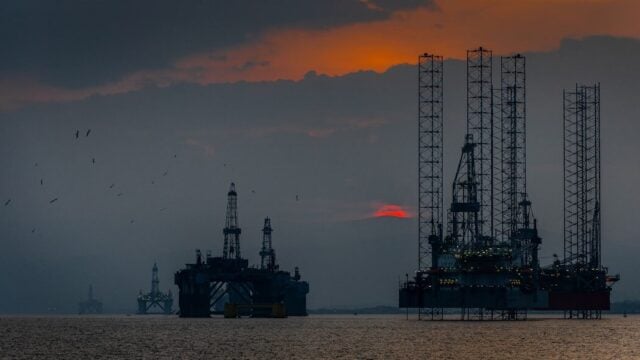
JAKARTA — Global crude oil prices posted a significant gain toward their highest level in several weeks. The surge was driven by renewed geopolitical tensions involving Iran, which raised market concerns about possible disruptions to global energy supplies.
On the other hand, the U.S. stock market, Wall Street, weakened. Investors became more cautious and moved toward safer assets after reports about security dynamics in the Middle East resurfaced. The situation shows how sensitive financial markets are to any escalation in a major oil-producing region.
Impact of Geopolitical Escalation on Energy
Market data showed Brent and WTI crude prices trading in positive territory in midweek trading. Analysts said uncertainty over international oil shipping routes, especially around the Strait of Hormuz, was the main catalyst for the price increase. Iran plays a crucial role as one of the key players in the global energy supply map.
This condition forces energy industry players to recalculate projections for operating and logistics costs. So far, there has been no physical disruption to production facilities, but the risk premium in oil prices has already reflected market fears of the worst-case scenario that could occur in the future.
For consumers in Indonesia, fluctuations in global oil prices certainly have direct consequences. The rise in crude oil prices will indirectly increase the burden of energy subsidies in the State Budget (APBN). If prices remain high for a long time, pressure on the national trade balance will rise significantly.
Pressured Capital Markets
Unlike commodities, Wall Street stock indexes recorded declines. Technology and energy sectors, which are sensitive to geopolitical news, led the losses. Investors are worried the escalation could push inflation higher again through energy prices, which in turn could delay the U.S. central bank, the Federal Reserve, from lowering its benchmark interest rate.
A risk-off strategy dominated the portfolios of major investment managers on Wall Street. They began shifting capital away from risky assets such as stocks into instruments like government bonds or gold, which are considered more stable during global geopolitical shocks.
Analysis of the Impact on Industry
Market participants in Indonesia need to monitor how this dynamic affects the rupiah exchange rate. When global oil prices rise, demand for the U.S. dollar usually increases to finance oil and gas imports. This adds further pressure on domestic exchange rate movements in the short term.
Going forward, oil price volatility is expected to continue as long as diplomatic talks fail to produce a permanent solution to tensions in Iran. For companies in the transportation and logistics sectors, higher fuel prices are a challenge that must be mitigated quickly, given margins that are highly vulnerable to changes in energy input costs.
Overall, global markets are currently on alert. Investors are now focused on official statements from Iranian authorities as well as responses from Western countries regarding developments in regional security. Uncertainty is the main narrative expected to dominate trading through the end of this week.
The editorial outlook for the next 7 to 30 days shows that oil price movements will depend heavily on the release of U.S. crude inventory data and diplomatic developments in the Middle East. If the escalation eases, oil prices could return to moderate levels. However, if the stalemate continues, the upward trend is expected to remain at relatively high levels.
📝 Leave a Comment
Comment as . Reviewed by an admin before it appears.