
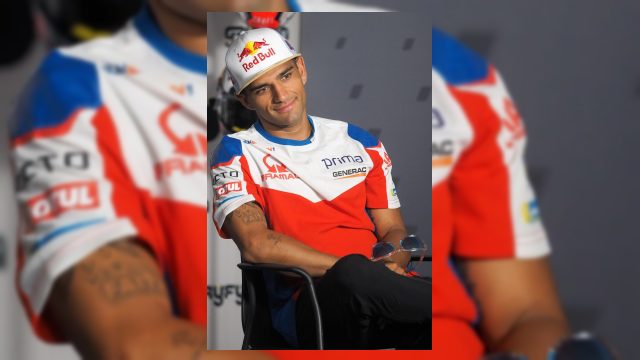
ASSEN — Ai Ogura won the 2026 Dutch MotoGP by nearly two seconds. But what had the TT Assen circuit buzzing was not just the result — it was how the Japanese rider turned the bike.
Jorge Martin, the 2026 MotoGP points leader, admitted he was both confused and amazed while chasing Ogura from behind. Ogura’s teammate, Raul Fernandez, also weighed in. Both agreed: Ogura’s riding style is strange — but deadly.
Body Nearly Down, Bike Still Upright
Martin is not the kind of rider who is easily fooled. The reigning MotoGP world champion is used to reading rivals from mirrors and data. But seeing Ogura up close on track left him uneasy.
“When following Ai, it feels really strange because he looks like he’s going to fall in every corner!” Martin said after the race in Assen on Sunday (28/6/2026).
Martin then explained in more detail what he saw. Ogura’s upper body drops extremely low when entering corners — an extreme position, far below what most MotoGP riders use. But the bike? It stays relatively upright.
“His upper body is really, really low, but the bike stays upright. I had a hard time following him because every time I looked at him, I felt like he was going to crash. But in fact, he was still able to turn and go as usual,” Martin said.
This is not just a visually striking style. Martin suspects the technique has a concrete purpose: keeping the tires alive until the final laps.
“Maybe that’s why he’s so fast in the last few laps. I’m going to try doing it too,” said the Aprilia Racing rider.
Fernandez: The Data Doesn’t Lie
Raul Fernandez, who shares a garage with Ogura at Trackhouse Aprilia, had a more complete view. He could see Ogura’s telemetry data directly — and the numbers explained a lot.
“Watching Ai ride the bike is quite strange because the style he uses is completely different from the rest of us,” Fernandez said, as quoted by Crash.net.
“Maybe that’s why he is so strong at the end of the race. From the data we saw, his performance kept improving lap by lap.”
It is a pattern that has repeated throughout the season. Ogura often looks threatening late in races, but before Assen he was frequently stuck with poor starting positions — forcing him to spend energy early just to recover. In Assen, he finally started from the front row, and the result spoke for itself.
Fernandez did not hesitate to warn the rest of the grid. “So be careful with him in the title fight!” he said firmly.
From Fourth Corner to the Top Step
Ogura’s path to his first victory in the premier class was not smooth from the start. He slipped as low as fourth in the opening laps, behind Martin and Fernandez, who were leading at the front.
Gradually, Ogura began to close the gap. With six laps to go, he took the lead. From there, no one could touch him.
The win came even with a technical issue: his bike’s ride-height device malfunctioned during the race. Under normal circumstances, a problem like that could ruin any rider’s rhythm. Ogura still won by almost two seconds.
Martin, who remained at the top of the standings, admitted that all the Aprilias in Assen were highly competitive and close in performance. “The gap between us on track was relatively small,” he said. But Ogura managed to make the difference — with a style even his own rivals do not fully understand yet.
Why Does That Riding Style Matter?
In modern MotoGP, tire management is everything. Tires that fade in the second half of a race mean slower lap times — and dropped positions. That is why riding technique has a direct impact on the final result.
Ogura’s style — very low body position, bike relatively upright — is technically believed to reduce lateral load on the rear tire in corners. A bike that is not leaned over as much means the tire contact patch with the asphalt is wider and more evenly distributed, reducing excess heat. The result: longer tire life, and sharper performance in the final laps.
This is not a new technique in racing. Some Moto2 and Moto3 riders are known to use a similar approach. But in the premier class, where engine power is far greater and the physical demands on the rider are multiplied, holding that body position for dozens of laps takes extraordinary strength and control.
Martin himself said he wants to try the technique. A notable statement — because Martin is the reigning world champion, not a rookie looking for inspiration.
Ogura is no longer a dark horse. He is a real threat in the 2026 MotoGP title fight — with a riding style that even the strongest rivals are now double-checking.
3 Key Points:
- Ai Ogura won the 2026 Dutch MotoGP in Assen by nearly two seconds, his first victory in the premier class.
- Jorge Martin and Raul Fernandez were both surprised by Ogura’s style: his body stays very low while the bike remains upright — likely a key to late-race tire life.
- Trackhouse Aprilia telemetry shows Ogura’s performance improved lap by lap, a pattern that now has the whole grid on alert.
Quick FAQ:
What makes Ogura’s riding style different? His upper body drops very low in corners while the bike stays relatively upright — the opposite of most MotoGP riders.
Why is the technique seen as an advantage? A bike that is leaned over less is believed to reduce overheating in the tires, helping Ogura improve in the final laps.
Does Ogura have a real chance at the world title? Fernandez openly warned rivals to watch out for Ogura. With this first victory, he is clearly in the serious conversation.
📝 Leave a Comment
Comment as . Reviewed by an admin before it appears.