
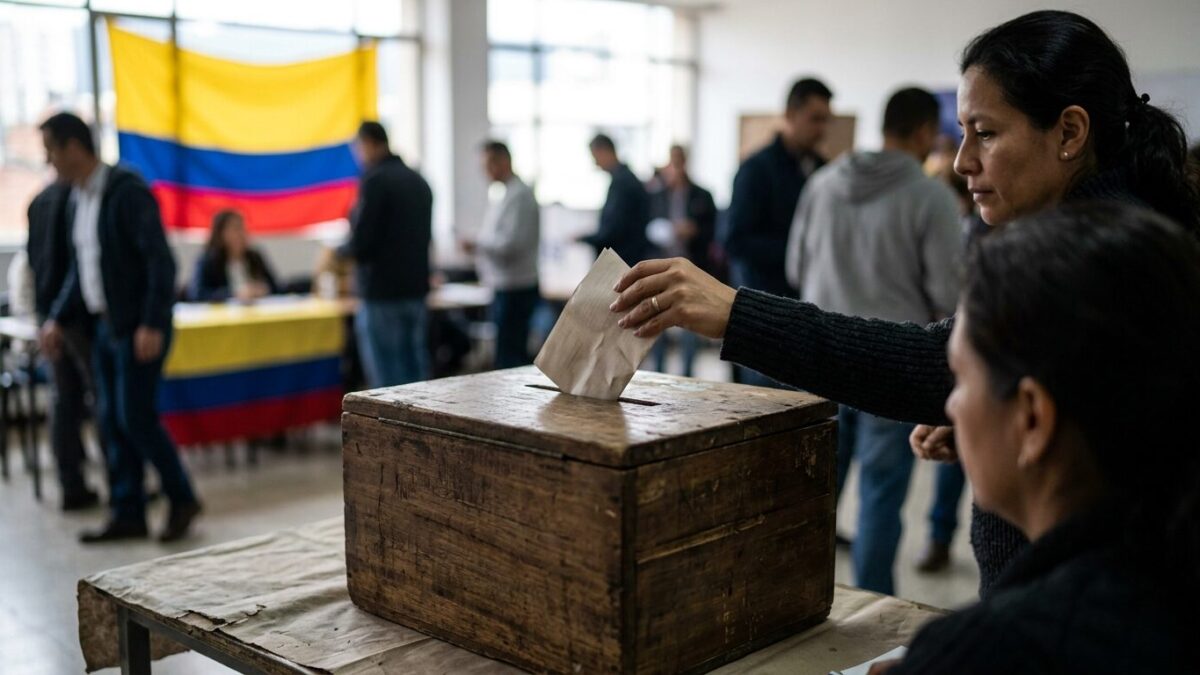
BOGOTA — Tens of millions of Colombians headed to polling stations to decide their country’s future in a highly consequential presidential runoff. The Colombia presidential election has pitted two candidates with sharply opposed ideologies against each other amid public fears of a return to waves of violence.
The result is expected to quickly reshape national security policy and the fight against drug cartels. Whoever wins will face a grim reality: swelling public debt, a health system on the verge of collapse, and a gang war that has yet to ease.
Up to 41 million registered voters cast ballots to choose between left-wing lawmaker Ivan Cepeda and hard-right criminal defense attorney Abelardo de la Espriella. Both advanced after edging out nine other contenders in the first round at the end of May.
Two Contrasting Approaches to Bloody Terror
Although both candidates have promised to end Colombia’s long trauma of car bombings, kidnappings, and enforced disappearances, their methods are worlds apart. Security has become the hottest political commodity in this election.
De la Espriella, often nicknamed “The Tiger,” is offering a hardline approach inspired directly by Salvadoran President Nayib Bukele’s policies. The controversial lawyer has also secured backing from former U.S. President Donald Trump.
He has vowed to hunt criminals without mercy and build 10 mega-prisons to hold gang members and drug cartel operatives. The extreme strategy appeals to voters fed up with crime, though human rights activists strongly oppose it.
Cepeda, by contrast, is taking the path of dialogue. He has pledged to continue President Gustavo Petro’s efforts to negotiate with armed groups in pursuit of a broader civilian peace.
But that peace strategy has drawn heavy criticism for being too soft and too slow to deliver results. So far, only one small group of around 100 people has agreed to lay down arms and return to normal life.
Fear Hangs Over Polling Stations
The sharp polarization has fueled deep anxiety among ordinary Colombians. This is no longer just a political argument. It is a real fear of street-level violence.
“Right now what worries me most is the polarization between us. There are two very extreme camps, and the potential for violence is deeply alarming,” John Manrique, a lawyer in Bogota, told AFP.
Alex Vizcaino, a 59-year-old voter who cast his ballot in the coastal city of Barranquilla, voiced a similar concern. He said the atmosphere feels different in this election.
“This is the first election where you can feel a bit of fear. There is too much fanaticism out there,” Vizcaino said.
In the first round, the race between the two candidates was extremely tight, as shown in the data below:
| Candidate | Political Leaning | First-Round Vote Share |
|---|---|---|
| Abelardo de la Espriella | Right-wing | 44% |
| Ivan Cepeda | Left-wing | 41% |
Tension escalated after President Gustavo Petro questioned the legitimacy of the first-round results without strong evidence, following Cepeda’s narrow defeat after previously leading in several official polls.
The Return of Cartel Killings
The election is being held exactly ten years after Colombia signed its landmark peace agreement with the Revolutionary Armed Forces of Colombia (FARC). But hopes for peace gradually faded after rebel factions split apart and turned to cocaine trafficking.
Last year, Colombian security authorities recorded 14,780 homicides, the highest figure since 2015. One of the victims in that wave of violence was conservative presidential hopeful Miguel Uribe, who was shot dead by a criminal gang.
The worsening security situation has left the public demanding firm leadership, while also fearing that political friction could trigger a new civil war.


📝 Leave a Comment
Comment as . Reviewed by an admin before it appears.