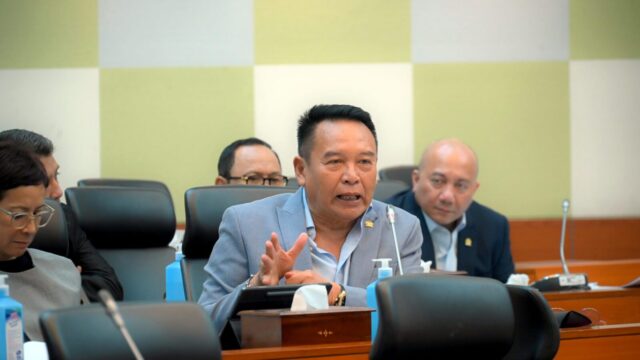
DKUKM Babel asks UGM KKN-PPM students to support village MSMEs
DKUKM Babel trains UGM KKN-PPM students to help village MSMEs secure NIB permits and halal certification.
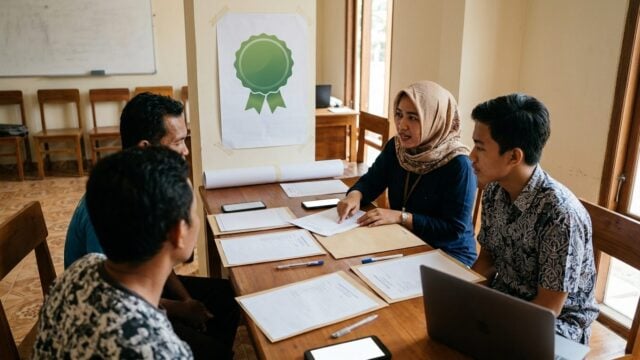
PANGKALPINANG — DKUKM Babel asks UGM KKN-PPM students to support village MSMEs in Bangka Belitung by helping business owners process Business Identification Numbers, or NIB, and halal certification ahead of the 2026 community service deployment.
The provincial Office of Cooperatives and SMEs wants the students to move beyond routine field service work and become practical guides for rural entrepreneurs who often struggle with licensing rules, document requirements, and service channels that look complicated from the outside.
Students asked to work as field facilitators
The head of the Bangka Belitung Provincial Office of Cooperatives and SMEs, represented by agency secretary M. Denny Elyasa, said the briefing was designed to prepare students before they go out to service locations in villages across Bangka Island.
“This activity is part of the briefing for students before they are deployed to service locations in various villages on Bangka Island,” Denny said in Pangkalpinang on Monday.
He said the students have a strategic position because they are close to communities, move easily in the field, and are usually welcomed by residents. For DKUKM Babel, that makes them a useful bridge between village entrepreneurs and a licensing process that still feels out of reach for many micro and small business owners.
The office wants students to explain the basics clearly. Not with jargon. Not with bureaucratic language. Just simple steps that residents can follow when they try to legalize their businesses.
That matters in villages where many owners run their businesses while also farming, managing households, or selling products door to door. They do production, sales, and administration at once. Paperwork often gets pushed aside.
Why NIB matters for village MSMEs
Denny said the office wants students to understand that NIB is not just another administrative number. It serves as a legal identity for a business and can help owners access government programs, financing, training, and broader market opportunities.
Without that document, many micro businesses stay stuck at the same level. They may sell well locally, but they often face limits when they try to grow, apply for support, or join formal assistance schemes.
DKUKM Babel sees the NIB as the entry point to orderly business legality. Once a business is registered, the government can trace it more easily, channel support with more precision, and open the door to programs that may have been hard to reach before.
For Bangka Island villages, that is no small issue. Local economies depend heavily on home-based food products, processed snacks, household goods, and small retail operations that serve nearby residents. When those businesses are documented, they gain more room to expand.
The office also expects the students to act as ambassadors for MSME empowerment during their placement. Their job is not to replace government staff, but to make the process less intimidating for residents who want to start but do not know where to begin.
Halal certification gets the same attention
Halal certification was another major point in the briefing. DKUKM Babel asked students to learn the basics of halal assurance, the application flow, and the facilitation programs available for MSME actors.
Denny said the information should not stop in the briefing room. Students are expected to carry it into villages and explain it in plain language, especially to food and beverage business owners who may not yet understand how the process works.
For many consumers, halal status affects trust. For business owners, it can shape how their products are received in local markets and beyond. That is why the provincial government wants students to help prepare documents, identify the right service path, and connect entrepreneurs with the available programs.
Small-scale help can still matter a lot. A resident who learns what to prepare today may submit an application tomorrow. A business that gets one clear explanation may avoid weeks of confusion.
What the support means for villages
The direct impact is simple. If a student helps one business owner secure an NIB, or helps one group start halal certification, that can change how the business operates in the village. Formal status opens access. It also builds trust.
That is the “so what” for readers outside Bangka Belitung too. Village MSMEs are often the first rung of Indonesia’s local economy. When they stay informal, they can miss out on financing, training, and market expansion. When they become legal and better documented, they can move faster and stand on firmer ground.
DKUKM Babel said it expects UGM KKN-PPM students in 2026 to deliver programs residents can actually feel. The office wants field work that solves real problems, not just socialization that ends when the banner comes down.
“With this knowledge, students are expected to deliver programs that provide real benefits to the community, strengthen the MSME ecosystem, and support inclusive and sustainable regional economic growth,” Denny said.
He said the provincial government and UGM are trying to build a pattern where policy support, academic energy, and village needs meet in one place. If the work goes well, the most visible result may be modest but concrete: one more village business with a valid NIB, and one more product on the road toward halal certification.