Mathematicians’ Feud Puts OpenAI Navier–Stokes Claim Under Scrutiny
A dispute over OpenAI's claim to have solved a famed maths problem, involving a New York University mathematician and an Anthropic-employed colleague, is…
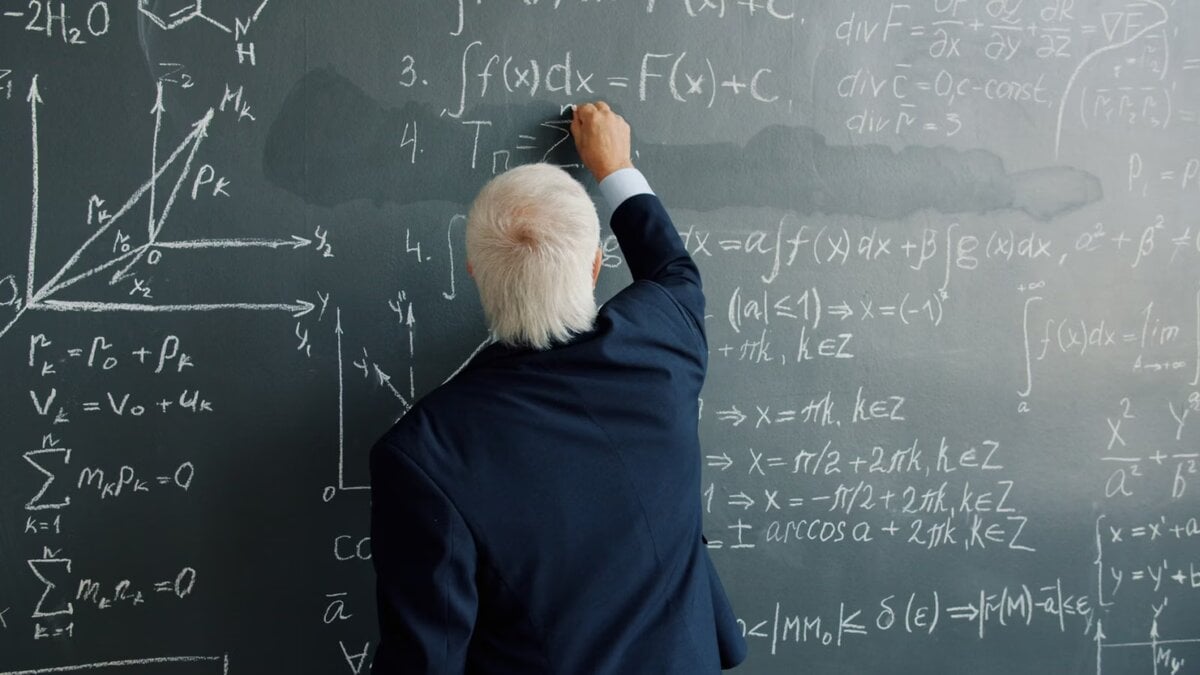
A bust-up between mathematicians fuelling fears that AI could undermine science has put OpenAI under scrutiny after the company said last month that its AI agents had solved one of maths' great unsolved problems. The problem relates to the Navier–Stokes equations, and OpenAI said its agents cracked it in 88 hours.
The body that runs a prize for whoever can solve the problem said it had "apparently been settled", but added that its review would take time.
A dispute over drafts stored in Codex
Hours before the announcement, Tristan Buckmaster, a mathematician at New York University, went public with concerns. He had formed an independent team with Levent Alpöge, a mathematician employed by the rival company Anthropic. The pair had been working towards the same goal.
They kept their drafts in OpenAI's coding tool, Codex. Buckmaster said his co-researcher was tipped off that news of their progress had "reached" OpenAI, though he did not specify how. He asked whether research stored in Codex could have fed into OpenAI's own work. He stressed he was "not accusing anyone of anything".
OpenAI rejected the suggestion. It said nobody at the company, human or AI, saw the other teams' work before it was published. Initially it said that, while unlikely, it could not "rule out" that anonymised data from use of its products may have helped improve its models. Days later, it said Buckmaster's Codex prompts from the two months before the announcement "could not have influenced the system in any way".
The full picture is still unclear. But the row points to a growing issue about AI in science.
Trust is the real stake
Fears about AI in research usually centre on engineered viruses or chemical weapons. A quieter problem gets far less attention: AI could undermine faith in the scientific process and raise questions about the novelty and accuracy of research.
There is a second worry. Chatbots such as Claude or Gemini can hallucinate, describing a film that never existed or a quote never said. There is now evidence this is increasingly happening in science. Eventually, it is feared, separating true discovery from AI-generated fiction will get harder.
Scientific journals, the guardians of research integrity, are seen to be failing to cope with a tsunami of AI-generated distortions. "Generative AI has basically disrupted the whole scientific process," says Dalmeet Singh Chawla, a science journalist who has spent a decade reporting on research misconduct.
Chawla told the BBC that publishers' integrity staff, who screen submissions for accuracy and reliability, will need to "drastically increase [in number and effort] if they're anywhere near the fight". He said: "Right now, it seems like they're not."
The optimists' case
On the face of it, AI looks like the right tool for research. Scientists handle huge volumes of information, and telescopes and particle accelerators collect billions of data points.
In central London, Basecamp Research stores dozens of small boxes of barcoded glass tubes in a bank of freezers at a former watch factory. They collectively contain one hundred billion genes. Co-founder Dr Oliver Vince says just two boxes may hold 10 times more information than all the text on the internet.
His firm plans to collect as much DNA as possible to build an AI that can speak the language of biology, much as US and Chinese tech firms scraped written material online to build Large Language Models. Vince believes AI will supercharge scientific research.
Source: bbc.com