Cowboy Space Unveils Big Iron Rocket Built to Become AI Data Center
Cowboy Space, led by Robinhood co-founder Baiju Bhatt, has revealed Big Iron, a 86-meter reusable rocket whose upper stage becomes an orbital AI data center…
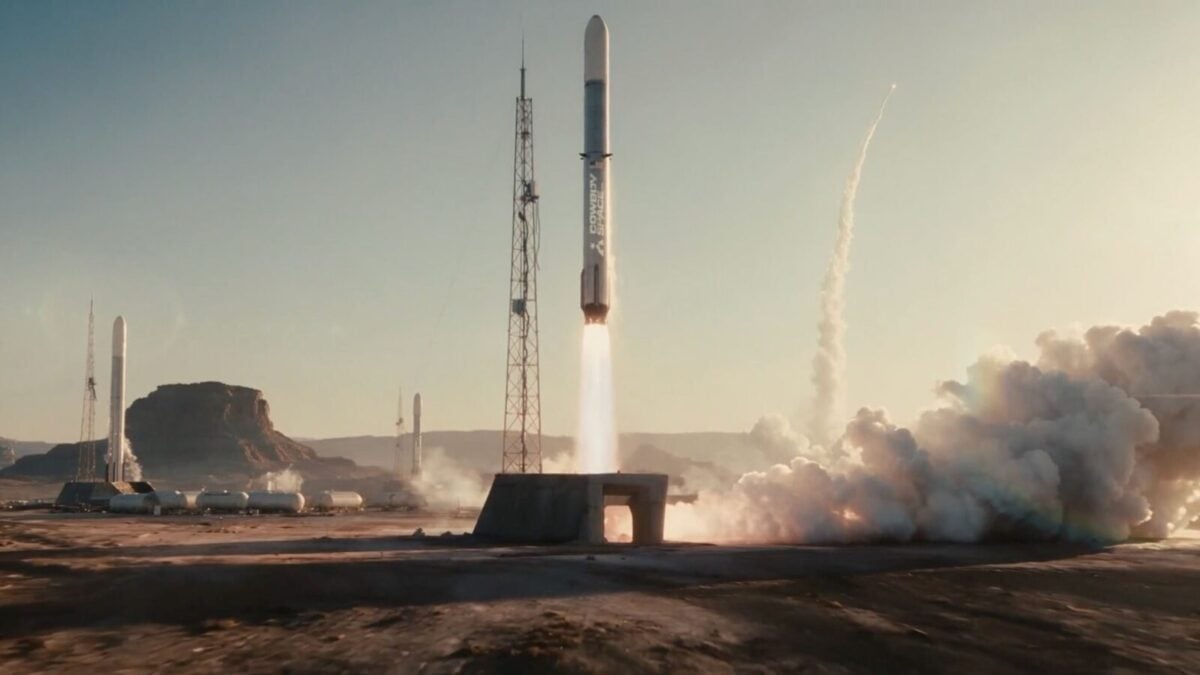
Cowboy Space unveils big plans for orbit: a rocket whose upper stage never comes home but becomes an AI data center. The California company, run by Robinhood co-founder Baiju Bhatt, showed off the vehicle, called Big Iron, at an event it named "Big Sky Rising" in Palo Alto on the night of Monday, Oct. 26.
The company intends to operate a constellation of 20,000 AI data centers in low Earth orbit. It will build the satellites itself and launch them on its own rocket. According to a company statement issued October 27, 2026, Cowboy has filed an application with the FCC for the constellation, which it calls Stampede.
"It's a fundamentally novel approach to rocketry in the modern era, in our opinion," Bhatt said during the event. "The idea is that you have a two-stage rocket where the upper stage of the rocket itself transforms into the satellite."
What Big Iron looks like
The stainless-steel rocket will stand 86 meters (282 feet) tall and 4.7 meters (15.4 feet) wide. Its first stage uses nine Clydesdale engines and the upper stage uses one, the same layout as SpaceX's Falcon 9. Each Clydesdale burns liquid oxygen and liquid methane and provides 300,000 lbs of thrust, according to the company.
Cowboy chose methane to support reuse, and picked a gas generator engine cycle, a proven design, to shorten the path to a first flight. The first stage is reusable. An animation shown at the event had the booster landing on a ship at sea.
The rocket is designed to carry more than 15,000 kg to sun-synchronous orbit. Its size is set by the limit of road transport, which the company says speeds production and keeps capital costs down.
A rocket that becomes the satellite
The upper stage stays in orbit. It weighs about 15,000 kilograms (33,000 pounds) and, once its solar panels unfurl, spans about 132 meters (433 feet). The company's statement puts the deployed satellite at 132 meters by 73 meters.
Many parts do double duty. The rocket's skin becomes the radiator that dumps heat from the GPUs. Ammonia propellant becomes coolant. Nitrogen that pressurizes the second stage deploys the solar wings.
Each satellite carries five racks of NVIDIA Vera Rubin GPUs, Bhatt said, giving about 1 megawatt of compute payload. Bhatt contrasted that with SpaceX's planned Starmind spacecraft, which he called "imperial-class" satellites with a 246-foot (75 m) solar wingspan and about 250 kW of compute.
Launching constantly
Each rocket carries one satellite, so building Stampede takes 20,000 launches, and likely several thousand more every year to maintain it. Cowboy therefore expects to fly multiple times per day from launch complexes it calls Trailheads. Locations have not been announced, though each is likely to have four active launch mounts, Bhatt said.
Not every flight will serve Stampede. Cowboy also introduced Big Iron Express, a commercial service for outside customers who need megawatt-class power in orbit, for compute or other uses. The same upper stage can be configured for each customer's mission.
"We set out to build data centers in space and found there weren't enough rockets to get them there, so we're building our own," Bhatt said in the company statement. He added that the design puts Cowboy on a path to cost parity with terrestrial data centers.
Timeline and track record
Founded in 2024 as the power-beaming company Aetherflux, Cowboy is still building and testing the Clydesdale engine. It aims to fly Big Iron for the first time in December 2028.
Its only hardware in space now is Reason-1, launched October 1 on SpaceX's Transporter-18 rideshare mission to demonstrate laser power beaming from orbit to Earth. Reason-2, slated for 2027, will run GPUs in orbit for commercial and government workloads.
The company is headquartered in San Carlos, California, with operations in Seattle, Washington. Investors include Index Ventures, Breakthrough Energy Ventures, Construct Capital, Interlagos and IVP.
Bhatt was candid about the odds. "Now, a lot of things have to go right for that to happen; it's not a guarantee," he said. "I think it's ambitious. But if it wasn't ambitious, I wouldn't be an entrepreneur."
Source: space.com