NASA’s Swift space telescope faces uncontrolled reentry
NASA’s Swift space telescope is expected to reenter Earth’s atmosphere in the next few days after a robotic rescue mission failed to raise its orbit. Its path…
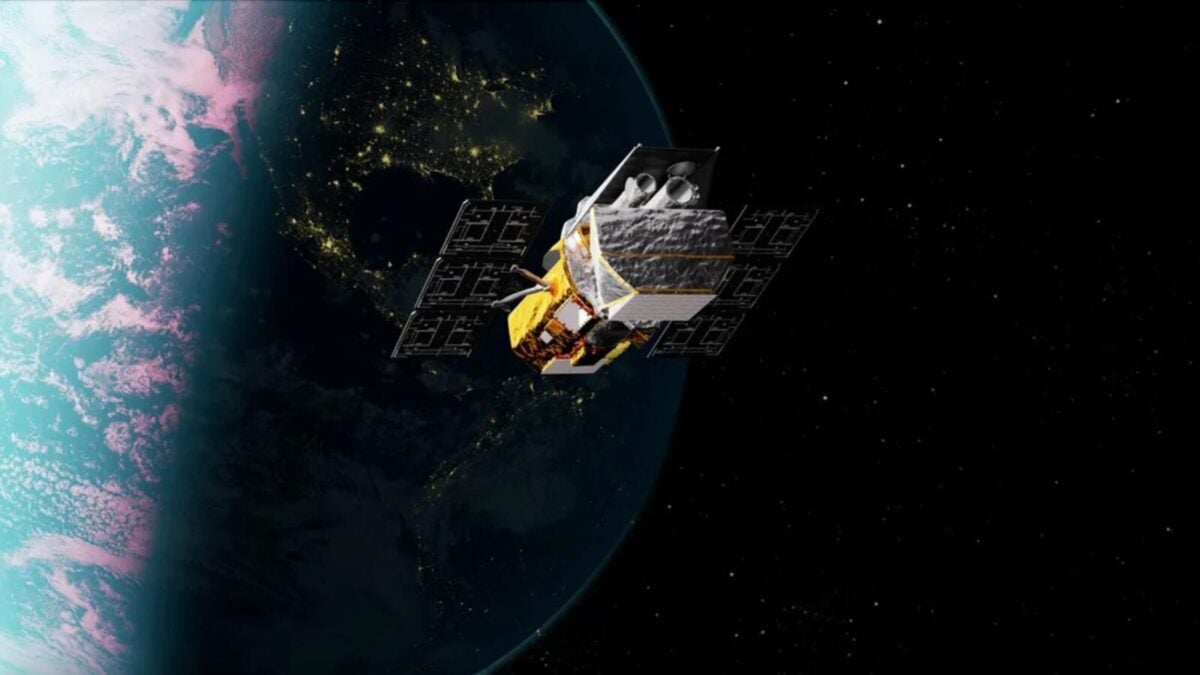
NASA’s Swift space telescope is expected to reenter Earth’s atmosphere in the next few days, after a failed rescue attempt left the observatory on an uncontrolled descent. The exact time and location remain uncertain, but experts say its orbital path crosses mostly ocean and only a handful of small fragments are expected to reach the ground.
The Neil Gehrels Swift Observatory entered safe mode after its orbit fell to 171 miles (275 kilometers) above Earth, NASA reported on Oct. 20. Its operations team at Pennsylvania State University then sent a command that effectively ended the spacecraft’s operations.
The descent is underway. Swift can no longer compensate for the increased atmospheric drag, and the robotic mission intended to lift it to a higher orbit failed.
What could survive Swift’s reentry?
Most of the observatory is expected to burn up. Darren McKnight, a senior technical fellow at LeoLabs, said the spacecraft would likely disintegrate enough during reentry not to pose a ground casualty hazard, though parts of its internal X-ray and optical telescopes might survive.
“It is unfortunate that Swift was not 'reorbited,' but from a reentry hazard perspective it is a small portion of the stuff coming back in,” McKnight said.
Dean Sladen, a quality manager and aerospace engineer at U.K. precision-components supplier Accu Components, described how the breakup typically unfolds as an object falls through the atmosphere. At about 120 kilometers (75 miles), the end usually comes within minutes as air in front of the satellite heats up. Solar panels and antennas are typically among the first parts to detach. Around 78 kilometers (48 miles), the main body breaks apart, he said.
That leaves a limited risk on the ground, but the possible surviving pieces matter. Sladen said the parts most likely to endure are Swift’s six heavy reaction wheels, along with tougher telescope components such as lenses and mirrors. Its body is mostly aluminum, wiring and electronics, which melt away earlier in the descent. The observatory’s mask of around 52,000 tiny lead tiles is almost certain to melt.
“Only a handful of small, scorched fragments are expected to make it down — nothing recognizable as a telescope,” Sladen said.
Where could the debris fall?
Swift’s orbit passes over a band within about 21 degrees of the equator, Sladen said. Much of that area is ocean, though the path also crosses populated parts of Africa, South and Southeast Asia, and Latin America.
For people in those regions, the key distinction is between the observatory’s fiery breakup and the far smaller chance of surviving debris reaching land. Experts expect most material to melt or vaporize, while dense, heat-resistant pieces such as titanium, steel and glass are more likely to endure. The landing point of any fragments has not been established.
Swift launched into Earth orbit in November 2004 and spent more than two decades studying gamma-ray bursts, the universe’s most powerful explosions, as well as other cosmic objects and events. It used three instruments: a Burst Alert Telescope, an X-Ray Telescope and an Ultraviolet/Optical Telescope.
McKnight said the number of objects reentering each year is 10 times higher than it was just five years ago, citing the growth of low Earth orbit constellations and technology refresh cycles. He said he was more concerned about the rapid rate at which massive objects are being abandoned above 400 miles (644 kilometers).
Swift’s reentry is expected in the next few days.