Cats Meow Four Times More When Humans Are Present, Brazilian Study Finds
Researchers at the University of São Paulo tested 38 pet cats with a treat they could not reach. The cats meowed 86 times with a human present and 20 times alone, suggesting meows are aimed at people. The team cautions against reading too much into it.
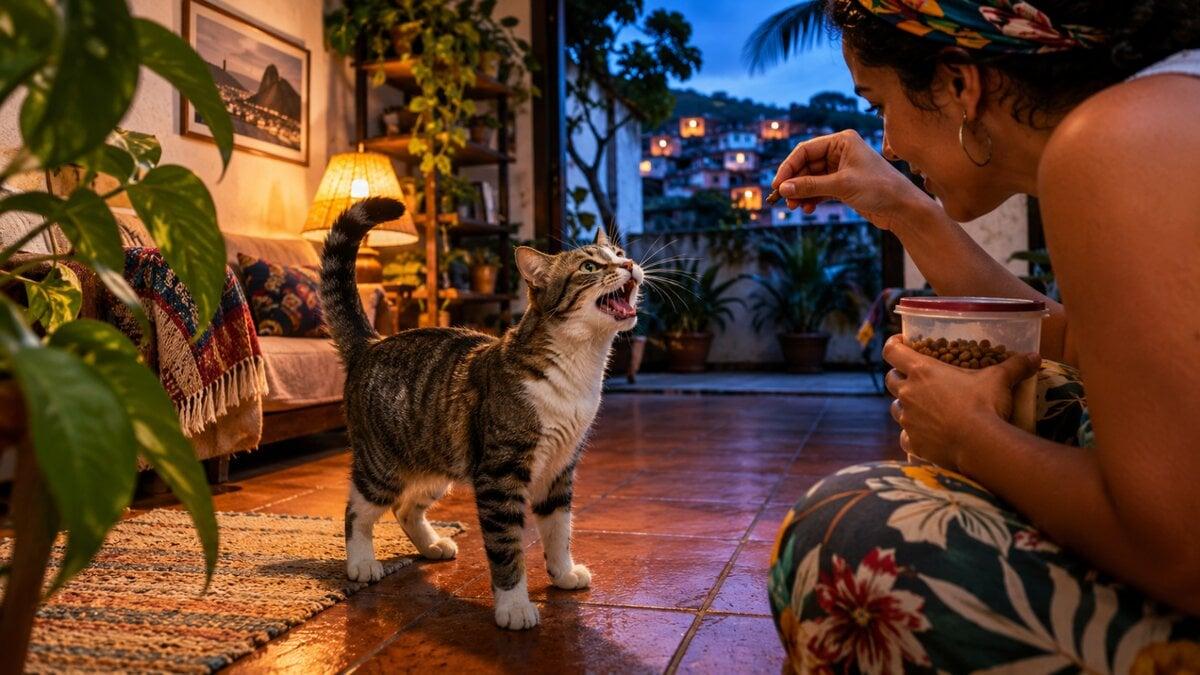
Researchers at the University of São Paulo in Brazil reported that 38 pet cats meowed far more when a human was in the room, in a study published in the journal Animal Behaviour. Has science finally shown your cat is talking to you? In part, yes.
The treat box test
Animal behaviorists recruited cats whose owners said they meowed a lot around food. Each cat got a favorite treat inside a small plastic box with holes in it. The cat could smell the food but could not open the box alone.
The team watched each cat for one minute under two conditions. In one, a human was present and paying attention. In the other, the room was empty.
What the cats did
The cats were four times more vocal with a human around. Researchers counted 86 meows with a person present, against 20 when the cat was alone. The odds of meowing were more than 16 times higher with a human in the room.
Body language matched the noise. Cats often looked at the person, sometimes switching their gaze between the human and the treat box. Alone, they spent more time standing still and looking at the door.
"These results are consistent with meowing playing a communicative role in cat-human interactions," the researchers write in the paper.
Why it matters
Scientists have long known that cats meow often around people and rarely around other cats. Feral cats meow far less than pet cats, which points to a link with living near humans. Researchers have also suspected that different meows aim to get food, attention or an opened door.
The new work, led by Naila Fukimoto, adds a test of whether meows are aimed at a listener. The team says they are. "The recipient-directed nature of the majority of meows recorded in our study indicates that cats were not simply vocalizing into the environment but targeting a specific audience," the researchers write.
Limits of the findings
The study does not show that cats consciously understand that their owners can solve the problem. Nor does it show that every meow is a deliberate request. It does suggest that meowing is more than an involuntary expression of feeling.